
How to Check If iPhone 20 Is Original: Authenticity Guide
No iPhone 20 has been announced, so any iPhone 20 offered for sale today is not original. Apple has never confirmed the name, and every launch detail in circulation is an unconfirmed report pointing to 2027 — which makes the iPhone 20 the single most abused “upcoming device” name in phone scams right now.
On this page
No iPhone 20 has been announced, so any iPhone 20 offered for sale today is not original.
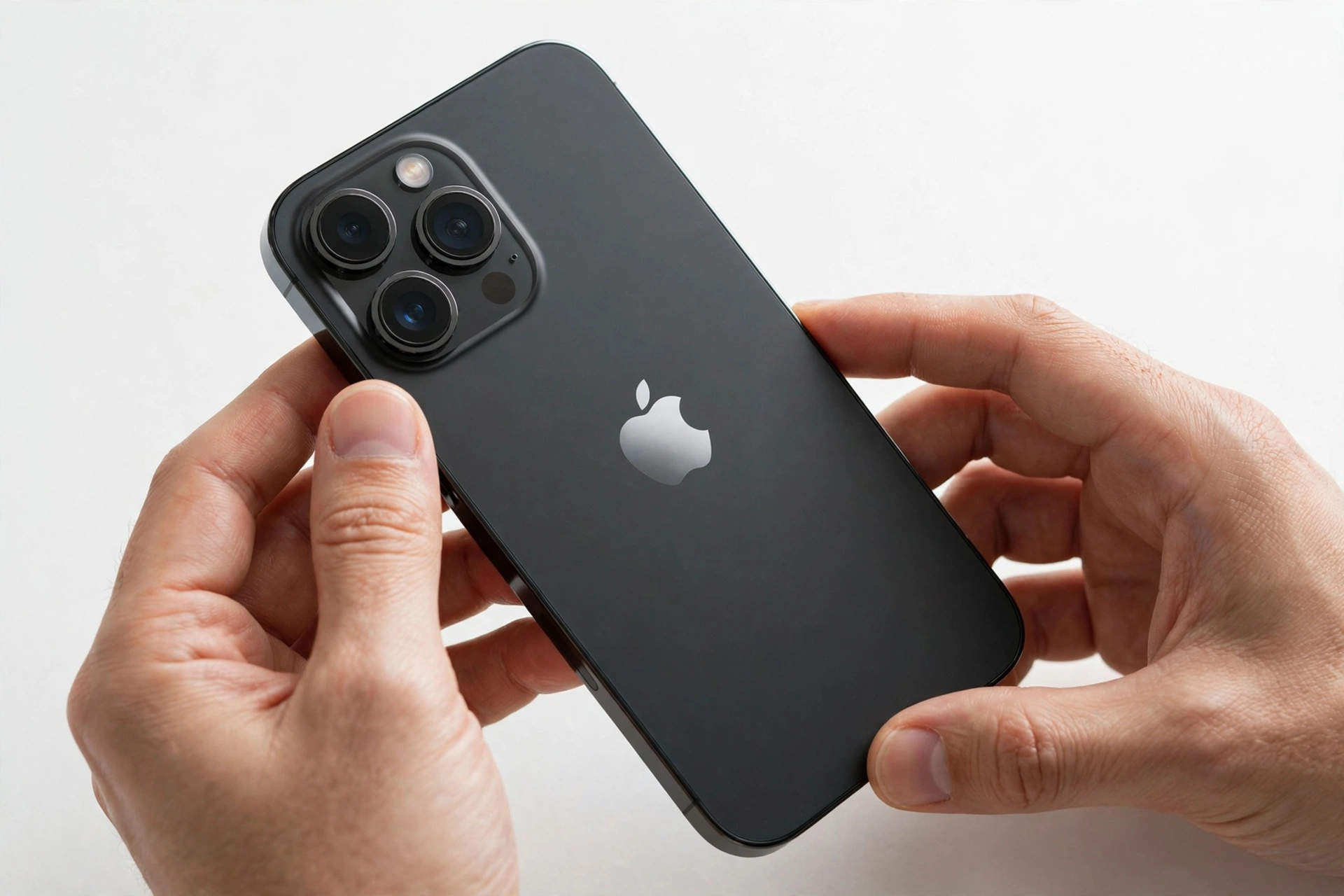
1. The one-check answer: the existence test
This guide is organized around the fastest test in phone authentication: the existence test. Before you check serial numbers, cameras, or finishes, ask the simplest question — does the device exist yet? If the answer is no, every listing, pre-order, and “early unit” is fake by definition, and no further testing is needed. (Apple Check Coverage page)
For the iPhone 20, the answer is no. Apple has not announced an iPhone 20, has not listed one on apple.com, has not assigned it a model number, and has not confirmed the name. The earliest reported launch window is 2027, nearly a year away. Any seller holding a physical “iPhone 20” in October 2026 is selling something else with a different name on the box — or nothing at all.
Quick fact: The iPhone 20 name itself is unconfirmed. Multiple outlets report Apple is widely expected to skip “iPhone 19” and jump straight to “iPhone 20” for the 20th anniversary of the original iPhone (2007), mirroring the iPhone 8-to-iPhone X skip in 2017. That is reporting, not an Apple announcement.
The rest of this guide explains what the rumor record actually says, which scam patterns target the iPhone 20 name, and how to verify any iPhone you are buying — including how to spot the most common physical scam, a relabeled iPhone 18 Pro.
2. What the rumor record actually says (all reported, none confirmed)
Nothing in this section comes from Apple. It comes from analysts and reporters covering the supply chain. Here is what they say, each framed as reporting:
- Naming: Omdia analyst Heo Moo-yeol, via South Korea’s Electronic Times, reported that Apple will skip “iPhone 19” and introduce “iPhone 20” to commemorate the 20th anniversary of the first iPhone, just as Apple skipped “iPhone 9” for the iPhone X on the 10th anniversary.
- Two-stage 2027 launch: The same Omdia reporting describes an unusual split schedule — a base iPhone 20 and an iPhone 18e in the first half of 2027, followed by iPhone 20 Air, iPhone 20 Pro, iPhone 20 Pro Max, and a second-generation iPhone Fold in the second half of 2027.
- Design: Bloomberg’s Mark Gurman reported a “mostly glass, curved design” with glass curving around all four edges — a “quad-curved” display co-developed with Samsung, using thinner Color Filter on Encapsulation (COE) display technology for higher brightness and lower power draw.
- Display sizes: Weibo-based leaker Digital Chat Station claimed Apple is testing a 6.41-inch iPhone 20 Pro (around 2686 x 1236) and a 6.96-inch Pro Max (around 2912 x 1340), with a borderless quad-curved look and a much smaller display cutout — a hole-punch camera with Face ID hidden under the panel.
- Price: Gurman reported the anniversary device is expected to command a higher price, similar to how the iPhone X broke the $1,000 barrier in 2017.
Read that list again and notice what is missing: a confirmed name, a confirmed date, confirmed specs, a product page, and a model number. The entire public record is secondhand. That thinness is exactly what scammers exploit.
Tip: A seller who recites the details above — quad-curved glass, 6.96-inch Pro Max, 2027 anniversary — is proving they read rumor sites, not that they hold a product. Press coverage is free; hardware is not.
3. Why the iPhone 20 is the most dangerous pre-order scam target right now
Most fake-phone scams sell a device that already exists (a relabeled older model) or one that will never exist (a fantasy name). The iPhone 20 sits in a third, more dangerous category: a device that is real in the rumor record but nearly a year from any reported launch. That combination makes three distinct frauds possible:
- Fake pre-orders. A seller collects deposits for a 2027 device in 2026, then disappears. There is no product to pre-order and no allocation to reserve.
- “Early access” units. A seller claims to have review units, factory samples, or employee devices — none of which Apple has produced, because Apple has not announced the product.
- Relabeled current models. A seller physically presents an iPhone 18 Pro (or older) with doctored software claiming to be an iPhone 20. This is the only fraud in which you hold hardware — and the only one these checks need to defeat.
The first two frauds are defeated by the existence test alone. The third requires the verification checks in sections 6 through 10.
4. The deposit trap: no iPhone 20 exists to pre-order
Stop for safety: Never send money — a deposit, a pre-order payment, a “reservation fee” — for an iPhone 20. Because no such product has been announced, there is nothing to reserve. Any deposit collected today is fraud by definition, not an early-bird opportunity.
Legitimate Apple pre-orders open on apple.com and through carriers after an Apple event announces the product, with a published price, a shipping date, and Apple’s own order system. Until that event happens, “pre-order” is a word with no product behind it. If a seller pressures you with limited-time pricing or a countdown timer, that pressure is the product — urgency is the oldest tool in advance-fee fraud.
The same applies to waitlists, raffles, “allocation lists,” and employee-purchase schemes. Ask the seller one question: on which date did Apple announce this device? Every answer that is not a real Apple keynote date is a confession.
5. Check 1: Settings > General > About — the software-name test
Genuine iPhone firmware is built by Apple, and Apple has never built firmware for a device called “iPhone 20.” Open Settings > General > About on the phone in your hand and read the Model Name field.
- If it says “iPhone 20,” the software is not genuine Apple firmware. No real iPhone can display that name, because no real iPhone 20 firmware exists.
- If it says a real model (for example, iPhone 18 Pro), you are holding that model — whatever the seller told you.
- If the Settings app looks wrong, opens slowly, or the About page is missing fields, the phone is likely running skinned Android made to look like iOS.
This is the single fastest physical check. Cloned phones fail it because their makers type the fantasy name into the fake Settings screen — which is also what convicts them.
6. Check 2: the serial number and Apple’s own coverage page
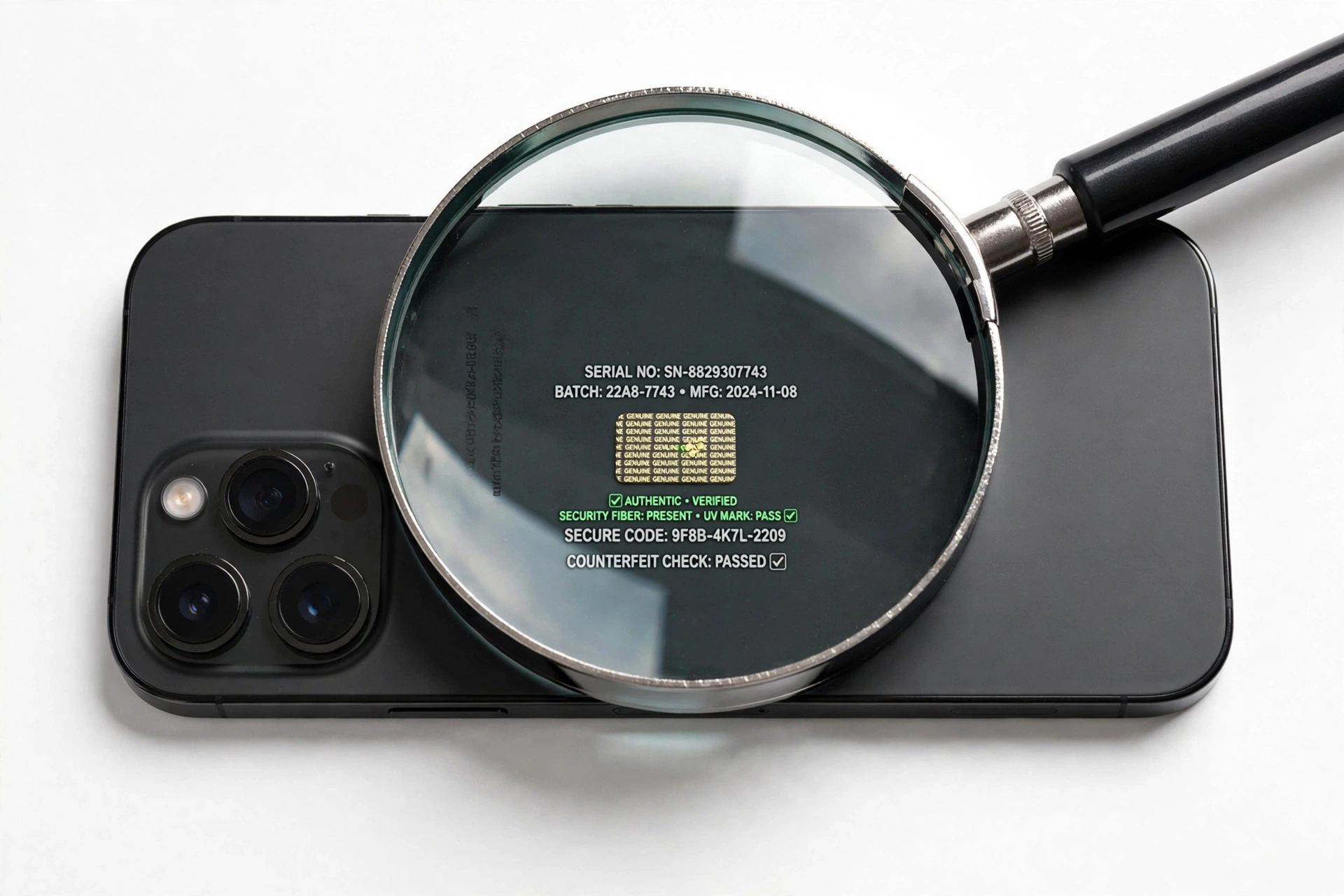
Dial *#06# to display the IMEI, then check the serial number at Apple’s official coverage lookup (checkcoverage.apple.com). This is the authoritative test because only Apple controls Apple’s records:
| Lookup outcome | What it means |
|---|---|
| Serial not found / invalid | The device is not in Apple’s records. Combined with an “iPhone 20” claim, it is counterfeit or mislabeled. |
| Resolves to a real model (e.g., iPhone 18 Pro) | You are holding that real model. The “iPhone 20” story is false. |
| Resolves to “iPhone 20” | Impossible for a genuine device — Apple has no iPhone 20 on record. The page itself would be the anomaly; do not trust it. |
Stop for safety: Check the serial on the physical phone and enter it yourself on Apple’s site. Do not use screenshots of serial numbers a seller sends you, and do not use unofficial “iPhone checker” websites — many exist to harvest IMEI numbers, and none can overrule Apple’s own records.
One honest caveat: a cloned IMEI — a genuine serial number copied onto a fake phone — will resolve to a real model on Apple’s page. That is why the serial check is one layer, not the whole verdict. The software tests in section 7 close that gap.
7. Check 3: the real-iOS tests clones cannot pass
A counterfeit phone can copy Apple’s icons. It cannot copy Apple’s servers. These tests force the phone to authenticate against Apple itself:
- App Store identity: Open the App Store and sign in with an Apple Account. Clones open a fake storefront or a browser page; only genuine iOS reaches Apple’s real App Store.
- Software Update: Go to Settings > General > Software Update. A genuine iPhone contacts Apple’s update servers. A clone shows a fake “up to date” screen or fails to connect.
- iMessage and FaceTime: Try activating both with your Apple Account. Clones cannot complete Apple’s activation handshake.
- Siri: Hold the side button and ask Siri something that requires Apple’s servers, like the weather. Clones either have no Siri or a voice assistant that answers from a script.
If a seller refuses to let you test these — “the phone isn’t activated yet,” “the SIM isn’t in” — treat the refusal as a failed test. A genuine iPhone passes them on any Wi-Fi network with no SIM installed.
8. Check 4: model numbers and the A-number test
Every iPhone Apple ships carries a model number in Apple’s A-number format (for example, the iPhone 18 Pro generation has its own assigned numbers). Ask the seller for the phone’s model number and compare it against Apple’s published model-identification list on support.apple.com.
- No A-number has been assigned to an “iPhone 20,” because Apple assigns numbers to announced products.
- A model number that resolves to an existing iPhone identifies the phone you are actually holding.
- A model number that matches nothing in Apple’s list — or a seller who cannot produce one — ends the conversation.
Also check the regulatory markings and the SIM situation against the reported record: the details reported for the anniversary device describe a radical redesign, not a re-shelled existing phone. Anything that looks exactly like a current iPhone with a new name in Settings is a current iPhone.
9. Check 5: the physical design tells — Dynamic Island versus the reported redesign
The reported (unconfirmed) design direction for the anniversary iPhone is a near-all-glass, quad-curved device with a much smaller display cutout — a hole-punch camera with under-display Face ID, moving away from the Dynamic Island. Use that reporting honestly: not as proof, but as a contradiction test.
| If the phone in hand has… | What it suggests |
|---|---|
| A full-size Dynamic Island identical to current models | It is a current-generation iPhone, not a redesigned anniversary device. |
| A notch from older generations | It is an older iPhone with doctored software. |
| Android-style navigation buttons or a mismatched font | It is a skinned Android clone. |
| Exactly the dimensions and camera layout of an iPhone 18 Pro | It is an iPhone 18 Pro — see section 10. |
Remember the direction of this test: passing it does not prove the phone is an iPhone 20 (nothing can, since none exists). Failing it proves the phone is something else.
10. The most common physical scam: a relabeled iPhone 18 Pro
When a scammer needs actual hardware to show a buyer, the cheapest convincing option is the current flagship — per reporting, the iPhone 18 Pro and 18 Pro Max launched in September 2026. A relabeled 18 Pro is genuine Apple hardware, which means it passes the serial check, the App Store test, and iMessage activation. The fraud is the name, not the phone: you would overpay for a current model dressed as a future one.
| Trait | Reported iPhone 18 Pro | Claimed “iPhone 20” |
|---|---|---|
| Chip (reported) | A20 Pro | Anything newer-sounding is invented |
| Main camera (reported) | 48MP with variable aperture | Seller claims beyond this are unverified |
| Design | Evolution of the 17 Pro chassis | Reported anniversary redesign is quad-curved glass — not this chassis |
| Apple’s records | Serial resolves to iPhone 18 Pro | No record exists |
How to catch it: run the serial check yourself (section 6). If Apple’s page says iPhone 18 Pro, you are holding an iPhone 18 Pro. Also compare the price — if the “iPhone 20” costs roughly what an 18 Pro costs, the seller is pricing the hardware they actually have.
Tip: A relabeled genuine iPhone is safe to use — it is real Apple hardware. The harm is financial: you paid a future-device premium for a current device. If you already bought one, the price difference is the dispute to raise with the seller or your payment provider.
11. Spec-laundering: how sellers fake knowledge of an unreleased phone
Watch for this three-step chain, which manufactures false credibility out of thin air:
- A rumor blog or analyst report publishes unconfirmed details (quad-curved glass, 6.96-inch display, 2027).
- Aggregator spec pages copy those details into confident-looking tables, sometimes with contradictory entries.
- A seller recites the aggregator’s table as if it were a product brief — and screenshots it as “proof.”
The rebuttal is one question: how would the seller know? Apple has not briefed any reseller on an unannounced product. A seller quoting Digital Chat Station’s reported display resolutions is demonstrating literacy in rumor coverage, not access to hardware. Treat recited specs as evidence the seller reads the same internet you do — nothing more.
Related: beware “leaked” photos and videos. The concept-trailer economy — fan-made renders on YouTube and TikTok presented as leaks — supplies the imagery for these listings. If a listing’s “photos” look like renders (perfect lighting, impossible angles, no hands, no real-world background), they are renders.
12. The four listing patterns to recognize
| Pattern | What it looks like | What it is |
|---|---|---|
| The pre-order | “Reserve your iPhone 20 today — limited allocation” | Advance-fee fraud; no product exists to allocate |
| The early unit | “Factory sample / review unit, unlocked” | Impossible — no units exist before announcement |
| The relabeled flagship | Real iPhone in hand, software says “iPhone 20” | A current iPhone (often 18 Pro) with doctored naming |
| The clone | New-in-box “iPhone 20” at a tempting price | Skinned Android; fails the real-iOS tests |
All four fail the existence test. The last two additionally fail the hands-on checks in sections 5 through 9.
13. Purchase-channel risk: where the scams concentrate
| Channel | Risk level | Why |
|---|---|---|
| Social-media marketplace listings and messaging apps | Highest | No verification, payment outside protected systems, sellers vanish |
| Classified-ad sites | High | Anonymous sellers, “too good to be true” pricing, pressure tactics |
| Small independent online stores with no track record | High | Fake pre-order pages are cheap to build |
| Established carriers and major retailers | Low | They cannot sell a product Apple has not announced |
| Apple directly (apple.com, Apple Store) | None | Apple lists only announced products |
Notice the bottom two rows: no legitimate channel can sell you an iPhone 20 today. If every legitimate channel says “this does not exist” and one seller says “I have it,” believe the channels.
14. What these checks can and cannot establish
| Question | Can these checks answer it? |
|---|---|
| Is this specific phone a genuine iPhone 20? | Yes — the answer is no. No genuine iPhone 20 exists to compare against. |
| Is this phone a genuine iPhone of some model? | Yes — the serial, iOS, and hardware tests identify the real model. |
| Will an iPhone 20 launch in 2027? | No — that is unconfirmed reporting, not a fact. Apple may change plans. |
| Will it look like the renders? | No — renders are fan art, and reported details may not survive to production. |
| Is the seller legitimate? | Partially — a seller offering an iPhone 20 today has failed the honesty test regardless of the hardware. |
15. Already bought one? What to do next
If you already paid for an “iPhone 20,” act on the evidence, not the hope:
- Identify what you actually have. Run the serial check on Apple’s site yourself. Most buyers discover a real older iPhone or an Android clone.
- Do not sign in with your Apple Account on a suspected clone. Counterfeit firmware can include spyware; signing in hands your credentials to it.
- Dispute the payment. Contact your bank or payment provider promptly. “Item not as described” and “item never existed” are strong dispute grounds — keep the listing screenshots and your messages with the seller.
- Report the listing. Report the seller to the marketplace platform and, for wire fraud, to the appropriate authorities.
Quick fact: If what you received is a relabeled genuine iPhone, you own usable hardware — the dispute is about the price premium you paid for a false name. If it is a clone, stop using it for anything sensitive; a counterfeit phone should not hold your banking apps, email, or photos.
For an in-person assessment of a suspicious device — what it really is and what it is really worth — you can visit a local repair shop. Las Vegas Phone Repair & Accessories, 7400 Las Vegas Blvd S, Unit TT42, Las Vegas, NV 89123, (424) 406-6202, can examine the device in hand; call ahead to confirm today’s hours. No shop can certify a phone as an “iPhone 20” from photos alone, and any shop that claims to should not be trusted.
16. Two hypothetical cases (illustrations, not real customers)
Hypothetical example 1 — Priya’s deposit. Priya sees an Instagram ad: “iPhone 20 pre-order — $199 deposit, ships March 2027.” She pays. The seller’s page disappears in January. There was never a product to pre-order; the existence test in section 1 would have ended this in thirty seconds. Her recourse is a payment dispute with her bank, using the ad screenshots she saved.
Hypothetical example 2 — Marcus’s marketplace “iPhone 20.” Marcus meets a seller whose phone shows “iPhone 20” in Settings. He dials *#06#, checks the serial on Apple’s coverage page himself, and it resolves to an iPhone 18 Pro. The App Store and iMessage work — because the hardware is genuine Apple. He walks away from the $1,400 asking price, which was a $400+ premium over the actual device in his hand.
17. Frequently asked questions
Has Apple announced the iPhone 20?
No. As of October 2026, Apple has not announced an iPhone 20, listed one on apple.com, or confirmed the name. Everything in circulation is unconfirmed reporting pointing to 2027.
Is Apple skipping the iPhone 19?
That is what multiple outlets report — Apple is widely expected to skip “iPhone 19” and go straight to “iPhone 20” for the 20th anniversary, mirroring the iPhone 8-to-iPhone X skip. It is reporting, not an Apple statement, and plans can change.
Can I pre-order the iPhone 20 anywhere legitimate?
No. Legitimate pre-orders open after Apple announces a product. Any “pre-order” page for an unannounced device is collecting money for nothing.
A seller showed me “leaked” photos. Are they real?
Almost certainly not. The images circulating are fan-made renders and concept videos. Real pre-release iPhone hardware does not circulate in public marketplaces.
What if the phone’s Settings screen says “iPhone 20”?
Then the software is fake. Apple has never shipped firmware containing that name. Check the serial on Apple’s own site — it will resolve to a real model or to nothing.
Could a carrier or major retailer have early units?
No. Carriers and retailers receive products after announcement, under Apple’s launch schedule. None can sell what Apple has not announced.
How is this different from the iPhone 19 guides?
The iPhone 19 is a name that may never exist at all — its guide is organized around a naming dispute. The iPhone 20 is a widely reported future device, so its guide is organized around premature-sale fraud: pre-orders, deposits, and relabeled current models.
How do I check whether a used iPhone is refurbished rather than new?
See our guide on how to check if an iPhone is refurbished, and compare against the iPhone 18 Pro authenticity guide for the current flagship that scammers most often relabel.
Video: How to check if an iPhone is original
Sources and editorial notes
- Cult of Mac — Omdia/Electronic Times reporting on the iPhone 19 skip and two-stage 2027 launch plan (iPhone 20 + 18e in H1 2027; 20 Air/Pro/Pro Max + Fold 2 in H2 2027).
- MacRumors — 20th-anniversary iPhone roundup: quad-curved display, Digital Chat Station hole-punch/under-display Face ID claims, “four-edge bending” display reports.
- Mac Observer — summary of the Omdia naming-skip report and the 2026/2027 lineup cadence.
- Gadgets360 — Omdia report details: sequential-nomenclature break for the anniversary, iPhone X parallel from 2017.
- TweakTown — Mark Gurman’s Power On reporting: curved glass edges all around, higher price, all-screen design with under-display camera.
- TheStreet — September 2027 expectation per CNET, anniversary pricing analysis.
- Digital Trends — Digital Chat Station display-size claims (6.41-inch Pro, 6.96-inch Pro Max), “iPhone 20” name unconfirmed note.
- Apple Support — official iPhone model identification guidance (referenced for the model-number check procedure).
Last source check: October 14, 2026. AI-assisted editorial guide, checked against the linked manufacturer information and press reporting. All launch details are reported, not confirmed by Apple; the central finding — that no iPhone 20 has been announced — is verifiable on apple.com and Apple’s coverage lookup. This guide does not provide financial or legal advice; payment disputes follow your provider’s process.
Let’s get you connected again.
Tell us what’s happening with your device and we’ll help you decide the safest next step — no jargon, no pressure.
Las Vegas Phone Repair & Accessories · 7400 Las Vegas Blvd S, Unit TT42, Las Vegas, NV 89123
10:00 AM–8:00 PM — call ahead to confirm today’s hours