
How to Check If OnePlus 15 Pro Is Original: Authenticity Guide
OnePlus has never announced a OnePlus 15 Pro, so any phone sold under that name today is not a genuine OnePlus 15 Pro. It is either a relabeled real OnePlus (most commonly the standard OnePlus 15) with edited software text, or a counterfeit built on generic hardware.
On this page
OnePlus has never announced a OnePlus 15 Pro, so any phone sold under that name today is not a genuine OnePlus 15 Pro.
1. The 60-second answer: does the OnePlus 15 Pro exist?
No. As of October 2026, OnePlus has officially announced and launched the standard OnePlus 15, but no OnePlus 15 Pro has ever appeared in a OnePlus press release, launch event, regulatory filing, or official spec sheet. Spec aggregator sites list a “OnePlus 15 Pro” as rumored with an unofficial expected date around October 30, 2026, and explicitly mark its status as unconfirmed. A rumored device is not a real device. (Source: 9to5google.com)
This matters because it flips how you check authenticity. With a launched phone, you compare what you hold against a real spec sheet. With the OnePlus 15 Pro, the spec sheet does not exist yet — so the existence test is the single strongest check you can run: a seller offering you a OnePlus 15 Pro right now is offering you something OnePlus has never sold.
Quick fact: The real OnePlus 15 launched in China on October 27, 2025, with a global launch in November 2025, running the Snapdragon 8 Elite Gen 5. If your “15 Pro” behaves exactly like a OnePlus 15 — same chipset, same battery size, same camera setup — it is almost certainly a standard OnePlus 15 wearing borrowed branding.
This guide is written for anyone who has been offered, bought, or is considering a phone labeled “OnePlus 15 Pro” — on a marketplace, from a street vendor, in an import shop, or as a gift. It walks you through what OnePlus has actually announced, what reporting says about the rumored model, the checks that catch relabeled devices and counterfeits, and what to do if your phone fails them.
Scope note: This guide covers the unannounced “15 Pro” specifically. For brand-wide OnePlus verification that applies to every model, see how to check if a OnePlus phone is original; for the closely related 15T — which has its own signature tell (no Alert Slider) — see how to check if a OnePlus 15T is original; and for the cross-brand camera-flagship comparison, see how to check if an Oppo Find X9 Pro is original.
2. What OnePlus has actually announced: the real OnePlus 15
Before you can spot a fake 15 Pro, you need to know what the real 15 looks like, because the most common scam is simply renaming one. The following is drawn from launch reporting — not from a rumor table — and is the baseline every “15 Pro” should be measured against.
| Feature | Reported specification | Why it matters for your check |
|---|---|---|
| Chipset | Snapdragon 8 Elite Gen 5 (3 nm) | A hardware-identifier app must report this exact chip; anything else fails the test |
| Display | 6.78-inch BOE LTPO AMOLED, 1272 × 2772 (1.5K), 1–165 Hz adaptive | A 6.82-inch or differently-specced panel is a spec mismatch worth investigating |
| Battery | 7,300 mAh silicon-carbon; 120 W wired (80 W in the US), 50 W wireless | A “15 Pro” reporting a much smaller battery is suspicious |
| Rear cameras | Triple 50 MP: Sony IMX906 main (OIS, f/1.8) + 50 MP ultrawide (OV50D) + 50 MP periscope telephoto (3.5x, OIS, f/2.8) | Anything other than three 50 MP sensors contradicts the real flagship |
| Front camera | 32 MP (Sony IMX709) | Launch reporting is consistent on 32 MP, not 50 MP |
| Software | OxygenOS 16 on Android 16 (global); ColorOS 16 on Android 16 (China) | A 15-series phone running any other skin is a red flag |
| Biometrics | Ultrasonic in-display fingerprint sensor | Optical-only or side-mounted readers contradict the flagship hardware |
| Durability | IP68/IP69 rated; Alert Slider on the side | The Alert Slider is a long-running OnePlus signature — with one caveat (see section 9) |
| Model number (China) | PKL110 | Model numbers that do not match OnePlus’s scheme deserve scrutiny |
| Memory / storage | 12 / 16 GB LPDDR5X; 256 GB / 512 GB / 1 TB UFS 4.1; no microSD slot | An 8 GB or 128 GB variant, or a microSD tray, contradicts the flagship line |
Notice what is absent: no Pro. OnePlus skipped a “Pro” suffix entirely for this generation’s announced lineup, the same way it previously consolidated around single flagship models in some years. Rumors of a Pro persist online, but a rumor page with an “unofficial” date is not a product.
3. The rumored 15 Pro: what reporting actually says
Because scammers write their fake spec sheets from the same rumor pages you can read, it helps to know exactly what those pages claim — and where they contradict each other. Every figure below is reported or expected, never confirmed, because there is no official source to confirm it against.
| Feature | What rumor sources claim | Reliability note |
|---|---|---|
| Display | 6.82-inch LTPO AMOLED, 1440 × 3168 | Consistent across aggregators, but still unconfirmed |
| Rear cameras | Triple: 50 MP + 50 MP + 200 MP (some sources); triple 50 MP (others) | Direct conflict — sources disagree, a sign no real spec sheet exists |
| Front camera | 50 MP (aggregators) vs. 32 MP (press-style rumors) | Direct conflict — the genuine 15 has 32 MP |
| Battery | 7,000 mAh silicon-carbon | Slightly smaller than the real 15’s 7,300 mAh; unconfirmed |
| Chipset | Snapdragon (model unconfirmed); press rumors say 8 Elite Gen 5 | Plausible but unconfirmed |
| Software | Android 16, OxygenOS 16 | Plausible; matches the 15 generation |
| Expected price | Around €1,200 / ₹74,999 for base variant | Unofficial estimates only |
| Status | Rumored; unofficial expected date October 30, 2026 | No OnePlus announcement — this is the decisive fact |
Quick fact: The disagreements in the table are themselves evidence. When a phone is real, every reputable source publishes the same spec sheet within hours of launch. When sources contradict each other on basics like the front camera, it means they are guessing from the same vacuum — and anyone selling you the phone is selling you the guess.
4. Instant rejects: configurations that fail on sight
You do not need a full checklist for every phone. Some configurations contradict everything known about OnePlus’s flagship line so completely that they end the investigation immediately.
- Any chip other than a Snapdragon 8-series flagship. A MediaTek chip, an older Snapdragon, or an unknown processor in a supposed 15 Pro is an instant reject.
- 8 GB of RAM or 128 GB of storage. The 15 generation starts at 12 GB / 256 GB. Budget tiers do not exist in this lineup.
- A microSD card slot or a 3.5 mm headphone jack. OnePlus flagships have neither; their presence means the underlying hardware is a different, cheaper phone.
- Anything other than three rear cameras. Two or four lenses contradict both the real 15 and every rumor of a Pro.
- A side-mounted or rear fingerprint reader. The 15 generation uses an ultrasonic in-display sensor.
- An LCD display. Every credible description of the 15 line involves AMOLED; an LCD panel means budget hardware.
- Model names like “15 Pro Max,” “15 Pro Ultra,” or “15 Pro+.” OnePlus has never used these suffixes, and no rumor mentions them either. They are invented by counterfeiters.
- No Google Play Store on a supposed global unit. Global OnePlus phones ship with full Google services. Their absence on a non-China unit is a strong counterfeit signal (China-market units legitimately differ — see section 13).
5. The 10-check authenticity worksheet
Run these in order. The first checks are free, take seconds, and catch most fakes; the later ones confirm what the early ones suggest. Mark each pass, fail, or inconclusive as you go.
| # | Check | What a pass proves | Key limitation |
|---|---|---|---|
| 0 | Existence test (section 1) | Whether the model is even real | It cannot identify what the phone actually is — the later checks do that |
| 1 | Official IMEI / warranty lookup | OnePlus’s own database recognizes the device and names its true model | A genuine but gray-market unit may show a different region; cloned IMEIs can fool it |
| 2 | Hardware-identifier app (chipset, RAM) | The actual silicon matches flagship specs, not just the software label | Requires installing an app on a phone you may not trust — see the safety note |
| 3 | OxygenOS / ColorOS version and update check | The software is genuine OnePlus software that reaches OnePlus’s update servers | Clones can skin Android to look like OxygenOS at a glance |
| 4 | Alert Slider and physical hardware tells | The body matches OnePlus design language | The 15T precedent shows newer models may drop the slider (section 9) |
| 5 | IMEI cross-match: box, tray, Settings, dialer | The identity is consistent across the whole package | A careful counterfeiter can print matching numbers |
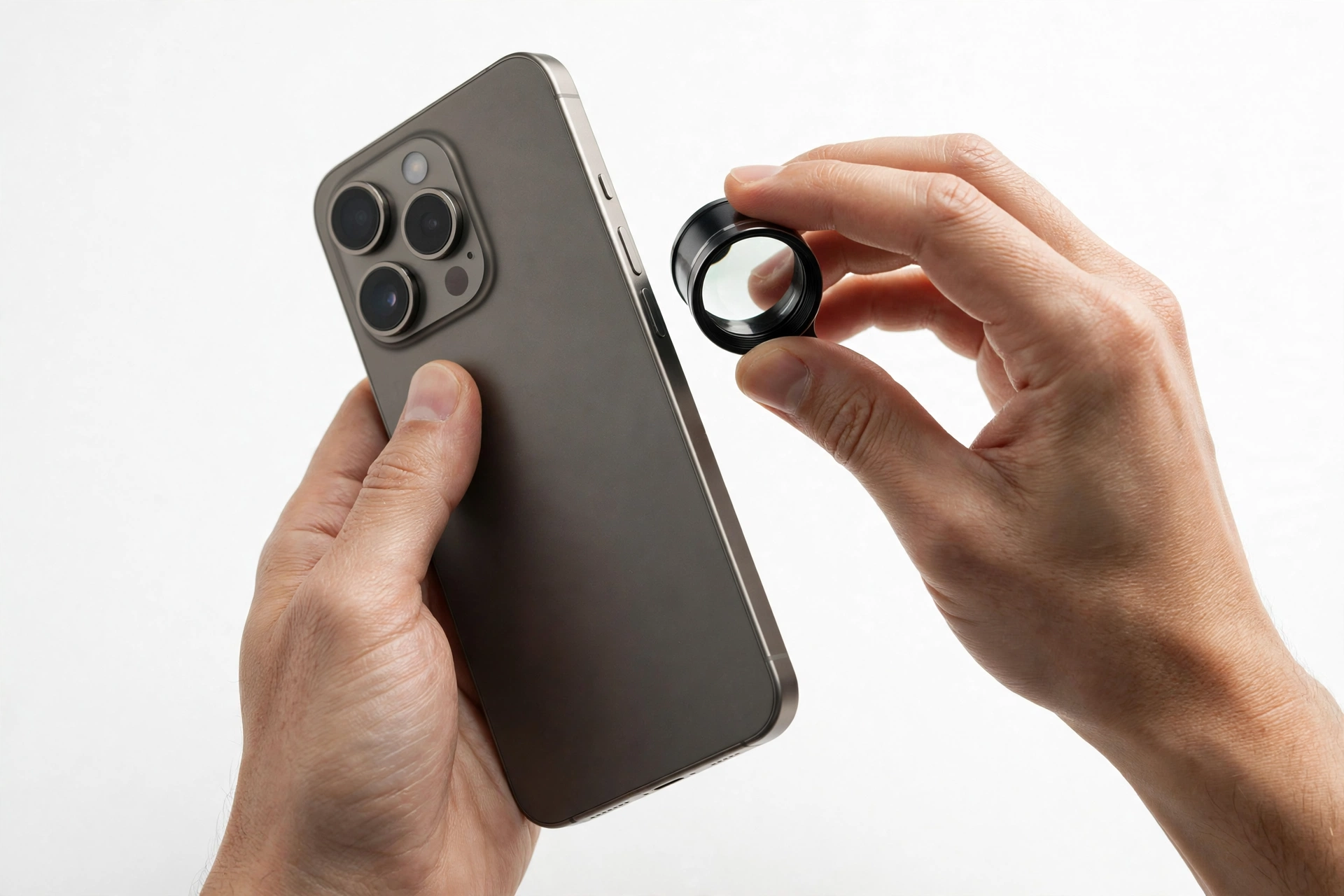
| 6 | Camera hardware test (lens cover + zoom detail) | The lenses are real, functional optics — not stickers over cheap sensors | Needs decent lighting and a few minutes |
| 7 | Play Store / Play Protect certification | Google recognizes the device as a legitimate Android build | China-market units are the legitimate exception |
| 8 | Packaging and included accessories | The unboxing matches OnePlus’s current packaging standards | Packaging is the easiest thing to fake well |
| 9 | Seller, channel, and price reality check | The transaction itself makes sense for a genuine flagship | A fair price from a bad seller is still a bad seller |
Tip: You do not need all ten to reach a verdict. Two independent fails — for example, a failed existence test plus a chipset mismatch — is enough to conclude the phone is not what the seller claims. Stop spending effort once the answer is clear.
6. Check 1: the official IMEI and warranty lookup
This is the single most authoritative check available to a buyer, because it queries OnePlus’s own records rather than anything the phone tells you about itself.
How to find the IMEI
- Open the Phone (dialer) app and enter *#06# — the IMEI appears automatically. This works on OxygenOS; note that on some OnePlus builds the dialer may behave differently, so have the Settings path as backup.
- Or go to Settings > About device > Status, where the IMEI (and a second IMEI on dual-SIM units) is listed. You can long-press to copy it.
How to use the official lookup
OnePlus operates an official warranty-check page (reached through OnePlus Support on oneplus.com). Enter the IMEI and tap Check. For a genuine device, the page returns the model name, storage variant, and activation time — with warranty status shown in green (covered) or red (expired). This is documented in independent how-to guides and matches how OnePlus’s after-sales system works.
Now the critical part for this guide: a genuine OnePlus 15 will return “OnePlus 15.” There is no “OnePlus 15 Pro” in OnePlus’s database to return, because the model does not exist. Three outcomes are possible:
- It returns “OnePlus 15” (or another real model). Your phone is genuine OnePlus hardware that has been relabeled in software. The scam is the name, not the phone — see section 11.
- It returns nothing / an error. The IMEI is not in OnePlus’s system. Combined with the existence test, this points strongly to a counterfeit.
- It returns “OnePlus 15 Pro.” Treat this with extreme skepticism. If OnePlus ever launches such a model, this guide will be outdated — but as of the last source check (October 14, 2026), no such model exists in any official OnePlus material.
Stop for safety: Never type the phone’s IMEI into a random third-party “checker” site that asks for payment, personal details, or an account. Use only OnePlus’s official support page. And never share a photo of your IMEI publicly — it can be cloned onto counterfeit phones.
7. Check 2: the chipset and hardware-identifier test
Counterfeiters edit the text in Settings > About device with ease. They cannot edit the actual silicon. A hardware-identifier app (such as CPU-Z or AIDA64, both free on the Play Store) reads the real processor, real RAM amount, and real sensor list directly from the hardware.
On a genuine 15-series device, the app must report a Snapdragon 8 Elite Gen 5 built on a 3 nm process, with 12 GB or 16 GB of RAM. Anything else — a MediaTek Dimensity, an older Snapdragon 8 Gen 2/3, 8 GB of RAM, or an “unknown” processor — means the software label is lying about the hardware underneath.
This is also the check that separates the two most common frauds:
- Relabeled OnePlus 15: the app reports a Snapdragon 8 Elite Gen 5 and 12/16 GB RAM. The hardware is genuine flagship silicon; only the model name was changed. You own a real OnePlus 15, not a 15 Pro.
- Counterfeit: the app reports mid-range or unknown hardware. The phone was built to look expensive while costing little.
Quick fact: Run this check before signing into anything. A phone you suspect is fake should not receive your Google account, your SIM, or your banking apps until it passes the checks — see the safety warning in section 16.
8. Check 3: OxygenOS signs and the update-server test
The 15 generation runs OxygenOS 16 on Android 16 for global units, and ColorOS 16 on Android 16 for China-market units. Both are correct; anything else (a generic Android skin, an older OxygenOS with the version number edited, “Android 17” in October 2026) is wrong.
The test counterfeit software fears most is the update check: go to Settings > System > System update and check for updates. Genuine OnePlus software contacts OnePlus’s update servers. Cloned software typically fails here — it either errors out, hangs, or reports the phone is “up to date” on a build number that OnePlus never released. A phone that cannot reach OnePlus’s servers is not running OnePlus’s software.
Also verify Google Play Protect certification: open the Play Store, tap your profile, and check Play Protect status. A certified, genuine build passes. Counterfeit builds commonly show as uncertified — though remember that legitimate China-market units are the exception, since they ship without Google services by design.
9. Check 4: the Alert Slider and physical hardware tells
The Alert Slider — the small three-position switch on the side that toggles silent, vibrate, and ring — has been a OnePlus signature for years, and the genuine OnePlus 15 keeps it. On a supposed 15 Pro, its presence fits OnePlus’s design language; a missing slider with a smooth, filled-in edge where one should be suggests the body came from a different phone.
One honest caveat: the OnePlus 15T, launched in China in March 2026, replaced the Alert Slider with a customizable shortcut key. That precedent means a future Pro model could legitimately drop the slider too — so treat its absence as a question mark requiring the other checks, not as a standalone verdict.
Other physical tells worth a careful look:
- Ultrasonic fingerprint behavior: the 15 generation’s in-display sensor is ultrasonic — it works without lighting up the screen brightly the way optical sensors do. A sensor that floods the screen with light during unlock is optical, contradicting flagship hardware.
- Build quality: genuine OnePlus flagships have tight seams, a metal frame, and precisely fitted camera glass. Wobbly buttons, uneven gaps, or a camera module that flexes are counterfeit hallmarks.
- Weight and balance: a 7,300 mAh-class flagship has real heft. A suspiciously light “Pro” suggests a much smaller battery inside.
10. Check 5: IMEI cross-match across box, tray, and software
A legitimate retail unit carries the same IMEI in four places: printed on the box label, on the SIM tray (or in the tray slot), in Settings > About device > Status, and via *#06#. Check all four. Mismatches — a box for one phone wrapped around another — are a classic sign of refurbished, Frankenstein, or counterfeit stock.
Two honest limitations: a careful counterfeiter can print matching numbers on a fake box, so a match is reassuring but not proof; and some legitimate regional packaging varies in what it prints. The cross-match is a supporting check, not a deciding one.
11. The most common scam: a relabeled OnePlus 15
Because the genuine OnePlus 15 is real, available, and shares the entire design language a “Pro” would plausibly have, the laziest and most common fraud is not building a fake phone at all — it is editing the software name on a real OnePlus 15 and charging a Pro premium.
| Signal | Relabeled genuine OnePlus 15 | What a true Pro would need (unconfirmed) |
|---|---|---|
| Official IMEI lookup | Returns “OnePlus 15” | Would return “OnePlus 15 Pro” — impossible today |
| Hardware-identifier app | Snapdragon 8 Elite Gen 5, 12/16 GB RAM | Would need to match whatever OnePlus eventually announces |
| About-device text | Says “15 Pro” (edited) | Would say “15 Pro” (factory) |
| Update server | Reaches OnePlus; offers 15-series builds | Would offer Pro-specific builds |
| Camera hardware | Triple 50 MP with 3.5x periscope | Rumors variously claim 200 MP telephoto — unconfirmed |
| Your verdict | Genuine phone, fraudulent listing — worth the 15’s price, not a Pro premium | Cannot exist until OnePlus announces it |
If this is your situation, the phone itself is fine — the transaction is the problem. You paid (or were asked to pay) extra for a name that adds nothing. That is a pricing dispute with the seller, and the IMEI lookup result is your evidence.
Hypothetical illustration: Amara finds a “OnePlus 15 Pro” on a marketplace at a price slightly below the real OnePlus 15. The About screen says “15 Pro,” but a hardware-identifier app reports a Snapdragon 8 Elite Gen 5 with 12 GB of RAM, and OnePlus’s official warranty lookup returns “OnePlus 15” with an activation date three months earlier. She has a genuine, relabeled OnePlus 15 — and the listing’s “Pro” premium evaporates. (The following is a hypothetical illustration, not a customer story.)
Tip: A relabeled phone may also have been rooted or flashed with modified firmware to change the displayed name. Check for root-management apps and run a Play Protect certification check — modified system software on a “new” phone is itself grounds to return it.
12. Packaging and unboxing tells
Packaging is the easiest thing for counterfeiters to fake convincingly, so treat it as supporting evidence only. Still, genuine OnePlus retail packaging of this generation follows consistent patterns: clean typography, correct OnePlus logo and red accent color, a properly sealed box, and documentation matching the region of sale. Blurry printing, misspelled words (“OnePluse,” “Oxygen0S”), generic white boxes, or chargers with the wrong plug type for your region are all bad signs.
One genuinely useful packaging check: the regulatory and model information on the box label should describe a real OnePlus model. A box that proudly labels a model OnePlus has never announced is the packaging confessing the fraud.
13. Purchase-channel risk: where fake “Pro” models appear
| Channel | Risk level | Why |
|---|---|---|
| OnePlus.com / OnePlus official store | None for this model | OnePlus does not sell a 15 Pro; you cannot buy what is not listed |
| Authorized carrier or major retailer | Very low | They sell the real 15; a “Pro” listing here would be a listing error, not a fake |
| Large marketplace (third-party seller) | High | Counterfeit and relabeled phones concentrate here; check seller history and reviews |
| Social-media / messaging-app sellers | Very high | No buyer protection, no recourse; the classic counterfeit channel |
| Street vendors / parking-lot deals | Very high | Cash transactions with no receipt and no return path |
| Overseas “wholesale” websites | Very high | Bulk counterfeit listings routinely invent Pro/Ultra variants |
A note on China-market units: a genuine China-market OnePlus runs ColorOS 16 rather than OxygenOS 16 and ships without Google services. That is legitimate regional variation, not a fake signal — but it also means a China unit being sold to you as a “global 15 Pro” is misrepresented twice over.
14. Five categories: what your “15 Pro” might actually be
| Category | What it is | How you identify it | What to do |
|---|---|---|---|
| Counterfeit | Non-OnePlus hardware in a OnePlus costume | Wrong chipset in hardware app, no Play Protect certification, update check fails, IMEI unknown to OnePlus | Return / refund; report the seller; do not use it for accounts or banking |
| Mislabeled (relabeled 15) | Genuine OnePlus 15 with edited model name | IMEI lookup returns “OnePlus 15”; hardware app shows 8 Elite Gen 5 | Dispute the price premium; the phone itself is genuine |
| Refurbished sold as new | Genuine OnePlus, previously used, reset and repackaged | IMEI lookup shows old activation date; wear under close inspection; battery health degraded | Negotiate a refurbished price or return it |
| Gray-market import | Genuine OnePlus meant for another region | ColorOS instead of OxygenOS, warranty lookup shows different region, missing local bands | Decide if the trade-offs (no local warranty, possible band gaps) are worth the price |
| Scam listing (no phone) | The “Pro” exists only in photos; nothing ships | Seller demands off-platform payment, refuses video calls, price far below market | Do not pay; report the listing |
15. What your checks can and cannot prove
Honesty about limits is part of an authenticity check. Here is what each layer of evidence actually establishes.
| Observation | What it can establish | What it cannot establish |
|---|---|---|
| No OnePlus announcement of a 15 Pro exists | That no genuine 15 Pro can currently be on sale | That OnePlus will never release one |
| IMEI lookup returns “OnePlus 15” | The hardware is a genuine OnePlus 15 | Whether the relabeling was malicious or a listing error |
| Hardware app shows wrong chipset | The phone is not 15-series hardware at all | Who built it or where |
| Update check fails | The software is not genuine OnePlus software | Whether the hardware underneath is genuine |
| IMEI lookup returns nothing | OnePlus has no record of the device | On its own, whether it is counterfeit vs. a database gap — combine with other checks |
| Everything passes except the name | You hold a genuine OnePlus 15 | That the seller will voluntarily refund the premium |
16. What to do if your phone fails the checks
Stop for safety: Do not sign into your Google account, install banking apps, or enter passwords on a phone that has failed authenticity checks. Counterfeit phones can carry pre-installed malware with system-level privileges that survives factory resets. If you already signed in, change your important passwords from a trusted device and revoke the phone’s sessions.
Step 1: Document everything
Photograph the listing, the box, the About-device screen, the hardware-app results, and the IMEI lookup result. Save all messages with the seller. This evidence is what turns a “he said, she said” dispute into a refund.
Step 2: Contact the seller in writing
State plainly what you found: OnePlus has never announced a 15 Pro; the IMEI lookup identifies the device as a OnePlus 15 (or returns nothing). Ask for a full refund or a price correction to the genuine model’s value. Keep every message — marketplaces decide disputes on written records.
Step 3: Escalate through the platform
If the seller refuses, file a “not as described” / counterfeit claim with the marketplace or your payment provider. Counterfeit and misrepresented goods are among the strongest buyer-protection categories; your screenshots of the IMEI lookup and hardware-app results are exactly the evidence these teams ask for.
Step 4: Report the listing
Report counterfeit listings to the marketplace and, for deliberate fakes, to OnePlus’s anti-counterfeit channels. This does not get your money back directly, but it protects the next buyer.
Questions to ask any seller before you buy
- Can you provide the IMEI before purchase so I can check it on OnePlus’s official warranty page?
- Is this the global version (OxygenOS) or the China version (ColorOS)?
- What is your return policy if the IMEI lookup does not return “OnePlus 15 Pro”?
- Can you show a live video of the phone running a hardware-identifier app?
A legitimate seller answers these easily. A scammer deflects, rushes you, or insists on off-platform payment — which is itself your answer.
Hypothetical illustration: Devon is offered a “OnePlus 15 Pro” in a parking-lot deal for cash, half the price of the real OnePlus 15. He asks for the IMEI to check on OnePlus’s warranty page; the seller refuses and says the deal expires in ten minutes. Devon walks away. A phone that cannot survive a 30-second IMEI check was never a bargain — it was the scam. (The following is a hypothetical illustration, not a customer story.)
If you are in the Las Vegas area and want a second opinion on a suspicious device before money changes hands, Las Vegas Phone Repair & Accessories (7400 Las Vegas Blvd S, Unit TT42, Las Vegas, NV 89123; (424) 406-6202; open 10 AM–8 PM — call ahead to confirm today’s hours) can take a look at the device with you.
17. Frequently asked questions
Is there really no OnePlus 15 Pro at all?
Correct — as of the last source check on October 14, 2026, OnePlus has never announced, launched, or published specifications for a OnePlus 15 Pro. The company announced the standard OnePlus 15 (China, October 27, 2025; global, November 2025). Everything labeled “15 Pro” online is rumor, speculation, or fraud. If OnePlus announces one in the future, the existence test in this guide flips — but the remaining checks stay valid.
Could the 15 Pro just be unannounced but real, like a secret model?
Phone makers do not secretly sell flagships. A genuine unreleased model would still appear in regulatory filings (TENAA, FCC) and supply-chain leaks months before sale, the way the real OnePlus 15 did. The “15 Pro” has none of that paper trail — only spec-aggregator pages marked “rumored.”
My phone’s About screen says “OnePlus 15 Pro.” Doesn’t that prove it?
No. The About-device text is just a software string and is trivially edited on counterfeit or relabeled phones. The hardware-identifier app (section 7) and the official IMEI lookup (section 6) read facts the software string cannot change. Trust silicon and OnePlus’s database, not the label.
What is the difference between the OnePlus 15 and the rumored 15 Pro?
The OnePlus 15 is real: Snapdragon 8 Elite Gen 5, 6.78-inch 1.5K 165 Hz display, 7,300 mAh battery, triple 50 MP cameras, OxygenOS 16. The “15 Pro” is rumored: aggregators variously claim a 6.82-inch display, a 200 MP telephoto, and a 7,000 mAh battery — but they contradict each other, and none of it is confirmed. If someone sells you the first phone under the second phone’s name, you own a real OnePlus 15 and have a pricing dispute, not a hardware problem.
Can a fake OnePlus pass the IMEI check?
Sometimes, through IMEI cloning — copying a genuine phone’s IMEI onto a counterfeit. That is why this guide layers checks: a cloned IMEI might pass the lookup while the hardware-identifier app exposes mid-range silicon underneath. No single check is bulletproof; the combination is.
I bought a China-market unit running ColorOS. Is it fake?
Not necessarily. China-market OnePlus phones legitimately run ColorOS 16 instead of OxygenOS 16 and ship without Google services. What would be fraudulent is selling you that unit as a “global 15 Pro” at a premium. Check the IMEI lookup for the true model and region, and weigh the trade-offs: no local warranty and possible missing network bands.
Should I update a suspicious phone to the latest software?
No — not until it passes the authenticity checks. Updating a counterfeit can brick it (leaving you with no phone and no evidence), and signing into accounts to perform the update exposes your data. Verify first, update second.
Where is the safest place to buy a genuine OnePlus?
OnePlus’s own store, authorized carriers, and major retailers with direct (not third-party) listings. For this specific model question, remember the decisive shortcut: no legitimate retailer can sell you a OnePlus 15 Pro, because OnePlus has never made one. Any “Pro” listing anywhere is, by definition, not from OnePlus.
Video: How to tell if your smartphone is fake or real
Sources and editorial notes
- 9to5Google — OnePlus 15 launch coverage: documents the OnePlus 15’s China launch (October 27, 2025), Snapdragon 8 Elite Gen 5, and 7,300 mAh battery.
- Android Headlines — OnePlus 15 buyer’s guide (September 2026): full reported spec breakdown of the genuine OnePlus 15 (display, cameras, charging, software).
- GizmoChina — OnePlus 15 TENAA certification: regulatory-listing details for the real OnePlus 15 (model PKL110, dimensions, RAM/storage tiers).
- MobileInto — OnePlus 15 Pro spec page: shows the “15 Pro” as rumored with unofficial expected pricing and an October 30, 2026 unofficial date; status explicitly unconfirmed.
- Gadgets360 — OnePlus 15 / Ace 6 launch details: confirms the official OnePlus 15 announcement timeline and Snapdragon 8 Elite Gen 5.
- Beebom — how to check warranty on Android phones: documents OnePlus’s official IMEI warranty-check flow (activation time, model, green/red status).
- Beebom — how to check IMEI on OnePlus phones: documents *#06# and Settings > About device > Status paths on OxygenOS.
Last source check: October 14, 2026. AI-assisted editorial guide, checked against the linked manufacturer information and launch reporting. Rumored specifications are labeled as reported or expected throughout and are not presented as confirmed. If OnePlus announces a OnePlus 15 Pro after this date, the existence test in section 1 should be re-evaluated; the remaining verification checks remain valid.
Let’s get you connected again.
Tell us what’s happening with your device and we’ll help you decide the safest next step — no jargon, no pressure.
Las Vegas Phone Repair & Accessories · 7400 Las Vegas Blvd S, Unit TT42, Las Vegas, NV 89123
10:00 AM–8:00 PM — call ahead to confirm today’s hours