
How to Check If Google Pixel 11a Is Original: Authenticity Guide
Google has not announced or released the Pixel 11a as of October 14, 2026 — so any phone being sold to you as a “Pixel 11a” today fails the existence test. Reporting points to a spring 2027 launch, which means every unit in circulation right now is either a relabeled Pixel 10a, a mislabeled listing, or an outright counterfeit. This guide shows you exactly how to tell.
On this page
Google has not announced or released the Pixel 11a as of October 14, 2026 — so any phone being sold to you as a “Pixel 11a” today fails the existence test.
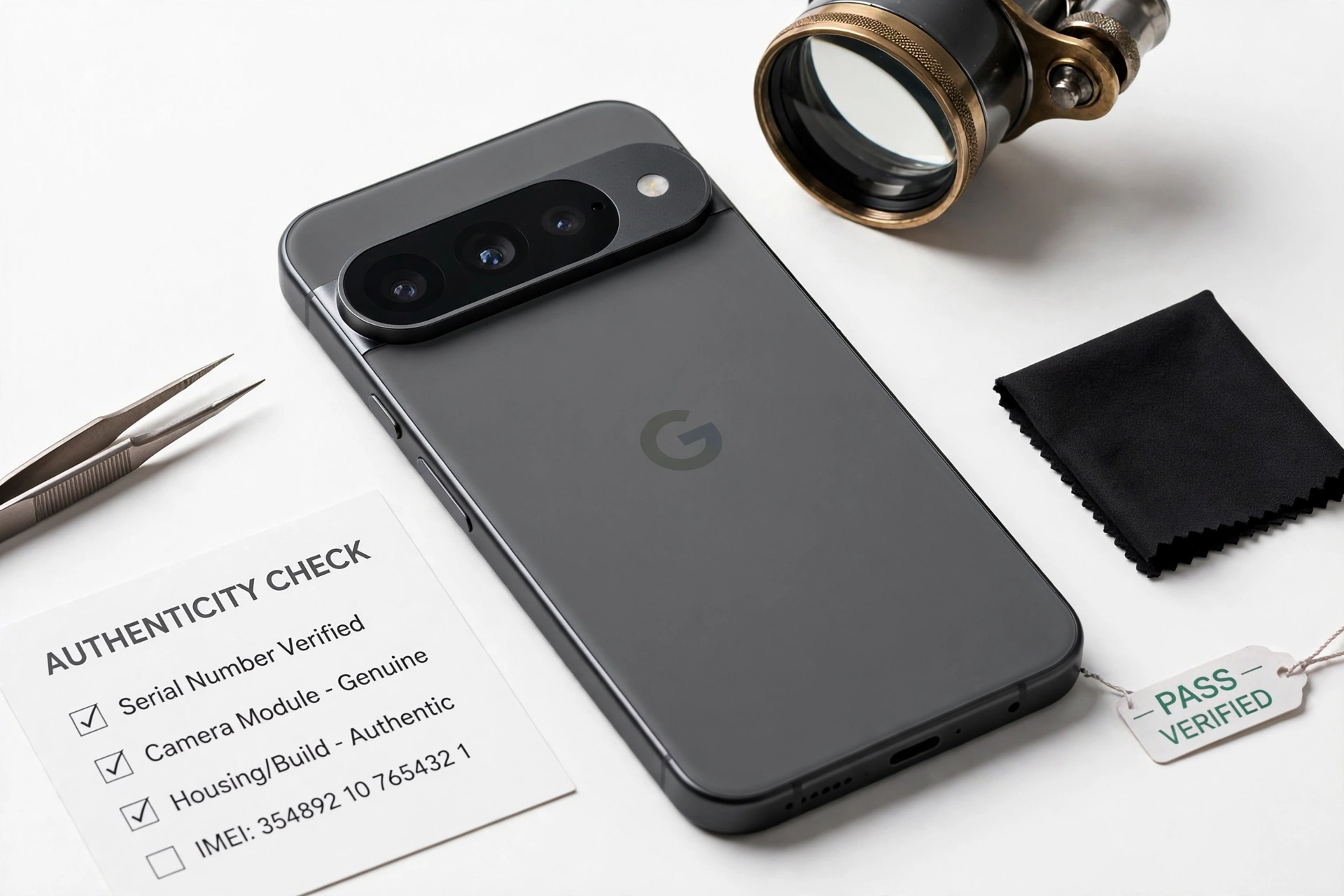
If someone is offering you a Pixel 11a — at a market stall, on a classifieds site, or even in a store that seems legitimate — you are looking at one of the highest-risk phone purchases in the current market. The device does not exist yet. That single fact is the most powerful authenticity check you will ever use, and it makes this guide simpler than most: pass the existence test first, and only then move on to the physical and software checks that catch the common scams.
1. The one-minute existence test
Before you check cameras, IMEIs, or model numbers, run this one-minute test. It settles the question in most cases. (Source: phonebunch.com)
- Ask the seller when the phone was released. Google has not announced the Pixel 11a. It has no official release date, no official price, and no official spec sheet as of October 14, 2026. If the seller claims it launched, they are wrong or lying.
- Check Google’s own channels. The device is absent from store.google.com, from Google’s Pixel Phone Help pages, and from every carrier lineup. A genuine Google phone is never sold before Google announces it.
- Compare with the reporting. Multiple outlets citing the same hardware leak (Mystic Leaks, reported by Android Headlines in July 2026, and CAD renders by @OnLeaks in September/October 2026) agree the phone is expected in Q1 2027 — February or March, following the A-series spring pattern. A phone cannot be genuine if it predates its own existence.
Quick fact: The Pixel 10a launched February 18, 2026, and the flagship Pixel 11 launched August 2026. The A-series has always arrived months after the flagship generation it descends from — never before Google announces it.
If the unit in front of you claims to be a Pixel 11a and it is October 2026 or earlier, it fails. Walk away, or keep reading to identify exactly what it really is — because that determines whether you have any recourse at all.
2. What the reporting actually says about the Pixel 11a
Since Google has published nothing, everything below is reported, not confirmed. That distinction matters: a seller who recites these “specs” as settled fact is proving they read rumor blogs, not that they hold a genuine phone. Still, the reported baseline is useful, because it tells you what a real Pixel 11a is expected to look like — and which claims instantly expose a fake.
| Spec | Reported detail | Confidence |
|---|---|---|
| Codename | “Formosan” | High — repeated across multiple leaks |
| Chipset | Tensor G6 (TSMC 2nm, codename “Malibu”) | High — the headline of the July 2026 hardware leak |
| Modem | MediaTek M90 (replacing Samsung modems) | High — same leak, widely echoed |
| Security chip | Titan M3 | Medium-high |
| Display | 6.3-inch FHD+ OLED, 120Hz, 3,350 nits peak | High — consistent across render and spec leaks |
| RAM / storage | 8GB RAM; 128GB / 256GB storage | High |
| Battery | ~4,870mAh minimum (~5,000mAh typical) | Medium — figures vary slightly between leaks |
| Rear cameras | 48MP main + 13MP ultrawide (dual) | Medium — expected, not directly leaked |
| Front camera | New sensor, codename “Dokkaebi” | Medium — from the July hardware leak |
| Dimensions | 153.46 × 72.35 × 9mm | High — from CAD-based renders |
| Colors | Obsidian, Fog, Olive, Frost (purple) | Medium — render leak; final names may change |
| Regional SKUs | GQ05X (global), GP1BL (Japan), G4XQ2 (North America) | Low-medium — single-leak origin |
| Launch window | Q1 2027 (February–March expected) | High — consistent across outlets |
| Price | ~$559–$600 (speculation) | Low — pure speculation, do not rely on it |
Tip: Use this table as a rebuttal tool, not a shopping list. If a seller’s “Pixel 11a” runs a Tensor G4, has 13MP selfie hardware, or ships in Lavender or Berry (those are Pixel 10a colors), the unit contradicts the reported baseline — and combined with the failed existence test, that is a double fail.
3. The A-series launch pattern — your timing rule
Google’s A-series has followed a predictable rhythm for four generations. The Pixel 11a is widely reported to continue it. Knowing the pattern gives you a timing rule no scammer can talk their way around.
| Model | Announced | Chipset at launch |
|---|---|---|
| Pixel 7a | May 2023 | Tensor G2 (current) |
| Pixel 8a | May 2024 | Tensor G3 (current) |
| Pixel 9a | April 2025 | Tensor G4 (current) |
| Pixel 10a | February 18, 2026 | Tensor G4 (one generation old) |
| Pixel 11a | Reported: Q1 2027, likely February–March | Reported: Tensor G6 (current) |
The timing rule is simple: no genuine Pixel 11a can exist before Google announces it, and every credible report places that announcement in early 2027. Anyone selling you one in 2026 is selling you something else with a different name on it — or a name that only exists on the box.
There is one more timing subtlety worth knowing. The Pixel 10a was unusual: it launched with the previous-generation Tensor G4 because the then-new Tensor G5 was reportedly too costly for the mid-range budget. The 11a is reported to correct this with a jump straight to the flagship Tensor G6. That makes the chipset check in section 11 especially decisive: a “Pixel 11a” running a G4 is, with near certainty, a relabeled Pixel 10a.
4. The most common scam: a relabeled Pixel 10a
When a phone that does not exist is being sold, the most deniable scam is to take a real, recent phone and rename it. The Pixel 10a is the perfect donor: it launched February 18, 2026, it is widely available, it looks nearly identical to what the 11a renders show (same rear design language since the Pixel 9a), and its specs overlap heavily with the reported 11a baseline.
Here is how the two compare on the points a buyer can actually verify:
| Check | Pixel 10a (genuine, Feb 2026) | Pixel 11a (reported, unannounced) |
|---|---|---|
| Chipset | Tensor G4 | Tensor G6 (reported) |
| Modem | Samsung | MediaTek M90 (reported) |
| Security chip | Titan M2 | Titan M3 (reported) |
| Display peak brightness | 3,000 nits | 3,350 nits (reported) |
| Front camera | 13MP | New “Dokkaebi” sensor (reported) |
| Colors | Obsidian, Fog, Lavender, Berry | Obsidian, Fog, Olive, Frost (reported) |
| Battery | 5,100mAh | ~4,870mAh min (reported) |
| Rear cameras | 48MP + 13MP | 48MP + 13MP (expected) |
The single most decisive row is the chipset. A genuine Pixel 10a runs a Tensor G4; the 11a is reported to run a Tensor G6. If the seller’s “Pixel 11a” shows Tensor G4 in its hardware info, you are holding a Pixel 10a with a new name — full stop. The colors are the second-fastest tell: Lavender and Berry were Pixel 10a launch colors, while Olive and Frost appear only in 11a render leaks. A supposed 11a in Lavender is a 10a.
Stop for safety: Never sign in to your Google account on a phone you suspect is counterfeit or relabeled. Clone firmware can include spyware that harvests credentials the moment you log in. Run all software checks without signing in, and factory-reset only after you have decided the device is legitimate — or return it without ever logging in.
5. The fake-listing pattern to watch for
Some third-party marketplace listings already advertise a “Pixel 11a” — complete with prices, color options, and delivery promises. These listings share a recognizable fingerprint, and spotting it protects you before money changes hands:
- A launch date that belongs to another phone. Some listings claim the “11a” launched on February 18, 2026 — which is the Pixel 10a’s actual announcement date. A listing that copies another model’s launch date is describing that model.
- Specs that match the 10a exactly. Tensor G4, 5,100mAh battery, 13MP front camera, Lavender/Berry colors — these are Pixel 10a specifications wearing an 11a title. The reported 11a baseline (Tensor G6, new front sensor, Olive/Frost colors) contradicts every one of them.
- Prices anchored to the 10a. The Pixel 10a launched at $499; reporting speculates the 11a could start around $559–$600 because of rising memory costs. A “brand new 11a” priced exactly at the 10a’s launch price is priced like a 10a because it is one.
- Stock photos instead of real unit photos. Since no genuine 11a exists to photograph, listings use renders, 10a photos, or generic Pixel imagery. Ask for a photo of the actual unit’s Settings > About phone screen — scammers selling mislabeled 10a units routinely refuse or go silent.
Two hypothetical illustrations show how this plays out. (The following are hypothetical illustrations, not customer stories.) Amara finds a “Pixel 11a, brand new, sealed” listing at a price slightly below retail. She asks the seller for a photo of the About phone screen; the seller sends a stock image instead and says the phone is “already packed for shipping.” Amara walks away — the refusal to show the real unit is itself the answer. Devon pays a deposit on a “pre-order” for the 11a from a social media seller. When the phone arrives, Settings shows a Tensor G4 and the box is labeled with a 10a-era color. Devon has paid 11a money for a 10a — the deposit-trap variant of the same scam.
Stop for safety: Never send a deposit or pre-order payment for a phone that has not been announced. Since the Pixel 11a does not exist yet, any “pre-order” is fraud by definition — there is nothing to pre-order, and no legitimate retailer takes money for unannounced Google hardware.
6. Check the box and retail packaging
Packaging is the easiest thing for a scammer to fake and the easiest thing for a careful buyer to read. Genuine Google packaging is consistent, minimal, and precise — counterfeit boxes almost always betray themselves in the details.
- The model name on the box. A genuine box names a real, announced product. Since the Pixel 11a is unannounced, any box printed with “Pixel 11a” is describing a product Google has never shipped — which means the box itself was printed by someone other than Google.
- Spelling, fonts, and print quality. Google’s packaging uses clean typography and sharp printing. Blurry text, inconsistent fonts, misspelled regulatory text, or a “G” logo that looks slightly off are classic counterfeit tells.
- The regulatory label. Genuine Pixel boxes carry proper regulatory markings for the region of sale. A box with no regulatory information, or with markings for a different region than where you are buying, deserves skepticism.
- The seal. Google seals its boxes in a consistent way. A resealed box — mismatched tape, double seals, or a seal that peels too easily — suggests the contents were swapped, which is exactly how a 10a becomes an “11a.”
- What is inside. Google’s in-box contents are documented for every model. Extra “free gifts,” missing documentation, or a charger that does not match Google’s regional standard are all worth noting.
One more packaging check specific to this scam: scan the QR code on the bottom edge of the box, if present. Google’s device-authenticity flow (described in section 8) can confirm whether the IMEI on the box corresponds to a genuine, unactivated device. If the box’s IMEI does not verify, the box is not Google’s.
7. Check the software identity
The software identity is where relabeled phones die. A scammer can print any name on a box and stick any label on a back panel, but the phone’s own Settings screens report what the firmware believes the hardware to be — and firmware built for a real Pixel 10a will say so.
- Settings > About phone > Model. A genuine Pixel reports its exact model name. A relabeled 10a will show Pixel 10a identifiers. No genuine Pixel 11a firmware exists, so nothing legitimate can display “Pixel 11a” here — if the screen does show it, the firmware has been tampered with, which is itself proof of fraud.
- Android version and build number. The Pixel 10a shipped with Android 16. The 11a is reported to launch on Android 17. A supposed 11a running Android 16 with a 10a-era build number is a 10a.
- Settings > About phone > Android version > Model & hardware. Cross-check the hardware revision against Google’s published specs for the 10a.
- The setup experience. Genuine Pixels boot into Google’s standard setup flow. A device that boots into a modified setup, shows unfamiliar branding, or asks for unusual permissions during setup is running non-Google firmware.
- System updates. Go to Settings > System > Software updates. A genuine Pixel reaches Google’s update servers. A counterfeit or heavily modified device often fails to check for updates, shows an error, or claims to be “up to date” on an ancient security patch.
Quick fact: Google’s Pixel update policy for the A-series is seven years of OS and security updates. A supposed 11a whose update screen shows an end-of-support date consistent with the 10a’s February 2026 launch is telling you its real identity.
8. Check the IMEI with Google
The IMEI check is the closest thing to an authoritative verdict, because it consults Google’s own records rather than anything printed on the device or its box.
- Find the IMEI without trusting the box. Dial
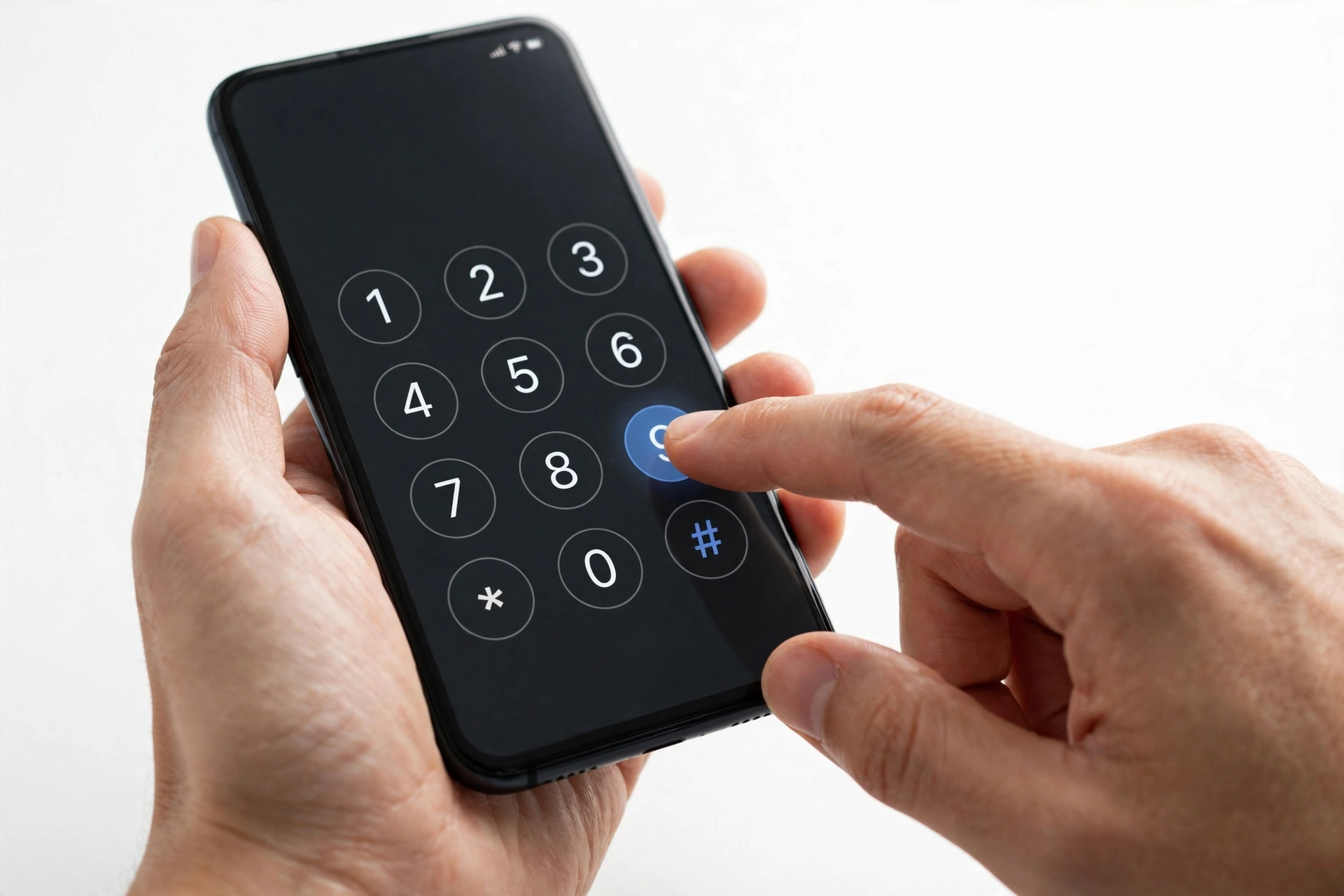
*#06#on the phone itself, or go to Settings > About phone and read the IMEI there. Compare it with the IMEI printed on the box and on the SIM tray — all three should match. A mismatch means parts were swapped. - Google’s Warranty Helper. Google offers a Warranty Helper that lists devices associated with your Google account and shows warranty start and expiration dates. A genuine Pixel purchased through proper channels appears here.
- store.google.com/my-devices and the repair portal. Google’s own support documentation directs users to enter their IMEI at the Google Store’s My Devices page or repair portal to check warranty eligibility. If Google’s system does not recognize the IMEI, the device did not come through Google’s supply chain.
- The device-authenticity URL. Google’s authenticity flow at store.google.com/device-authenticity accepts an IMEI and reports whether the device is genuine and unactivated. This is the single strongest remote check available to a buyer.
- Settings > Device health & support > Warranty. On recent Pixel software (Android 16 and later), the warranty status is visible directly in Settings, showing a coverage indicator and end date without visiting any website.
Stop for safety: Never enter a phone’s IMEI on unofficial “IMEI checker” websites. Many of these sites exist to harvest IMEIs, which can then be cloned onto counterfeit devices. Use only Google’s own pages — store.google.com and support.google.com — for IMEI verification.
One honest limitation: a relabeled genuine Pixel 10a will pass Google’s IMEI check, because it genuinely is a Google phone — just not the model on the box. The IMEI check catches counterfeits and grey-market units; the chipset, color, and software-identity checks in the surrounding sections catch the relabeled 10a. You need both layers.
9. Check the cameras
Camera hardware is difficult to fake convincingly, and the reported 11a camera setup gives you concrete tests — even though the rear sensors are expected to carry over from the 10a.
- The rear pair: 48MP main + 13MP ultrawide. Both the Pixel 10a and the reported 11a use this combination, so the rear cameras alone cannot separate them. But a supposed 11a with a different rear configuration — a third lens, a telephoto, or different megapixel counts — contradicts the reported baseline and fails.
- The EXIF test. Take a photo at full resolution and inspect its EXIF data (any EXIF viewer app works). A genuine 48MP main sensor produces images around 8,000 × 6,000 pixels. Counterfeit phones routinely interpolate smaller sensors up to fake megapixel counts — the EXIF dimensions expose the lie.
- The front camera is the reported differentiator. The Pixel 10a has a 13MP front camera; the 11a is reported to carry a new sensor codenamed “Dokkaebi.” A hardware-info app that reports the front sensor as the 10a’s known 13MP unit points to a relabeled 10a. (Treat third-party hardware apps as supporting evidence, not a lone verdict — see section 15.)
- Google Camera behavior. Genuine Pixels run Google’s camera software with its characteristic processing. A supposed Pixel whose camera app looks generic, lacks Night Sight and other Pixel signature modes, or processes photos slowly and poorly is not running Google’s camera stack.
For a deeper walkthrough of Pixel-specific authenticity checks, see our guide to checking if a Google Pixel is original, our Pixel 10 authenticity guide, and our Pixel 11 authenticity guide.
10. Check the chipset and modem
This is the technical heart of the guide. The Tensor G4-to-G6 jump is the single biggest reported change between the 10a and the 11a, and it is verifiable on the device.
- Tensor G6 vs. Tensor G4. A hardware-info app (or the kernel version string in Settings > About phone) reveals the actual SoC. Tensor G4 = Pixel 10a (or older). The 11a is reported to use the Tensor G6 — a TSMC 2nm part. A “Pixel 11a” reporting a G4 is a relabeled 10a, full stop.
- The modem: MediaTek M90 vs. Samsung. The July 2026 hardware leak’s most celebrated detail is the switch from Samsung Exynos modems (used since the Pixel 6 generation, long criticized for weak signal and battery drain) to MediaTek’s M90. Modem identification requires deeper inspection, but its presence or absence corroborates the chipset reading.
- Titan M2 vs. Titan M3. The 10a carries the Titan M2 security chip; the 11a is reported to move to Titan M3. Another corroborating data point, not a standalone verdict.
- Performance reality check. The G6 is reported to be a large generational leap over the G4. If the seller lets you run a benchmark, scores in line with 2024-era Tensor G4 performance contradict the 11a claim. (Benchmarks vary by conditions — use as supporting evidence only.)
| Component | Pixel 10a (verified) | Pixel 11a (reported) | What a mismatch means |
|---|---|---|---|
| SoC | Tensor G4 (4nm) | Tensor G6 (2nm) | G4 reading = relabeled 10a |
| Modem | Samsung | MediaTek M90 | Samsung modem corroborates 10a |
| Security chip | Titan M2 | Titan M3 | M2 corroborates 10a |
| RAM | 8GB | 8GB (reported) | No separation — both 8GB |
11. Check the model numbers
Every genuine Pixel ships with regulatory model numbers that identify its region and variant. The reported 11a SKUs — GQ05X (global), GP1BL (Japan), G4XQ2 (North America) — come from a single leak and should be treated with appropriate caution. Still, the model-number check has real power in the negative direction:
- Find the model number in Settings > About phone > Model, and on the regulatory label (Settings > About phone > Regulatory labels).
- Compare against known 10a model numbers. If the number matches a documented Pixel 10a variant, the phone is a 10a regardless of what the box says.
- Be skeptical of unfamiliar numbers. A model number that appears in no regulatory database and no Google documentation is more likely invented than genuine — Google registers its model numbers with regulators before sale.
- Region consistency. The model number’s region should match where you are buying the phone and the regulatory markings on the box. A “North America” SKU in a market Google does not serve, with mismatched box markings, is a red flag.
Tip: Because the 11a SKUs come from a single leak, do not treat a matching model number as proof of genuineness. Treat a mismatching number — especially one matching the 10a — as strong evidence of relabeling. Absence of evidence is not evidence of absence, but presence of the wrong evidence is decisive.
12. Check the colors
Color is a fast, no-tools check. The Pixel 10a launched in Obsidian, Fog, Lavender, and Berry. The 11a render leak reports Obsidian, Fog, Olive, and Frost (a purple shade) — with the caveat that final commercial color names may change.
- Lavender or Berry = Pixel 10a. These two colors belong to the 10a’s launch palette and do not appear in any 11a reporting. A supposed 11a in Lavender or Berry is a 10a.
- Olive or Frost = consistent with reporting, not proof. If the eventual 11a really ships in these colors, a matching unit is consistent with the leaks — but renders are not a spec sheet, and a counterfeiter can paint a phone any color. Treat as supporting evidence only.
- Obsidian or Fog = no separation. Both palettes reportedly include black and silver-grey, so these colors tell you nothing either way.
- Finish quality. The 10a uses a plastic back with an aluminum frame. Counterfeit housings often feel wrong — sharp edges, loose seams, or a back panel that flexes. Compare against a known-genuine Pixel if you can.
13. Purchase-channel risk
Where you buy matters as much as what you check. Not all channels carry equal risk, and for an unannounced phone the channel is often the whole story.
| Channel | Risk level | Why |
|---|---|---|
| Google Store / authorized carrier | None | They cannot sell a phone Google has not announced; the listing would not exist |
| Major authorized retailer | None | Same reason — no legitimate retailer stocks unannounced hardware |
| Established online marketplace (sold by platform) | Very high | Third-party sellers can list anything; platform enforcement is reactive |
| Classifieds / social media sellers | Extreme | No verification, no returns, deposit-trap capital of the phone world |
| Market stall / street vendor | Extreme | Cash transactions, no receipts, the seller is gone tomorrow |
| “Pre-order” from any unofficial source | Certain fraud | There is nothing to pre-order; the product does not exist |
The pattern is stark: every legitimate channel has zero Pixel 11a units, because the phone does not exist yet. That means 100% of current “Pixel 11a” offers come from high-risk or fraudulent channels. The channel table is not about finding a safe place to buy one — it is about recognizing that no safe place to buy one exists.
14. The 10-check worksheet
Run through this worksheet in order. Stop at the first hard fail — you do not need to complete the list once the verdict is clear.
| # | Check | Pass | Fail |
|---|---|---|---|
| 1 | Existence: has Google announced the 11a? | N/A — as of Oct 2026, no | Any unit offered now fails |
| 2 | Seller’s claimed launch date | Matches a real Google announcement | Feb 18, 2026 (that’s the 10a) or any 2026 date |
| 3 | Chipset (hardware info) | Tensor G6 (reported) | Tensor G4 = relabeled 10a |
| 4 | Colors | Consistent with reporting | Lavender / Berry = 10a |
| 5 | Settings > About phone model | Consistent identity | Shows Pixel 10a identifiers |
| 6 | Android version / build | Android 17-era build (reported) | Android 16 with 10a build number |
| 7 | IMEI via Google’s authenticity flow | Recognized as genuine | Unrecognized, or recognized as 10a-era |
| 8 | IMEI match (dialer vs. box vs. tray) | All three match | Any mismatch = swapped parts |
| 9 | Camera EXIF (48MP ≈ 8,000 × 6,000 px) | Matches sensor spec | Interpolated / wrong dimensions |
| 10 | Box print quality and seals | Sharp, consistent, properly sealed | Blurry print, resealed, wrong region marks |
Tip: Checks 1–4 can be done before you ever touch the phone — from the listing alone. If a listing fails there, do not arrange a meeting or send any payment. The remaining checks are for the rare case where the first four are somehow inconclusive.
15. What these checks can and cannot establish
Honesty about the limits of your checks is what separates a useful guide from a false sense of security.
| Observation | Establishes | Does not establish |
|---|---|---|
| Phone fails the existence test | It is not a genuine Pixel 11a | — |
| Chipset reads Tensor G4 | It is (or contains) 10a-era hardware | Whether the seller knew it was mislabeled |
| IMEI verifies with Google | The IMEI belongs to a genuine Google device | That the device is an 11a (a relabeled 10a passes) |
| IMEI does not verify | Counterfeit or grey-market unit | Which factory made it |
| Box looks perfect | Nothing by itself | Genuineness — boxes are the easiest part to fake |
| Seller refuses About-phone photo | High probability of fraud | The phone’s actual identity |
| All checks pass | Consistency with reporting | Genuineness — no genuine unit exists to compare against |
The last row deserves emphasis: right now, no combination of checks can prove a Pixel 11a is genuine, because there is no genuine article. The checks in this guide are elimination tools. They are excellent at proving a phone is not an 11a, which is exactly what you need while the device remains unannounced. After Google actually launches it, this guide’s framework — existence first, then software identity, then IMEI, then hardware tells — will still apply, with the reported specs replaced by Google’s official ones.
16. If you already bought a supposed Pixel 11a
If the phone is already in your hands and you now suspect it is not what was advertised, act quickly and in this order:
- Do not sign in. If you have not yet logged into your Google account on the device, do not start now. If you already have, change your Google password from a trusted device and review your account’s security activity.
- Document everything. Photograph the box, the About phone screen, the IMEI screens, the listing or advertisement, and all communications with the seller. You will need this for any dispute.
- Identify what you actually have. Run the chipset, color, and software-identity checks above. If it is a genuine Pixel 10a, it is still a usable phone — worth roughly the 10a’s market value, not what you paid for an 11a.
- Seek a refund through the payment channel. Credit card chargebacks and marketplace buyer-protection programs are far more effective than arguing with the seller. “Item not as described” is straightforward here: the described item does not exist.
- Report the listing. Report fraudulent listings to the marketplace platform and, for systematic fraud, to your local consumer protection authority.
- Get an independent assessment. If you need a professional opinion on what the device actually is — for a dispute or just peace of mind — Las Vegas Phone Repair & Accessories, 7400 Las Vegas Blvd S, Unit TT42, Las Vegas, NV 89123, (424) 406-6202, can examine the device in person. Call ahead to confirm today’s hours.
17. Frequently asked questions
Has Google announced the Pixel 11a?
No. As of October 14, 2026, Google has not announced the Pixel 11a. It is absent from the Google Store, Google’s support pages, and all carrier lineups. Reporting — including CAD renders and a hardware spec leak — points to an expected launch in Q1 2027, likely February or March.
What is the Pixel 11a’s codename?
Reporting identifies the internal codename as “Formosan.” Codenames come from leaks, not Google, so treat this as reported rather than confirmed — but it is consistent across the render leak and the hardware spec leak.
Will the Pixel 11a have the Tensor G6?
That is what the July 2026 hardware leak reports: a jump straight to the flagship Tensor G6 (TSMC 2nm), skipping the G5 entirely, paired with a MediaTek M90 modem and Titan M3 security chip. This would correct the Pixel 10a’s much-criticized use of the older Tensor G4. As with all leak details, it is reported, not confirmed.
How much will the Pixel 11a cost?
No official price exists. Speculation in the reporting suggests roughly $559–$600, up from the 10a’s $499 launch price, driven by rising memory costs — the same pressure that reportedly pushed the Pixel 11 lineup’s prices up. Treat any “confirmed price” you see online as speculation.
Can I pre-order the Pixel 11a?
No — and anyone taking your pre-order money is defrauding you. There is no official pre-order program for an unannounced phone. Google, carriers, and authorized retailers will announce pre-orders only after the official unveiling, which reporting places in early 2027.
A seller showed me a Pixel 11a box with a valid IMEI. Is it genuine?
Probably not. A box is the easiest part to fake, and an IMEI printed on a box proves nothing about the phone inside it. Run Google’s device-authenticity check on the IMEI from the phone itself (dial *#06#), and remember that a relabeled genuine Pixel 10a will pass an IMEI check while still not being an 11a. The chipset and software-identity checks are what catch that scam.
What is the most common Pixel 11a scam right now?
A relabeled Pixel 10a. The 10a launched February 18, 2026, looks nearly identical to the 11a renders, and shares the 48MP + 13MP rear cameras and 8GB RAM. The giveaways are the Tensor G4 chipset (the 11a is reported to use Tensor G6), the Titan M2 security chip, and 10a-exclusive colors Lavender and Berry.
When will this guide be updated after the real launch?
Once Google officially announces the Pixel 11a, the reported specs in this guide should be replaced with Google’s official specifications, and the existence test flips from “it cannot exist” to “verify it against the official baseline.” Until then, the elimination framework here — existence first, software identity second, IMEI third — remains the correct approach.
Video: How to tell if your smartphone is fake or real
Sources and editorial notes
- PhoneBunch — CAD renders, dimensions (153.46 × 72.35 × 9mm), reported colors, Tensor G6 / Titan M3 reporting, Q1 2027 launch expectation.
- Tech Advisor — A-series launch history (7a May 2023 through 10a February 2026), spring 2027 launch expectation, price speculation.
- Beebom Gadgets — render analysis, Tensor G6 and MediaTek modem reporting, $559 price speculation, Feb/Mar 2027 launch window.
- WebProNews — Mystic Leaks hardware details via Digital Trends (July 18, 2026): Tensor G6, MediaTek M90 modem, display brightness figures.
- Memeburn — 10a vs. reported 11a comparison table, binned-chip reporting, 8GB RAM / Gemini discussion.
- FoneArena — @OnLeaks renders, codename “Formosan,” 8GB RAM / 128–256GB storage reporting, Q1 2027 launch.
- droid.tools — spec table comparing 9a / 10a / reported 11a / Pixel 11; color predictions.
- Android Headlines — July 2026 hardware spec leak: Tensor G6, MediaTek M90, Titan M3, “dokkaebi” front camera, regional SKUs.
- PhoneArena — Pixel 10a specifications and February 18, 2026 launch (baseline for the relabeled-10a comparison).
- Techlusive — Pixel 10a launch reporting: Tensor G4, 48MP + 13MP cameras, $499 price.
- Google Pixel Phone Help — official warranty/IMEI check flow via store.google.com/my-devices and the repair portal.
- TechFeatured — Pixel 10a mid-cycle price increase reporting (memory-cost context for 11a price speculation).
Last source check: October 14, 2026. AI-assisted editorial guide, checked against the linked manufacturer information. Launch details for the Pixel 11a are reported by third-party outlets, not confirmed by Google — all unconfirmed specifications, dates, and prices in this guide are framed as reported. Google’s IMEI and warranty verification flows are documented from Google’s official support pages. If Google announces the Pixel 11a, the reported baseline in this guide should be replaced with Google’s official specifications.
Let’s get you connected again.
Tell us what’s happening with your device and we’ll help you decide the safest next step — no jargon, no pressure.
Las Vegas Phone Repair & Accessories · 7400 Las Vegas Blvd S, Unit TT42, Las Vegas, NV 89123
10:00 AM–8:00 PM — call ahead to confirm today’s hours