
Samsung Galaxy Watch 9: Rumors, Expected Features and What to Know
The Samsung Galaxy Watch 9 reportedly launched in July 2026 with a Snapdragon chip, bigger batteries, and AI health scores — and if the rumor mill is any guide, early leaks got several details wrong. This guide separates what was rumored from what launch reporting says actually shipped, so Watch 8 owners can decide whether the upgrade is worth it.
On this page
The Samsung Galaxy Watch 9 reportedly launched in July 2026 with a Snapdragon chip, bigger batteries, and AI health scores — and if the rumor mill is any guide, early leaks got several details wrong.
1. Who this guide is for
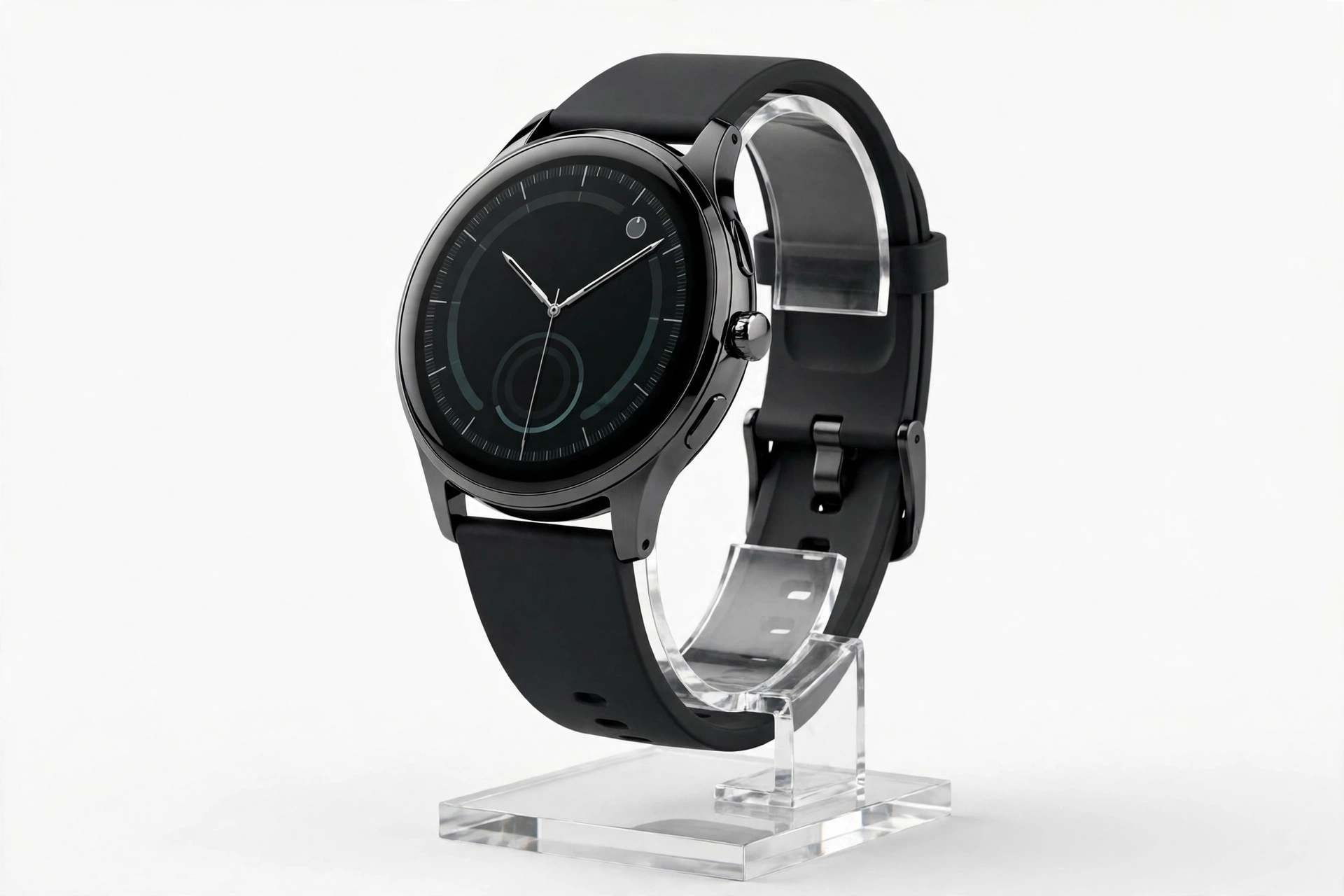
This guide is for anyone tracking the Galaxy Watch 9 — prospective buyers comparing it against the Watch 8, current Watch 8 owners wondering whether to upgrade, and Watch 7 or earlier owners deciding whether this is finally their generation to jump. It is written around reported information, because the detailed picture we have comes from press reporting on Samsung’s launch rather than long-term independent testing. (Source: en.wikipedia.org)
It is not the same as the Galaxy Watch 8 owner guide (which covers the 2025 model in depth) or the Galaxy Watch 7 guide. It also is not a repair manual — the Watch 9 is a sealed device, and hands-on help is framed as assessment, not DIY service. If you have screen trouble on an older Galaxy Watch, the Galaxy Watch screen issues assessment guide is the right starting point.
2. At a glance: what was rumored vs. what launch reporting says
The Galaxy Watch 9 was, by rumor standards, a fairly predictable launch. Leaks traced a coherent picture for months before Samsung confirmed it: two sizes, a new Qualcomm chip, bigger batteries, and a software push built around AI health scores. Launch reporting then corrected a few notable details the rumor mill had gotten wrong — most visibly the battery size and the chip strategy.
| Detail | What launch reporting says |
|---|---|
| Announcement | Galaxy Unpacked, London, July 22, 2026 (reported) |
| On sale | August 7, 2026 (reported) |
| Sizes | 40 mm and 44 mm (reported) |
| Chip | Snapdragon Wear Elite (SDW6100), 3 nm (reported) |
| Memory / storage | 2 GB RAM, 32 GB storage (reported) |
| Battery | 390 mAh (40 mm); 445 mAh (44 mm) (reported) |
| Display | Super AMOLED, 3,000 nits peak, sapphire crystal (reported) |
| Software | Wear OS 7 / One UI 9 Watch; 5 years of updates (reported) |
| Durability | IP68, 5 ATM, MIL-STD-810H (reported) |
| Colors | Cream, Graphite (40 mm); Graphite, Silver (44 mm) (reported) |
| Starting price | $379.99 (reported) |
3. Timeline: from rumor to reality
The Watch 9’s rumor cycle followed a familiar Samsung rhythm. Early in 2026, renders and software details circulated; in June 2026, both watches passed FCC certification alongside the Galaxy Z Fold 8 and Z Flip 8 (reported). In July 2026, Samsung published teaser videos describing the Watch 9 as a “health-first, always-on gateway for advanced, personalized AI” (reported), and the day before launch, full specifications and European pricing were reported by Roland Quandt of WinFuture (reported).
On July 22, 2026, Samsung announced the Watch 9 and the Galaxy Watch Ultra 2 together in London (reported). Pre-orders opened that day in most markets, with general availability from August 7, 2026 (reported). The rumor phase ended with an unusual scorecard: the leaks were broadly right on the shape of the launch but wrong on two of the most-discussed hardware details, as the next sections explain.
4. The Snapdragon switch: the real story of the Watch 9
The single most consequential change in the Watch 9 is the processor. Samsung reportedly replaced its in-house Exynos W1000 — the chip that powered the Watch 8 — with the Qualcomm Snapdragon Wear Elite (SDW6100), a 3 nm platform with a five-core CPU (one Cortex-A78C core at 2.1 GHz plus four Cortex-A55 cores at 1.95 GHz) and an Adreno A622 GPU (reported). This is reportedly the first Galaxy Watch to run on Qualcomm silicon.
Why does this matter to a buyer? The chip is the foundation of the watch’s two headline claims: on-device AI processing for the new health scores, and improved efficiency that supports the bigger batteries (reported). Pre-release reporting was split on the chip question — several outlets expected Samsung to retain a split Exynos/Snapdragon strategy, with Exynos on the standard Watch 9 and Snapdragon on the Ultra 2 — and the launch specification sheet confirmed Snapdragon across both models (reported). That correction is worth remembering when reading early-2026 leaks: they were written when the chip decision was genuinely uncertain.
Quick facts: the Snapdragon Wear Elite is reported as a 3 nm chip with on-device AI capability. Reported battery gains (390 mAh on the 40 mm, up 20%) are a hardware change, not something a software update can give the Watch 8.
5. Battery: the 20% bump that the leaks missed
Battery life is the complaint that defines the smartwatch category, and it is where the rumor mill embarrassed itself. Coverage in early July 2026 stated that the 40 mm Watch 9 would carry a 325 mAh battery — identical to the Watch 8 — and several outlets repeated it (reported). The official specification sheet instead confirmed a 390 mAh cell, a 20% increase (reported). The 44 mm moved from 435 mAh to 445 mAh, a much smaller bump (reported).
Reported endurance figures hover around 30 hours with the always-on display active on the 40 mm model and up to 34 hours on the 44 mm (reported), with fast wireless charging at 10 W reportedly filling the watch in about 45 minutes (reported). Treat those endurance numbers as reported figures from early coverage, not independently verified test results — real-world battery life depends heavily on always-on display use, LTE connectivity, GPS exercise tracking, and sleep monitoring, all of which drain at very different rates.
6. Health: AI scores, Hearing Health, and honest screening framing
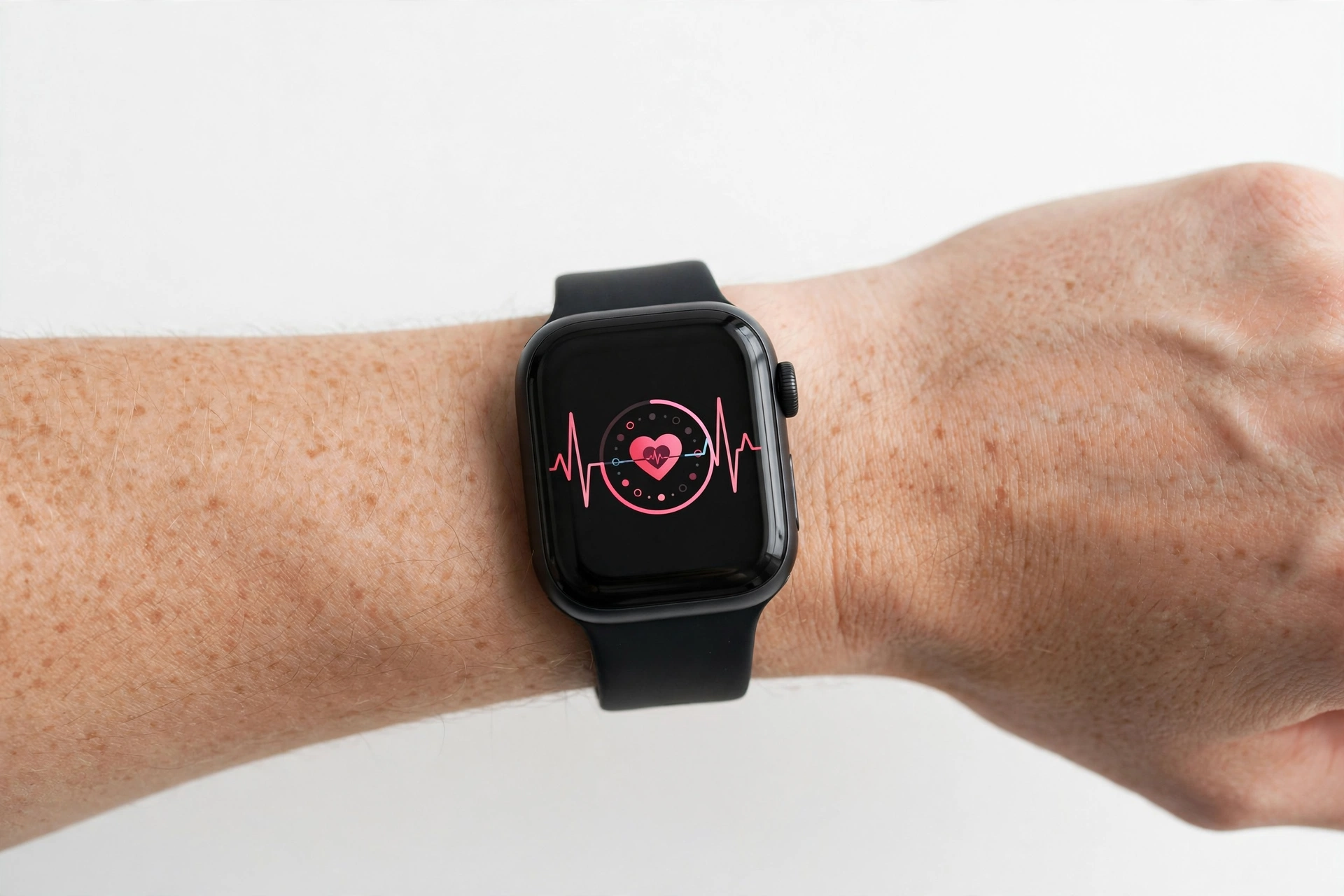
Where the hardware changed modestly, the health story changed loudly. The Watch 9’s headline features are a suite of AI-driven health scores rather than new sensors. The Heart Health Score reportedly combines activity, sleep, body composition, and stress trends into a single cardiovascular snapshot (reported). A Fitness Index reportedly measures aerobic capacity across five criteria — strength, flexibility, endurance, cardio, and body composition — and compares the result against other Samsung Health users of the same age and gender (reported). A Cardio Load metric reportedly balances exercise data with recovery signals like resting heart rate and sleep to suggest whether today should be a training day or a rest day (reported).
The genuinely new hardware-adjacent feature is Hearing Health: the Watch 9 is reportedly the first Galaxy Watch to monitor ambient noise levels and earbud volume exposure, warning when exposure risks long-term hearing damage (reported). The upgraded Sleep Apnea feature reportedly analyzes breathing disruptions per hour with an AI algorithm and categorizes them into three levels (reported) — and it is worth noting that the underlying sleep-apnea detection capability earned Samsung the world’s first De Novo authorization from the U.S. Food and Drug Administration in 2024 (reported).
Stop for safety: health scores are screening tools, not medical diagnoses. A “good” score does not rule out a condition, and a worrying score is a reason to see a clinician, not to self-diagnose. Never adjust medication or ignore symptoms because a watch gave you a number.
7. Software: Wear OS 7, One UI 9 Watch, and five years of updates
The Watch 9 reportedly ships with Wear OS 7 under Samsung’s One UI 9 Watch, bringing new first-party watch faces, improved stock apps, and enhancements to the Now Bar (reported). It can reportedly control aspects of Samsung’s first AI smart glasses (reported) — a sign of where Samsung sees the watch fitting into a wider wearable ecosystem.
The more durable software news is the update policy: Samsung reportedly offers five major Wear OS upgrades plus security updates for up to five years on the Watch 9 (reported), up from four years on the Watch 8. For a device category where software support has historically been short, that extra year matters for resale value and long-term security.
Here is the uncomfortable part for Watch 9 marketing: most of the software story already landed on the Watch 8. Reporting notes that the Watch 8 received the Galaxy AI health software update in June 2026 (reported), so much of what is new in the Watch 9’s software experience is available on the older watch for free. The hardware arguments for the Watch 9 — the Snapdragon chip, the 40 mm battery bump, Bluetooth 6.0, and Hearing Health — are the real differentiators (reported).
8. Design, display, and durability
The Watch 9 looks, by most accounts, nearly identical to the Watch 8 — Samsung’s design team clearly considered the previous look finished. Both sizes reportedly keep Super AMOLED displays at 3,000 nits peak brightness with sapphire crystal protection: 1.34 inches (438×438) on the 40 mm and 1.47 inches (480×480) on the 44 mm (reported). The case is reportedly a slimmer Armor Aluminum 2 design at 8.6 mm thick, with a new air-pocket band structure meant to improve all-day comfort (reported).
Durability ratings carry over at IP68 dust resistance, 5 ATM water resistance, and MIL-STD-810H certification (reported). Connectivity moves to Bluetooth 6.0 and Wi-Fi 6, with NFC, dual-band GNSS (BeiDou, Galileo, GLONASS, GPS), and LTE on select models (reported). Colors are Cream and Graphite on the 40 mm, Graphite and Silver on the 44 mm (reported). There is no Classic model with a rotating bezel this year (reported) — a quiet discontinuation that rotating-bezel loyalists will want to factor into their decision.
9. What the rumor mill got right — and what it got wrong
The Watch 9’s rumor cycle is a useful case study in leak reliability. The broad strokes — two sizes, Snapdragon chip, bigger batteries, AI health software — were correct. But two of the most specific, most repeated claims were wrong, and they are exactly the claims that would have driven buying decisions.
| Rumor | Reported as | Outcome | Confidence grade |
|---|---|---|---|
| 40 mm battery 325 mAh (unchanged) | Multiple outlets, early July 2026 | Wrong — 390 mAh confirmed (reported) | Miss |
| Split Exynos/Snapdragon chip strategy | Several outlets | Wrong — Snapdragon Wear Elite on both models (reported) | Miss |
| Exynos W1000 on the Watch 9 | Pre-launch spec tables | Wrong — Qualcomm SDW6100 (reported) | Miss |
| 40/44 mm sizes | Renders, FCC filings | Correct (reported) | A |
| Snapdragon Wear Elite chip | Later leaks | Correct (reported) | A |
| ~400 mAh battery on 40 mm | Some outlets | Correct in spirit — 390 mAh (reported) | B |
| Wear OS 7 / One UI 9 Watch | Software leaks | Correct (reported) | A |
| AI health scores headline | Teaser videos, July 2026 | Correct (reported) | A |
| 3,000 nits display | Spec leaks | Correct (reported) | A |
| No Classic model | FCC filings (no Classic number filed) | Correct (reported) | A |
| Starting price ~$349–$379 | Early pricing speculation | Correct-ish — $379.99 (reported) | B |
| Cream/Graphite/Silver colors | Retail listings | Correct (reported) | A |
The lesson: leaks derived from regulatory filings (FCC) and retailer listings were highly reliable; leaks about internal engineering decisions (chip choice, battery capacity) were the ones that broke. That pattern holds across the industry, and it is worth remembering the next time a rumor cites a specific milliamp-hour figure.
10. Watch 8 owners: upgrade, wait, or repair?
This is the question most readers actually have, and the honest answer depends on which watch you own now. If you own a Watch 7 or earlier, the Watch 9 is reportedly a meaningful upgrade: new chip architecture, bigger battery, Bluetooth 6.0, Hearing Health, and a longer update promise (reported). If you own a Watch 8, the case is harder — most of the software already arrived on your wrist in June 2026 (reported), so you are paying for the Snapdragon chip, the battery bump, Bluetooth 6.0, and Hearing Health against a $379.99 starting price that is $30 higher than what the Watch 8 launched at (reported).
There is a third option the marketing never mentions: repair and keep. If your Watch 8’s problem is a worn strap, a scratched screen, or a battery that no longer holds a charge the way it used to, assessment and service of the existing watch can be the most economical path — especially since the software experience largely converges. The Watch 8 guide and the screen assessment guide cover what to check before deciding.
| Detail | Galaxy Watch 8 (reported) | Galaxy Watch 9 (reported) |
|---|---|---|
| Chip | Exynos W1000 (3 nm) | Snapdragon Wear Elite SDW6100 (3 nm) |
| Battery, 40 mm | 325 mAh | 390 mAh (+20%) |
| Battery, 44 mm | 435 mAh | 445 mAh (+2%) |
| Bluetooth | 5.3 | 6.0 |
| Hearing Health | No | Yes |
| Update support | 4 years | 5 years |
| Classic model | Yes (rotating bezel) | No |
| Starting price | $349.99 | $379.99 |
| AI health software | Received June 2026 update | Ships with it |
11. Reported pricing and the $30 increase
Reported US pricing starts at $379.99 for the 40 mm Bluetooth model, rising to $429.99 with LTE; the 44 mm runs $409.99 Bluetooth and $459.99 LTE (reported). That is a $30 increase across the board versus the Watch 8’s launch pricing, and it continues a two-year pattern: $50 from the Watch 7 to the Watch 8, then $30 more here (reported). None of this is a deal-breaker against the chip upgrade, but it is a pattern worth naming when you evaluate value.
Trade-in values are typically most aggressive in the first few weeks after launch (reported), and Samsung’s own store has historically carried the strongest trade-in offers. If you are upgrading from a Watch 7 or earlier, check trade-in pricing before buying outright — and verify the final price before committing, since launch-window pricing and promotions shift quickly.
12. What the Watch 9 means for the Galaxy Watch line
Stepping back, the Watch 9 represents two strategic shifts for Samsung. First, the move to Qualcomm silicon ends years of in-house Exynos powering the standard Galaxy Watch — a quiet admission that the Snapdragon Wear platform’s AI and efficiency story is stronger right now (reported). Second, the software-first health pitch, delivered to the Watch 8 as a free update, suggests Samsung sees differentiation moving from hardware to the Samsung Health ecosystem: scores, coaching, and the five pillars of Activity, Mindfulness, Nutrition, Sleep, and Vitals (reported).
For shoppers, the practical takeaway is that the Galaxy Watch line is converging on software. The hardware differences between the 8 and 9 are real but narrow; the software experience is deliberately similar. That makes the buying decision more about battery life, chip longevity, and price than about any single must-have feature — and it makes keeping and servicing an existing watch a more defensible choice than it used to be.
13. Care tips for your current Galaxy Watch
Whether you upgrade or not, a few habits extend any Galaxy Watch’s useful life. Rinse the watch after workouts or exposure to sweat, sunscreen, or salt water, and dry it before charging. Avoid third-party chargers that fit poorly — a misaligned puck can cause slow or intermittent charging that mimics battery failure. Keep the heart-rate sensor window clean; a filmed-over sensor is a common cause of erratic readings that owners mistake for hardware faults.
For battery longevity, avoid leaving the watch on the charger for days at a time in a hot environment, and do not routinely drain it to zero. Software-wise, keep both the watch and the Samsung Health app updated — several reported quirks on the Watch 8 generation were resolved by updates rather than hardware service.
Tip: before assuming a watch is failing, restart it, check for a software update, and clean the sensor window. Those three steps resolve a surprising share of “broken watch” reports.
14. When to seek assessment instead of upgrading
Not every watch problem is a reason to buy a new one. Consider professional assessment when the screen is cracked or the touch response has dead zones, when the watch swells, runs dangerously hot, or smells of chemicals, when it will not charge on a known-good charger after cleaning the contacts, or when water exposure was followed by fogging under the display. These are hardware conditions that no software update fixes.
Stop for safety: if the watch is swollen, distorted, or dangerously hot, stop charging it and stop wearing it. Do not press on it, do not try to open it, and do not put it in the freezer. A swollen battery is a fire risk — handle it minimally and seek assessment promptly.
Be realistic about what service can and cannot do. A smartwatch is a sealed device; screen and battery work requires specialized handling, and water resistance is generally not guaranteed after any opening. Frame expectations as assessment first: a technician can tell you what is wrong and what the options are, including whether repair is economical versus replacement.
15. What reports can and cannot establish
| What you see | What it can establish | What it cannot establish |
|---|---|---|
| Launch specs from press reporting | The watch’s reported configuration at launch | Long-term reliability or real-world battery life |
| Rumor scorecard hits | Which leaks were accurate this cycle | Whether future leaks will be accurate |
| AI health scores | Screening-level trends in your metrics | A medical diagnosis or clean bill of health |
| 5-year update promise | Samsung’s stated support window | That every update will run well on day one |
| Price increase | The reported launch pricing structure | Street pricing after promotions and trade-ins |
16. Hypothetical examples
(The following are hypothetical illustrations, not customer stories.)
Amara’s upgrade decision. Amara wears a Galaxy Watch 7 whose battery now dies before dinner. She reads that the Watch 9’s 40 mm battery is 390 mAh — 20% bigger than the Watch 8’s — and that the Watch 8 got the AI health software in June. She decides the battery and chip are worth it for her, trades in the Watch 7 during the launch window, and verifies the final price before buying. (Hypothetical illustration, not a customer story.)
Daniel’s wait-and-see. Daniel bought a Watch 8 last year and loves the rotating-bezel Classic. He learns there is no Classic in the Watch 9 generation, that his watch already runs the new health software, and that the upgrade would cost him $379.99 plus the loss of his favorite bezel. He keeps the Watch 8, replaces the strap, and puts the upgrade money aside. (Hypothetical illustration, not a customer story.)
17. Frequently asked questions
When did the Galaxy Watch 9 launch?
It was reportedly announced at Galaxy Unpacked in London on July 22, 2026, with general availability from August 7, 2026. Treat dates as reported launch information.
What chip does the Galaxy Watch 9 use?
The Snapdragon Wear Elite (SDW6100), a 3 nm Qualcomm platform — reportedly the first Galaxy Watch on Qualcomm silicon, replacing the Exynos W1000 used in the Watch 8.
How much bigger is the Watch 9 battery?
The 40 mm model reportedly carries 390 mAh, 20% more than the Watch 8’s 325 mAh. The 44 mm moved from 435 mAh to 445 mAh, a much smaller gain.
Is the Galaxy Watch 9 worth upgrading from the Watch 8?
It depends. The Watch 8 received the Galaxy AI health software update in June 2026 (reported), so much of the new software is already on your wrist. The upgrade case rests on the Snapdragon chip, the battery bump, Bluetooth 6.0, Hearing Health, and the longer update window — against a $30 price increase.
Does the Watch 9 have a Classic model with a rotating bezel?
No Classic model was reported for this generation. Rotating-bezel fans should factor that into their decision — or consider keeping a Watch 8 Classic.
Does the Galaxy Watch 9 work with iPhone?
Functionality with iOS is reported as limited; the watch is designed for Android 10 and later, with full features on Samsung Galaxy phones. iPhone users should expect a reduced experience.
Can a repair shop service the Galaxy Watch 9?
Service should be framed as assessment: a technician can diagnose issues like screen damage, charging faults, or battery problems and explain the options. It is a sealed device, so expectations should be set accordingly — and water resistance is generally not guaranteed after any opening.
What happened to the rumors about an Exynos chip in the Watch 9?
Several outlets expected Samsung to keep Exynos on the standard Watch 9 in a split strategy. Launch reporting confirmed the Snapdragon Wear Elite across both the Watch 9 and Watch Ultra 2 instead — one of the cycle’s notable misses.
Video: How to tell if your smartphone is fake or real
Sources and editorial notes
- Wikipedia — Samsung Galaxy Watch 9: pre-release report timeline, FCC certification, teaser videos, the battery and chip corrections, announcement date and availability. (Last checked October 13, 2026.)
- Samsung Newsroom — Galaxy Unpacked July 2026: A First Look at Galaxy Watch Ultra 2 and Galaxy Watch 9: Samsung’s own first-look coverage — health-first positioning, Snapdragon Wear Elite platform, 390 mAh battery with 20% more capacity, Samsung Health’s five pillars, Sleep Apnea and Vitals features. (Last checked October 13, 2026.)
- SamMobile — Galaxy Watch 9: Everything you need to know: full specifications, Snapdragon Wear Elite details, 2 GB/32 GB, battery figures, connectivity, colors, Hearing Health, software and 5-year update policy. (Last checked October 13, 2026.)
- MobilityArena — Galaxy Watch 9 full specs, price and release date: spec table, Watch 8 vs Watch 9 comparison, pricing breakdown, the Watch 8’s June 2026 Galaxy AI software update, upgrade analysis. (Last checked October 13, 2026.)
- PhoneArena — You told us what you thought the Watch 9 needed: launch confirmation, the wrong 325 mAh leak, Snapdragon on both models, $379.99 pricing, no Classic model. (Last checked October 13, 2026.)
- ByteWire — Samsung Releases Galaxy Watch 9 With AI Health Scoring and Snapdragon Chip: release coverage, Heart Health score, Fitness Index, on-device AI positioning. (Last checked October 13, 2026.)
- Geeky Gadgets — Galaxy Watch 9: Full Specs, Price and Release Date: design, durability, Snapdragon Wear Elite, health features, One UI 9/Wear OS 7, pricing. (Last checked October 13, 2026.)
- TechCabal — Galaxy Watch 8 vs Galaxy Watch 9: pre-launch comparison table showing the contested chip and battery claims that launch reporting later corrected. (Last checked October 13, 2026.)
Last source check: October 13, 2026. AI-assisted editorial guide, checked against the linked manufacturer information and launch reporting. Device details are reported from press coverage of Samsung’s launch, not stated as independently verified fact; unconfirmed claims are labeled as rumored or reported. Health features are screening tools, not medical diagnoses. If your Galaxy Watch needs hands-on assessment, Las Vegas Phone Repair & Accessories is at 7400 Las Vegas Blvd S, Unit TT42, Las Vegas, NV 89123 — call (424) 406-6202 ahead to confirm today’s hours (generally 10:00 AM–8:00 PM).
Let’s get you connected again.
Tell us what’s happening with your device and we’ll help you decide the safest next step — no jargon, no pressure.
Las Vegas Phone Repair & Accessories · 7400 Las Vegas Blvd S, Unit TT42, Las Vegas, NV 89123
10:00 AM–8:00 PM — call ahead to confirm today’s hours