
How to Check If Honor Magic 8 Pro Is Original: Authenticity Guide
Yes — the Honor Magic 8 Pro is a real phone that launched in October 2025, and the fastest way to spot a fake is to compare what you’re holding against its reported launch specifications. Any unit that deviates from those specs — a different chip, a missing 200MP telephoto camera, or a software experience that isn’t MagicOS 10 — deserves a much closer look before you buy or trust it.
On this page
Yes — the Honor Magic 8 Pro is a real phone that launched in October 2025, and the fastest way to spot a fake is to compare what you’re holding against its reported launch specifications.
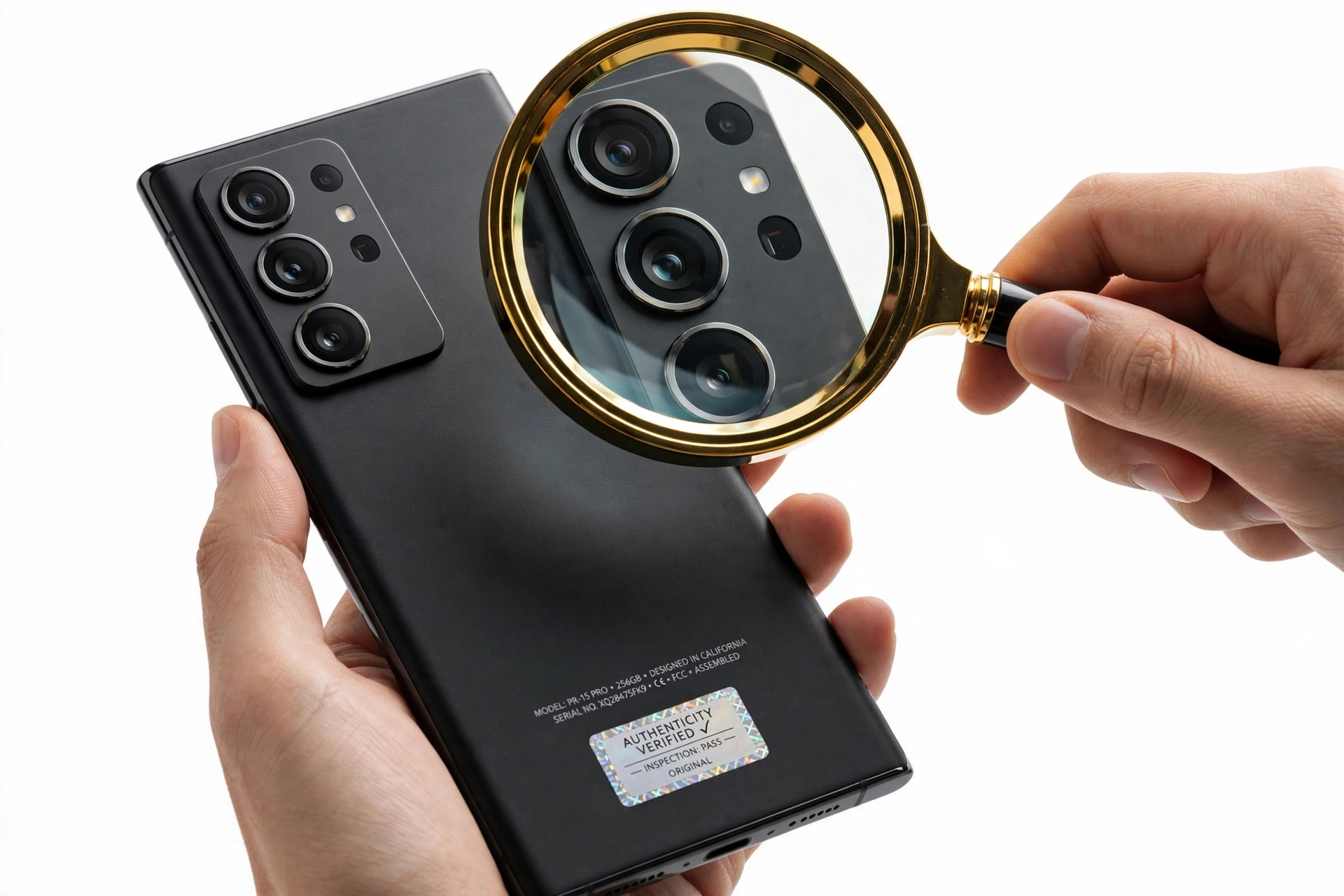
This guide is for anyone considering a used, open-box, marketplace, or imported Honor Magic 8 Pro: buyers who want to confirm the phone is genuine Honor hardware before money changes hands. It is not a general Honor brand guide — the brand-level Honor authenticity guide covers the broader lineup; this article goes deep on the Magic 8 Pro specifically, the camera flagship Honor launched in China in October 2025 and then rolled out across the UK, Middle East, and other markets. Every check below is tied to a documented specification or a manufacturer-published procedure, and every launch detail is attributed to independent press reporting rather than presented as official Honor marketing.
Quick fact: Honor was Huawei’s sub-brand until it was sold in November 2020 and became an independent company. Genuine Honor phones run MagicOS with full Google services — a “Magic 8 Pro” without Google Play Store is an instant red flag in markets where Google services are standard.
1. First, the existence test: is the Magic 8 Pro even a real phone?
Yes. The Honor Magic 8 Pro is a real, launched product. According to launch coverage from Android Authority, PhoneArena, and GizmoChina, the phone debuted in China in October 2025 (reported launch date October 15, 2025), reached the Middle East and Africa a month later, and launched in the UK in January 2026 at £1,099.99. Unlike some guides that treat every 2025 flagship as a rumor, this one starts from a launched product — which makes authentication easier, because real specifications exist to check against. (Source: androidcentral.com)
Two regional facts matter for US buyers in particular:
- No official US launch. Press coverage indicates Honor did not launch the Magic 8 Pro through US carriers or retailers. US buyers are looking at imports — units sold by international sellers or brought in privately. Import pricing around $1,049.99 for the 12GB/512GB model has been reported by US reviewers.
- The battery varies by region. Chinese units ship with a ~7,100–7,200mAh silicon-carbon battery; European units ship with a 6,270mAh battery, reportedly due to European battery regulations. A capacity mismatch between the label and the region is not automatically proof of a fake — but it should make you verify the unit’s regional identity rather than ignore it.
Tip: A listing that calls the phone “Magic 8” (without “Pro”) but shows Pro-level specs, or a “Magic 8 Pro Max/Ultra” that doesn’t match any reported model, is mislabeled at best. There is no reported Magic 8 Pro Max or Ultra in Honor’s launch lineup.
2. Why counterfeiters target this phone
The Magic 8 Pro sits in the sweet spot for fakes: flagship price, recognizable brand, limited official availability in the US, and a distinctive camera system that sounds impressive in a listing. A counterfeit operation doesn’t need to replicate the phone perfectly — it only needs to fool a buyer for the few minutes of a parking-lot handoff or a rushed online purchase. The checks in this guide are designed to make those few minutes count.
Counterfeits in this segment typically take one of three forms:
- Full clones: Android phones with a reskinned interface, fake About-phone text, and a camera module that looks right but performs like a budget phone.
- Rebadged mid-range phones: a real phone (sometimes a real Honor mid-ranger) flashed or relabeled to report Magic 8 Pro specifications it doesn’t have.
- Refurbished or repaired units sold as new: genuine hardware with replaced screens or batteries, reset and resealed, sold at near-new prices.
Each type fails different checks, which is why the worksheet in section 5 runs through hardware, software, and documentation layers rather than relying on any single test.
3. The 30-second test: impossible configurations
Before you run any diagnostics, check the listing or the box against configurations that cannot exist on a genuine Magic 8 Pro. Any one of these is an instant reject — no further testing needed:
- Anything other than Snapdragon 8 Elite Gen 5. The Magic 8 Pro’s reported chip is Qualcomm’s Snapdragon 8 Elite Gen 5. A unit reporting Snapdragon 8 Gen 3, Dimensity, or MediaTek silicon is not a Magic 8 Pro.
- 8GB RAM, or storage other than 512GB. Launch reporting describes a single 12GB RAM + 512GB storage SKU at launch. (One South African report mentioned 16GB; treat 16GB with extra scrutiny and verify against the box and regional model number.) 8GB RAM, 256GB, or 128GB storage do not match reported configurations.
- A microSD slot or a headphone jack. Neither exists on the reported design.
- Four rear cameras, or only two. The Magic 8 Pro has exactly three rear cameras: 50MP main, 50MP ultrawide, and the signature 200MP telephoto.
- No 200MP telephoto. The 200MP Ultra Night telephoto with 3.7x optical zoom is the phone’s headline feature. A “Magic 8 Pro” whose longest lens is a 50MP unit is fake or mislabeled.
- No Google Play Store (in Google-services markets). Genuine Honor phones ship with Google services. Its absence is a hard fail.
- “Magic 8 Pro Max,” “Magic 8 Ultra,” or “5G” as a separate model suffix — none are reported Honor models.
Stop for safety: Never sign in with your primary Google account, enter banking credentials, or restore a personal backup onto a phone you suspect is fake. A counterfeit device can harvest everything you type. Verify first, sign in second.
4. Reported launch specifications: your authenticity baseline
The table below collects the Magic 8 Pro’s reported launch specifications from independent press coverage (Android Central, TalkAndroid, GizmoChina, Android Authority, PhoneArena). Use it as the reference every other check is measured against. Where sources disagree slightly (for example, 213g vs. 219g weight, or 7,100 vs. 7,200mAh for the China battery), the range is noted — but the headline specs are consistent across every source.
| Component | Reported specification |
|---|---|
| Chipset | Snapdragon 8 Elite Gen 5 (2× 4.6GHz + 6× 3.62GHz), Adreno 840 |
| Display | 6.71-inch LTPO OLED, 1256×2808 (FHD+), 1–120Hz adaptive, up to 6,000 nits HDR peak |
| Rear cameras | 200MP telephoto (f/2.6, OIS, 3.7x optical) + 50MP main (f/1.6, OIS) + 50MP ultrawide (f/2.0, 122°) |
| Front camera | 50MP + 3D depth camera (3D face unlock) |
| RAM / Storage | 12GB + 512GB (single reported launch SKU) |
| Battery | ~7,100–7,200mAh China; 6,270mAh Europe (silicon-carbon) |
| Charging | 100W wired, 80W wireless Honor SuperCharge |
| Software | MagicOS 10 based on Android 16 (7 years of updates reported) |
| Biometrics | Ultrasonic in-display fingerprint + 3D face unlock |
| Durability | IP68, IP69, IP69K |
| Dimensions / Weight | ~161.15 × 75.0 × 8.4mm; ~213–219g |
| Colors | Sunrise Gold, Sky Cyan, Black |
| Connectivity | 5G, Wi-Fi 7, Bluetooth 6.0, NFC, IR blaster, USB-C 3.2, dual SIM + eSIM |
| UK launch price | £1,099.99 |
Tip: The 200MP telephoto is the single most distinctive hardware feature. It’s also the hardest for a counterfeiter to fake functionally — which is why the camera tests in section 8 carry so much weight.
5. The 10-check master worksheet
Run these checks in order. Each one is quick, and each catches a different class of fake. Mark pass or fail as you go — a phone that fails any of checks 1–4 should not be purchased.
| # | Check | What it proves | Limitation |
|---|---|---|---|
| 1 | Impossible-configuration screen (section 3) | Filters out obvious fakes instantly | Passes well-made clones; keep going |
| 2 | IMEI triple-match: *#06# = Settings = box | The number is consistent across the device | A valid IMEI proves the number, not the phone — copied IMEIs exist |
| 3 | Chipset verification (Settings + third-party identifier app) | The silicon matches Snapdragon 8 Elite Gen 5 | About-phone text can be spoofed; use a hardware-identifier app |
| 4 | MagicOS 10 / Android 16 + update check | Genuine software reaching Honor’s servers | Skinned clones can mimic the look; the update-server reach is the real test |
| 5 | 200MP telephoto functional test | The signature camera hardware is real | Requires the camera app to work; see section 8 |
| 6 | 3D face unlock enrollment | The 3D depth camera hardware exists | 2D face unlock on a fake can look similar at a glance |
| 7 | Ultrasonic fingerprint enrollment | In-display ultrasonic sensor present | Optical sensors feel similar; speed and reliability differ |
| 8 | Google Play Store + Play Protect certification | Genuine Google-services build | Only meaningful in Google-services markets |
| 9 | Physical build inspection (section 10) | Materials, weight, and finish match | Subjective without a genuine unit to compare |
| 10 | Box and documentation (section 11) | Retail packaging consistent with region | Boxes are the easiest thing to fake well |
6. IMEI and serial: the triple-match test
The IMEI (International Mobile Equipment Identity) is the phone’s unique hardware identifier. On a genuine phone, the same IMEI appears in three places. A mismatch between any two is a strong fake signal.
How to run the triple-match
- Dialer: open the phone app and dial *#06#. The IMEI appears on screen — this reads it from the modem hardware.
- Settings: go to Settings > About phone > IMEI (or Status). This reads it from the software build.
- Box: find the IMEI printed on the retail box label.
All three must match. Then note the honest limitation: a matching IMEI proves the number is consistent, not that the phone is genuine. Counterfeiters routinely copy real IMEIs onto fake devices. The triple-match catches sloppy fakes and mismatched parts (for example, a genuine box paired with a different phone), but a passing triple-match is the beginning of verification, not the end.
Stop for safety: Never share your IMEI publicly or with a seller you don’t trust. It can be used to clone or blacklist. Run the check yourself, on the device, in person.
Serial number and model number
In Settings > About phone, check the model number and serial number against the box label as well. The model designation should correspond to the Magic 8 Pro — be wary of generic model strings, truncated numbers, or model text that changes between the dialer, Settings, and the box.
7. MagicOS software checks: the layer fakes fail most visibly
A counterfeit can copy a spec sheet, but replicating a full manufacturer software build — with working update servers, certified Google services, and exclusive features — is far harder. This is where most clones reveal themselves.
MagicOS 10 on Android 16
The Magic 8 Pro launched with MagicOS 10 based on Android 16. Check Settings > About phone > Android version and MagicOS version. Then run the check clones fear most: Settings > System > Software update and attempt to check for updates. A genuine phone reaches Honor’s update servers; a clone typically errors out, hangs, or shows a fake “up to date” screen without ever contacting a server.
Play Protect certification
Open the Google Play Store, tap your profile icon, go to Settings > About, and check Play Protect certification. It should read “Device is certified.” An uncertified result on a phone sold as new is a major red flag in Google-services markets.
Honor-exclusive features
Look for working MagicOS features that require genuine Honor software: the Honor AI features (AI translation, AI notes), the full MagicOS customization suite, and proper integration with Honor’s own apps. A reskinned generic Android build usually has a thin feature set — a few renamed menus over stock Android — while genuine MagicOS is deep and consistent throughout Settings.
Tip: Reported coverage notes 7 years of software and security updates for the Magic 8 Pro. A “new” unit that cannot check for updates at all contradicts that support story.
8. The camera lie-detector: testing the 200MP telephoto
The 200MP telephoto camera is the Magic 8 Pro’s headline feature and the single hardest component for a counterfeiter to fake functionally. A clone can print “200MP” on a spec sheet; it cannot easily produce 200MP-class zoom photography. These tests take five minutes and catch most camera fakes.
Test 1: Cover each lens
Open the camera app, point it at a well-lit scene, and cover each rear lens one at a time with your finger. The viewfinder should go dark only when you cover the active lens. Switch between main, ultrawide, and telephoto modes and repeat. On a genuine triple-camera phone, each mode maps to a real lens. On many fakes, one or more “lenses” are decorative — covering them changes nothing because no sensor sits behind the glass.
Test 2: Zoom through the telephoto range
Zoom to 3.7x (the reported optical zoom of the telephoto) and take a photo of fine detail — text on a distant sign works well. Then zoom to 10x and beyond. A genuine 200MP telephoto with OIS produces sharp, stabilized zoom shots; a fake typically shows heavy digital-crop softness, aggressive noise, or visible software sharpening artifacts at the same zoom levels.
Test 3: Night zoom
The telephoto is marketed as an “Ultra Night” camera. Take a zoomed photo in dim light. Genuine hardware with a large 1/1.4-inch sensor and OIS captures usable detail; a fake’s small sensor produces muddy, unusable results in the same conditions. This is the test budget clones fail hardest.
Test 4: 4K video at high frame rates
Reported specs include 4K video at up to 120fps on the rear cameras. Check that the camera app actually offers these modes and that recording works without crashing. Fakes often list the modes in a spoofed menu but fail when you try to use them.
Quick fact: The front camera is 50MP with a 3D depth sensor for face unlock — not a simple 2D camera. Test it in the next section.
9. Biometrics: 3D face unlock and ultrasonic fingerprint
The Magic 8 Pro’s biometric system is unusually strong for authentication purposes, because it includes hardware most fakes skip: a 3D depth-sensing front camera and an ultrasonic (not optical) in-display fingerprint sensor.
3D face unlock enrollment
Go to Settings > Security > Face unlock and enroll your face. A genuine 3D system maps facial depth — it works in the dark, and it resists photo spoofing. A fake with only a 2D front camera typically struggles in low light and can sometimes be fooled by a photograph. Try enrolling in a dim room: genuine 3D hardware handles it; a 2D fake usually fails or demands bright light.
Ultrasonic fingerprint enrollment
Enroll a fingerprint in Settings > Security. Ultrasonic sensors read through the display using sound waves and generally enroll quickly with a distinctive animation. While an optical sensor can feel similar, the enrollment experience and reliability differ — and a fake that skips the sensor entirely will fail enrollment outright. If fingerprint enrollment is missing from Settings or crashes, treat it as a fail.
10. Physical build inspection
With the software checks done, examine the hardware itself:
- Weight and feel: reported weight is ~213–219g. A phone that feels dramatically lighter or heavier deserves suspicion, though this is a rough check without a scale.
- Display quality: the 6.71-inch LTPO OLED should show deep blacks and smooth 1–120Hz adaptive refresh. An LCD panel masquerading as OLED reveals itself on a pure-black screen in a dark room — OLED pixels turn fully off; LCD panels glow gray.
- Camera module: three distinct rear lenses in the reported arrangement, with clean glass and precise machining. Misaligned lenses, rough edges, or a module that rattles are bad signs.
- Buttons and ports: USB-C 3.2 port, precise button click feel, no gaps in the frame assembly. The IR blaster (a small dark window, typically near the top edge) should be present per reported specs.
- Finish: reported colors are Sunrise Gold, Sky Cyan, and Black. An unusual color not in the reported lineup is a flag — though regional variants can exist, so verify rather than assume.
Tip: Never attempt to open the phone to “check inside.” Opening a sealed flagship risks battery damage and voids any warranty — and a visual inspection of internals proves little without reference hardware to compare against.
11. Box, documentation, and what’s included
Retail packaging is the easiest thing to fake well, so treat it as supporting evidence, not proof. Still, check for consistency:
- Box label: IMEI, serial number, model designation, and regional markings should match the phone (see the triple-match in section 6).
- Reported box contents (per launch coverage): the phone, a 100W charger, a USB cable, a SIM ejector tool, a clear TPU case, and a pre-installed screen protector film. Missing premium items (especially the 100W charger) on a “new sealed” unit is worth questioning.
- Documentation: quick-start guide and warranty card consistent with the region of sale. Warranty terms that reference a different region than the seller claims are a gray-market signal (see section 13).
- Seals: factory seals should be intact and professional. Resealed boxes often show stretched film, double tape lines, or mismatched seal stickers.
12. Where you buy matters: purchase-channel risk
| Channel | Risk level | Why |
|---|---|---|
| Honor official store / authorized retailer (launch regions) | Lowest | Factory-sealed, warranty-backed, returnable |
| Major established marketplace, sold by reputable seller | Low–Medium | Buyer protection helps; still verify on arrival |
| Carrier or large electronics chain (where officially sold) | Low | Authorized channel with warranty support |
| International importer / gray-market seller (US buyers) | Medium | Hardware may be genuine but warranty is regional; verify specs carefully |
| Classifieds / peer-to-peer / parking-lot sale | High | No recourse; run every check in this guide before paying |
| Price far below market (“too good to be true”) | Highest | The classic counterfeit signal — walk away |
A note for US buyers: because Honor did not officially launch the Magic 8 Pro in the US, every US unit is an import. That doesn’t make it fake — but it means no US warranty, and it means the seller’s story about where the phone came from should be consistent with the phone’s regional markings, box language, and battery capacity (see the China/Europe battery difference in section 1).
13. Not every “fake” is a counterfeit: five categories
Before concluding, classify what you’re actually looking at. The remedy differs for each:
| Category | What it is | What to do |
|---|---|---|
| Counterfeit | Non-Honor hardware pretending to be a Magic 8 Pro | Do not buy; report the listing; do not sign in to anything on it |
| Mislabeled model | A real Honor phone (e.g., a Magic 8 Lite or older Magic) sold as the Pro | Verify the actual model; renegotiate or walk away |
| Refurbished sold as new | Genuine Magic 8 Pro hardware with replaced parts, reset and resealed | Decide if the price fits a refurbished unit; check battery health |
| Gray-market import | Genuine hardware meant for another region (e.g., China unit in the US) | Acceptable if priced accordingly; confirm no regional locks and working bands |
| Demo / display unit | Genuine hardware from a store display, often with demo software | Check for demo firmware that can’t be fully removed; price should reflect it |
The Magic 8 Lite deserves a specific warning here: Honor launched it alongside the Pro, and a Lite in Pro clothing is one of the more plausible mislabeling scams. The Lite lacks the 200MP telephoto and the Snapdragon 8 Elite Gen 5 — the camera tests in section 8 distinguish them in minutes.
14. What to do if it’s fake
- Don’t complete the purchase. If you’ve already paid, start the platform’s dispute process immediately and preserve all messages, photos, and the listing.
- Don’t sign in or enter personal data on the device — factory-reset it if you handled it, and change any passwords you may have entered.
- Report the listing to the marketplace and, where applicable, to local consumer-protection authorities.
- Don’t resell it as genuine. Passing a known fake to the next buyer creates liability for you.
- If you need a working phone assessed or a genuine used device checked over, a local repair shop can help: Las Vegas Phone Repair & Accessories, 7400 Las Vegas Blvd S, Unit TT42, Las Vegas, NV 89123 — (424) 406-6202, open 10AM–8PM (call ahead to confirm today’s hours). They can assess hardware condition, but note that authenticity verification against manufacturer records may require Honor’s own support channels.
15. What to do if it’s genuine
- Register the device with Honor where available in your region, and keep the box with its matching IMEI.
- Run the first software update over Wi-Fi before installing apps — a genuine phone should reach Honor’s update servers without issue.
- Check carrier band compatibility if it’s an import — confirm your carrier’s 5G bands work with the unit’s regional radio configuration.
- Back it up from day one: enable Google backup and Honor’s own cloud backup so your data survives anything that happens to the hardware.
Quick fact: For comparison with other 2025–2026 camera flagships, see our guides on checking the Xiaomi 17 Ultra and checking the OnePlus 15T — the same layered method (specs, software, camera tests, documentation) applies across brands.
16. Frequently asked questions
Hypothetical illustrations: The following two examples are hypothetical illustrations, not customer stories. Example 1 — Amara’s marketplace deal: Amara finds a “sealed” Magic 8 Pro on a classifieds site for 40% below the UK launch price. In person, the About-phone screen claims Snapdragon 8 Elite Gen 5, but a hardware-identifier app reports a mid-range chip, and the “200MP telephoto” produces soft digital-zoom images. She walks away — a textbook counterfeit caught by checks 3 and 5. Example 2 — Devon’s gray-market import: Devon buys a Magic 8 Pro from an international seller. Everything checks out — genuine MagicOS, working 200MP telephoto, matching IMEI — but the box is labeled for the China market and the battery is the larger 7,100mAh variant. It’s a genuine gray-market import, not a fake; he keeps it but confirms his carrier’s bands first.
Is the Honor Magic 8 Pro a real phone?
Yes. It launched in China in October 2025, then in the Middle East, Africa, and the UK (January 2026, £1,099.99), according to independent press coverage. It was not officially launched in the US, so US units are imports.
What is the fastest way to check if a Magic 8 Pro is original?
Verify the chipset (Snapdragon 8 Elite Gen 5), confirm the 200MP telephoto camera works through the lens-cover and zoom tests, and check that the phone runs MagicOS 10 on Android 16 and can reach Honor’s software-update servers. A fake typically fails at least one of these within minutes.
Does the Magic 8 Pro have Google Play Store?
Yes — genuine Honor phones ship with full Google services. A unit without the Play Store in a Google-services market is a hard fail.
How much RAM and storage does the Magic 8 Pro have?
Launch reporting describes a single 12GB RAM + 512GB storage SKU. Units claiming 8GB RAM, 256GB, or 128GB storage don’t match reported configurations.
Can I check the IMEI on Honor’s website?
Honor does not publish a widely documented buyer-facing IMEI authenticity portal. The practical substitute is the IMEI triple-match (*#06# = Settings = box) plus the software and hardware checks in this guide. A matching IMEI alone doesn’t prove authenticity — copied IMEIs exist.
Is a China-market Magic 8 Pro fake if I’m buying in the US?
Not necessarily — it’s likely a gray-market import: genuine hardware meant for another region. Check that the price reflects import status, confirm carrier band compatibility, and understand there’s no US warranty.
What’s the difference between the Magic 8 Pro and the Magic 8 Lite?
The Lite is the affordable sibling launched alongside the Pro. It lacks the 200MP telephoto and Snapdragon 8 Elite Gen 5. A Lite relabeled as a Pro is a mislabeling scam the camera tests catch quickly.
Should I buy a Magic 8 Pro from a classified ad?
Only if you can run the checks in this guide in person before paying — especially the chipset verification, camera tests, and software-update check. Never pay in advance for a phone you haven’t verified, and never sign in to personal accounts on an unverified device.
Video: How to tell if your smartphone is fake or real

Sources and editorial notes
- Android Central — Honor Magic 8 Pro hands-on: specs, pricing, availability — China October 2025 launch, 12GB/512GB SKU, 7,200mAh China / 6,270mAh Europe battery, box contents, Sunrise Gold/Sky Cyan/Black colors.
- TalkAndroid — The Honor Magic8 Pro bets big on a 200MP AI camera — full specification table: Snapdragon 8 Elite Gen 5, 200MP telephoto (f/2.6, OIS, 3.7x), 50MP main + 50MP ultrawide, 50MP front + 3D depth, MagicOS 10, IP68/IP69/IP69K.
- GizmoChina — Honor launches Magic 8 Pro & Magic 8 Lite in the UK — UK launch details, £1,099.99 pricing, camera specifications, 100W/80W charging.
- Android Authority — HONOR Magic 8 Pro arrives with ambitions to claim the night photography crown — UK launch announcement, key specs summary.
- PhoneArena — Honor Magic8 Pro UK debut — China October 2025 debut, Middle East/Africa release timeline, 200MP telephoto details.
- TheGeek.games — Honor Magic8 Pro review — US import pricing (~$1,049.99), full spec confirmation, MagicOS 10 on Android 16.
- Hypertext — Unboxing the HONOR Magic 8 Pro — South African variant specifications, Snapdragon 8 Elite Gen 5 confirmation.
Last source check: October 14, 2026. AI-assisted editorial guide, checked against the linked manufacturer information and independent press reporting. Launch specifications are attributed to press coverage as noted; Honor’s official specifications should be confirmed on Honor’s regional website before purchase. This guide describes buyer-side verification steps only and does not represent Honor or claim manufacturer authorization.
Let’s get you connected again.
Tell us what’s happening with your device and we’ll help you decide the safest next step — no jargon, no pressure.
Las Vegas Phone Repair & Accessories · 7400 Las Vegas Blvd S, Unit TT42, Las Vegas, NV 89123
10:00 AM–8:00 PM — call ahead to confirm today’s hours