
How to Check If Xiaomi 19 Is Original: Authenticity Guide
No. A genuine Xiaomi 19 does not exist — and it may never exist at all, because reporting suggests Xiaomi could skip the “19” name entirely and jump straight to a Xiaomi 20 series in 2027. Any phone labeled, boxed, or listed as a “Xiaomi 19” today fails the existence test automatically, no matter how convincing the listing looks.
On this page
No. A genuine Xiaomi 19 does not exist — and it may never exist at all, because reporting suggests Xiaomi could skip the “19” name entirely and jump straight to a Xiaomi 20 series in 2027.
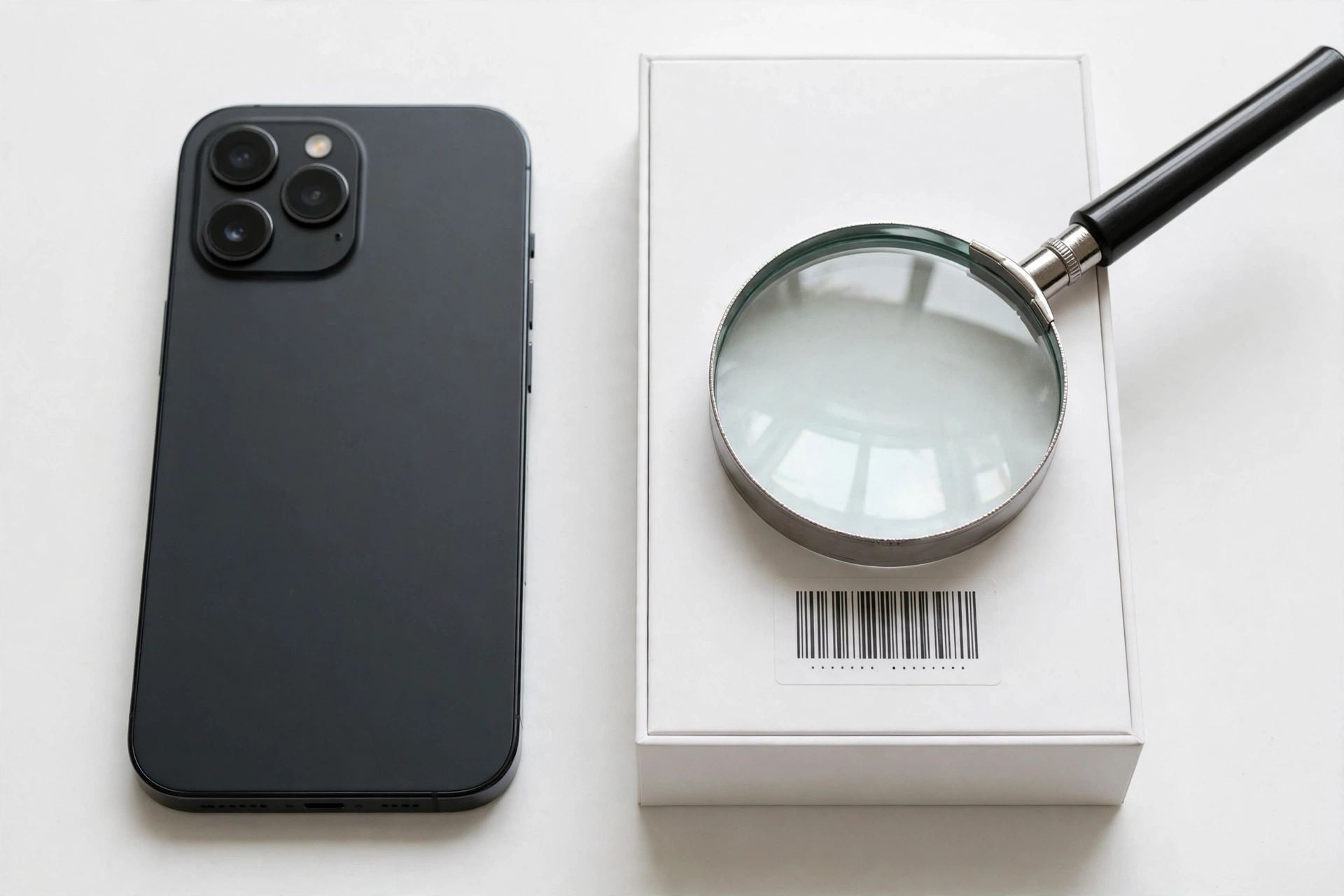
This guide is for anyone who has seen a Xiaomi 19 for sale — on a marketplace, a small online store, a classified ad, or a “pre-order” page — and wants to know whether it could possibly be real. The answer is simpler than the sellers want you to believe: the model itself is the red flag. Below, you will find why the Xiaomi 19 probably never becomes a real product, where the actual Xiaomi lineup stands today, the checks that expose the fakes in minutes, and what to do if you have already paid for one.
1. The short answer: the Xiaomi 19 fails the existence test
The “existence test” is the simplest authenticity check there is. It asks one question: does this model exist in the manufacturer’s own product record? If it does not, the device in the seller’s hand cannot be genuine, and you can stop there. No IMEI lookup is needed to rule out a phone that was never built. (Source: gizchina.com)
As of October 2026, Xiaomi has never announced, teased, or listed a Xiaomi 19 anywhere — not on mi.com, not at a launch event, not in a regulatory filing anyone can point to. That makes every “Xiaomi 19” offered for sale today one of exactly two things: a fictional device the seller invented, or a real phone from an earlier generation (usually a Xiaomi 18-series device) that has been relabeled, re-boxed, or re-skinned in software to wear the 19 badge.
Quick fact: the existence test is the same check used in our guides for other never-announced models, including the cancelled Xiaomi 18 Ultra and the Xiaomi 17 Ultra. In those guides it exposes one more pattern: sellers who recite rumor-page specifications almost always sourced them from rumor pages.
2. Why the Xiaomi 19 may never exist: the skip-to-20 reporting
Normally, when a model is unannounced, there is a chance it simply has not launched yet — the buyer is just too early. The Xiaomi 19 is different, and the difference matters. Multiple technology publications report that Xiaomi may deliberately skip the “19” name and go straight to a Xiaomi 20 series in 2027.
The reporting traces back to XiaomiTime (reported by Gizmochina and Android Headlines): Xiaomi would jump from the 18 series to a 20 series in 2027, aligning with Apple’s rumored 20th-anniversary iPhone — which, per the same reporting, is also expected to skip “19” and debut as an iPhone 20. Xiaomi already set the precedent for this kind of parity naming: the Xiaomi 17 series copied Apple’s iPhone 17 lineup structure (17, 17 Pro, 17 Pro Max), and Xiaomi skipped the number 16 entirely.
This reporting is unconfirmed — the same Android Headlines piece notes there is “no concrete proof to back this” and that it may be inference rather than a leak. But it has two consequences for buyers:
- There is no “coming soon” defense. A seller cannot credibly claim their Xiaomi 19 is an early unit of a model arriving next quarter, because the best available reporting says no such model is on the schedule.
- There is no “expected specs” list to check against. Unlike genuine upcoming phones that leak through regulatory filings or supply-chain reports, the Xiaomi 19 has no spec sheet at all. Any seller who quotes you “specs” — a chipset, a camera count, a battery size — is reciting fiction they invented or copied from concept videos.
Quick fact: the skip has cultural cover too. The Gizmochina reporting notes there is no taboo about the number 19 that forces the decision — it is framed as pure marketing strategy, exactly like Apple’s 2017 decision to skip the iPhone 9 and launch the iPhone X on the tenth anniversary.
3. Where the real Xiaomi lineup actually stands (October 2026)
The fake “19” only works as a lie because it sits one step beyond a real, recently launched generation. Here is the genuine product record a scammer’s listing is borrowing credibility from:
- Xiaomi 18 Pro and 18 Pro Max — launched in China on September 23, 2026 (reported by Tech Advisor, TechTimes, and multiple outlets). Reported specs: Snapdragon 8 Elite Gen 6 (Pro Max on the higher-tier Gen 6 Pro variant), dual 200MP Leica cameras (200MP main plus 200MP periscope telephoto with a 50MP ultrawide), 7,000mAh (Pro) and 8,500mAh (Pro Max) silicon-carbon batteries, HyperOS 4, a “Versatile Back Screen” secondary rear display, and a hardware-level privacy display that blocks side-angle viewing.
- Standard Xiaomi 18 — China launch split from the Pro models (reported, with Xiaomi’s Lu Weibing confirming the standard model would launch separately later). Global availability of the 18 series is expected around early 2027.
- Xiaomi 18 Ultra — reportedly cancelled. Per Digital Chat Station reporting via Gizmochina (October 5, 2026), Xiaomi shelved the 18 Ultra over pricing concerns (a reported 9,999-yuan price for the 12GB/256GB configuration). DCS suggested the Ultra branding could return with a “Xiaomi 19 Ultra” in late 2027 or early 2028 — the only place in any public record where the string “Xiaomi 19” appears attached to a real company plan, and even that is an unconfirmed rumor, not a product.
- Xiaomi 18 Fold — launched September 2026 in China, running Xiaomi’s own XRING O3 chip.
Notice the gap the scam fills: the 18 Pro/Pro Max are real and recent, the 19 is rumored to never exist, and a seller claiming “Xiaomi 19” gets to promise next-generation hardware without a single benchmark, review, or teardown anyone can verify. That is the entire business model.
| Model | Status | Key reported specs |
|---|---|---|
| Xiaomi 18 Pro | Launched China, Sept 23, 2026 | SD 8 Elite Gen 6, dual 200MP Leica, 7,000mAh, HyperOS 4, rear display, privacy display |
| Xiaomi 18 Pro Max | Launched China, Sept 23, 2026 | SD 8 Elite Gen 6 Pro, dual 200MP Leica, 8,500mAh, HyperOS 4, rear display, privacy display |
| Xiaomi 18 (standard) | Launched separately from Pro models | Standard flagship tier, details per Xiaomi’s own teasers |
| Xiaomi 18 Ultra | Reportedly cancelled | Three 200MP cameras, 12GB/256GB at 9,999 yuan — never reached market per DCS |
| Xiaomi 18 Fold | Launched China, Sept 2026 | XRING O3 chip, mid-fold design |
| Xiaomi 19 (any variant) | Never announced; skip-to-20 reported | No specs, no price, no date — nothing to check against |
4. The four scam listing patterns to recognize
Fictional-model scams on marketplaces follow a small set of scripts. Learning them helps you spot the fraud before any technical check:
| Pattern | What the listing claims | Why it fails |
|---|---|---|
| The relabel | “Xiaomi 19” with photos that look like a real Xiaomi | Almost always a genuine Xiaomi 18 Pro or Pro Max with modified software or a swapped back panel. Check sections 6–10 to catch it. |
| The concept-trailer screenshot | Impossibly thin renders, 300MP cameras, “official concept” | Fan-made renders from video channels; Xiaomi never published them. Fantasy specs are the tell — no manufacturer announces a 300MP sensor in a render video. |
| The “pre-order deposit” trap | “Reserve your Xiaomi 19 — ships after launch event” | There is no launch event to ship after. Any deposit for a non-existent model is fraud by definition; there is no unit coming that makes the deposit refundable. |
| The spec-laundering ad | Lists confident “specs” — Snapdragon 8 Elite Gen 7, 200MP triple camera | The specs are copied from rumor-page guesswork about the 2027 generation. Ask the seller: “how would you know the specs of a phone Xiaomi has never announced?” They cannot answer. |
Stop for safety: never send a deposit, reservation fee, or “pre-order payment” for a Xiaomi 19. Because the model does not exist, no seller can deliver one — so a deposit is not a risk, it is a guaranteed loss. Walk away and report the listing.
5. Check 1: the software name test — the fastest fail
Open the phone itself and go to Settings → About phone. The Device name and Model fields are decisive for a fictional device:
- If the device name says “Xiaomi 19,” “Xiaomi 19 Pro,” or anything with “19,” the device is a fake. Xiaomi never built firmware that identifies itself as a Xiaomi 19 — the company has never typed that name into a build manifest.
- If the model number field shows a model you cannot find on Xiaomi’s own site or in any reputable database (GSMArena, for example), treat it as fictional. Real Xiaomi flagships carry “M”-series model numbers; a “19” cannot produce a valid one.
- If the device name says “Xiaomi 18 Pro” or “Xiaomi 18 Pro Max” but the seller calls it a 19, you are looking at the relabel scam — a genuine previous-generation phone with a false name pasted over it. The rest of this guide shows you how to prove it.
The software name test works because counterfeiters’ favorite trick — editing the build name on a real phone — is also their biggest weakness: they have to write a name Xiaomi never used, and the lie is visible in the first settings screen.
6. Check 2: Xiaomi’s official verification page (the authoritative test)
Xiaomi runs an official product authentication page at mi.com/global/verify. It has two tabs: “Verify your phone purchase” and “Xiaomi Product Authentication.” This is the only authoritative source for whether Xiaomi considers a device genuine. Here is the process, documented from Xiaomi’s own support pages:
- Find the phone’s IMEI by dialing *#06# on the dial pad, or go to Settings → About phone → Status for the IMEI and serial number. The box the phone came in also carries them on the barcode sticker.
- Open mi.com/global/verify and choose “Verify your phone purchase.”
- Enter the IMEI or serial number plus the verification code, and submit.
- The page returns the model’s basic specifications, production date, and activation date. On a successful check it confirms the phone is the official international version.
Now apply it to a “Xiaomi 19.” There are only two possible outcomes:
- The check fails or shows a different model. The phone is not a genuine Xiaomi 19 — because there is nothing to match. Most relabeled fakes fail here, or come back as “Xiaomi 18 Pro” when the IMEI is genuine.
- The check shows a genuine model that is not a 19. If it identifies an 18 Pro or Pro Max, you have proven the relabel scam: the hardware is real, the “19” badge is not.
A third outcome is impossible: the official page cannot confirm a “Xiaomi 19,” because Xiaomi has never registered that product in its own verification database.
Quick fact: a separate warranty check exists at mi.com/global/support/warranty/ — entering the IMEI or serial number shows warranty status and expiration. A “Xiaomi 19” has no warranty record to display, for the same reason: the product was never created.
7. Check 3: the chipset readout — firmware cannot lie about silicon
Go to Settings → About phone and read the processor entry. A genuine Xiaomi 18 Pro reports the Snapdragon 8 Elite Gen 6 (the Pro Max reports the Gen 6 Pro variant); these are 2nm-class Qualcomm chips launched alongside the 18 series in September 2026. Any “Xiaomi 19” listing today exists in a world where:
- The reported candidate for the real 2027 generation is the Snapdragon 8 Elite Gen 7 (per the same reporting that discusses a possible Xiaomi 20) — a chip that is not in any shipping consumer phone yet.
- A seller’s “Xiaomi 19” that reports a Gen 6 chip is just an 18 Pro under a different name.
- A seller’s “Xiaomi 19” that reports some other, older chip (a common trick: clone boards use MediaTek or older Snapdragon parts) is exposed the moment you compare it with the claimed “latest flagship” marketing.
Cross-check the chipset against the model the official verification page returned. If the page says the IMEI belongs to an 18 Pro but the seller’s software claims “Xiaomi 19,” the software name was edited — and edited software names are one of the oldest counterfeiting techniques there is.
8. Check 4: the dual-200MP Leica fingerprint — an EXIF test
The Xiaomi 18 Pro and Pro Max share a signature camera system: dual 200MP Leica sensors (a 200MP main plus a 200MP periscope telephoto, with a 50MP ultrawide). A relabeled 18 Pro sold as a “19” still carries this hardware, and its photos carry the fingerprint:
- Take a photo with the rear main camera and open its details (EXIF metadata).
- Check the reported resolution, sensor description, and lens information.
- Compare against the 18 Pro generation’s published hardware: 200MP main + 200MP periscope.
A listing that advertises a “Xiaomi 19” with a “300MP camera” or “400MP triple camera” — figures that circulate in fan-made concept trailers — fails instantly, because no shipping Xiaomi sensor is anywhere near those numbers. And a “19” whose photos carry the 18 Pro’s exact 200MP-periscope signature is a relabeled 18 Pro, not a new generation.
9. Check 5: the rear “Versatile Back Screen” — the generation’s signature part
Xiaomi’s recent flagships carry a secondary rear display beside the camera island — upgraded on the 18 series as the “Versatile Back Screen,” on which users can run notifications, selfie previews, widgets, and mini-apps. This is a signature hardware part of the 18 generation.
Apply it as a lie detector in both directions:
- A “Xiaomi 19” with the rear display, 18-Pro-style camera island, and Gen 6 chipset is a relabeled 18 Pro or Pro Max — the parts tell the truth even when the software name lies.
- A “Xiaomi 19” without the rear display, whose listing still claims 18-generation-plus specs, is an even simpler fake — a generic clone board in a Xiaomi-styled shell.
Signature parts are powerful because counterfeiters can edit a software string in seconds, but they cannot affordably replicate a working secondary display, a hardware-level privacy screen, and a Leica-tuned camera module.
10. Check 6: the hardware-level privacy display
The 18 Pro and Pro Max ship with a hardware-level privacy display that electronically narrows the viewing angle to block side-angle viewing — Xiaomi’s answer to the same feature on Samsung’s Galaxy S26 Ultra. On the genuine 18 series, it is toggled from the display settings or a quick setting, and it works without any privacy film.
- If the “Xiaomi 19” in your hand has a working hardware privacy display plus the rear back screen, it is an 18-series device wearing a false name.
- If the seller’s listing advertises a privacy display but the unit has none — or the “privacy mode” is just a dimming overlay from a third-party app — the hardware does not match the marketing, and the marketing was fiction anyway.
11. Check 7: the box, the model number, and the triangle
Counterfeit phones live or die on the packaging check. Work the triangle — phone, box, and official verification must all agree:
- Read the model number on the box’s barcode sticker and in Settings → About phone → Status. They must match each other.
- Enter the IMEI from the box into mi.com/global/verify. The returned model must match both the box and the phone.
- Inspect the box itself: genuine Xiaomi boxes carry consistent print quality, correct spelling, proper regulatory marks, and a 20-digit security scratch code on accessories’ holograms. Blurry print, misspellings, or a missing scratch panel are classic clone tells.
For the “Xiaomi 19,” the triangle collapses at the first step that touches reality: no genuine box can carry a valid “Xiaomi 19” model number, because Xiaomi never assigned one. A box that says “Xiaomi 19” is a box a counterfeiter printed.
| Combination | Verdict |
|---|---|
| Box says “19,” phone says “19,” verification fails | Fake. Neither component is backed by Xiaomi’s database. |
| Box says “19,” phone says “18 Pro,” verification says “18 Pro” | Relabeled genuine 18 Pro — real hardware, fraudulent “19” branding. |
| Box says “19,” phone says “19,” verification says “18 Pro” | Relabeled genuine 18 Pro with edited software name. |
| Box says “19,” verification returns “not found,” chipset is MediaTek/old Snapdragon | Full clone — no genuine Xiaomi hardware involved. |
| Any combination where verification says “Xiaomi 19” | Impossible. Xiaomi has never registered this product. |
12. The most common scam in practice: the relabeled Xiaomi 18 Pro
Why would a scammer pick the 18 Pro as the donor phone? Because it is real, recent, impressive on paper, and widely available in China — the perfect raw material for a “next-generation” fiction. The seller buys a genuine 18 Pro, edits the device name, prints a “Xiaomi 19” box, and prices it below what a real next-gen flagship would cost but above the 18 Pro’s street price. The margin is the lie.
| Attribute | Genuine Xiaomi 18 Pro (reported) | Typical “Xiaomi 19” listing |
|---|---|---|
| Status | Launched China, Sept 23, 2026 | Never announced; may never exist |
| Chipset | Snapdragon 8 Elite Gen 6 | Claims Gen 7 or “latest” — check the actual readout |
| Rear cameras | 200MP main + 200MP periscope + 50MP ultrawide (Leica) | Claims 300MP+ — no such sensor exists |
| Battery | 7,000mAh silicon-carbon | Inflated figures (10,000mAh+) from concept videos |
| Rear display | “Versatile Back Screen” present | Either present (relabel proven) or absent (clone proven) |
| Official verification | Returns “Xiaomi 18 Pro” with dates | Fails or returns the donor model |
| Price | Published Chinese pricing | Priced in the gap — above 18 Pro street price, below “next-gen” fantasy |
Quick fact: this relabel pattern is exactly why our general Xiaomi authenticity guide and the Xiaomi 18 original-check guide treat the official verification page as the final word — only Xiaomi’s database knows what it actually built.
13. What the checks can and cannot establish
Honest testing means knowing the limits of each check — especially the official IMEI lookup, which buyers tend to over-trust:
| Check | Can establish | Cannot establish |
|---|---|---|
| Existence test | Whether the model itself is real | Nothing about the specific unit in hand |
| mi.com official verification | Whether Xiaomi recognizes this IMEI and which model it belongs to | Whether a cloned IMEI was pasted onto a fake (a relabeled genuine phone with a copied IMEI can pass) |
| Software name test | Whether the firmware claims a fictional model | Whether the underlying hardware is genuine — names can be edited in either direction |
| Chipset readout | What silicon is actually in the phone | Whether the rest of the hardware (cameras, display) is genuine |
| EXIF camera fingerprint | Whether the camera hardware matches the claimed generation | Whether the sensors are genuine Leica-tuned parts or third-party modules spoofing resolution |
| Signature parts (rear display, privacy screen) | Whether the hardware matches a real Xiaomi generation | The exact donor model on its own — combine with the verification page |
The cloned-IMEI caveat deserves emphasis: a counterfeiter can copy a genuine IMEI onto a fake phone, and the official page will then “verify” the stolen number rather than the phone in front of you. That is why the guide layers checks — the database, the silicon, the cameras, and the signature parts must all tell the same story. On a genuine phone they always do; on a fake they never do for long.
14. Hypothetical illustrations: how the scam usually plays out
Hypothetical example — Amara’s marketplace “deal.” Amara (a hypothetical buyer) finds a “Xiaomi 19 — brand new, sealed” listed at a price between the 18 Pro’s street price and what a next-gen flagship would cost. The photos show a phone with a rear display and a dual-camera island. She asks the seller for the IMEI before paying, runs it through mi.com/global/verify, and the page returns “Xiaomi 18 Pro” with a 2026 activation date. The software name on the seller’s screenshots says “Xiaomi 19,” but Xiaomi’s own database says 18 Pro. She walks away — the database outranks the screenshot.
Hypothetical example — Devon’s deposit trap. Devon (a hypothetical buyer) is offered a “Xiaomi 19 pre-order — reserve now, ships after the launch event” with a 20% deposit. He asks one question: “Which launch event — the date, the venue, the Xiaomi announcement?” The seller sends a fan-made concept video. Devon checks Xiaomi’s own channels and finds no event, no announcement, and reporting that the “19” name may be skipped entirely. He does not send the deposit, because there is no product for the deposit to reserve.
Both examples are hypothetical, not customer stories — but they follow the exact scripts these scams use, and the same two defenses (the official verification page, and “show me the Xiaomi announcement”) defeat both.
15. If you already bought a “Xiaomi 19”: what to do now
If the phone is already in your hands, work through the checks in sections 5–11 in order and document everything — screenshots of About phone, the verification page result, the listing, and the receipt. Then:
- Do not sign in to your main accounts on a suspected counterfeit. Clone firmware can carry spyware; a phone whose software was edited to fake a model name is not a phone you should trust with banking apps, email, or two-factor codes.
- Request a refund through the marketplace or payment provider with the evidence: the item is not as described, because the described model does not exist. “Item not as described” claims are strongest when you can show the manufacturer’s own database contradicts the listing.
- Report the listing to the marketplace for counterfeit goods. One report rarely removes a seller, but patterns of reports do.
- Do not try to “fix” it into a real phone. Flashing firmware on a counterfeit can brick it, and no software update turns a relabeled 18 Pro into a model Xiaomi never built.
Stop for safety: never sign in to banking, email, or payment apps on a phone you suspect is counterfeit. Clone firmware is a known vector for credential theft, and the risk is not theoretical — it is the reason the “never sign in on a suspected fake” rule exists across all of our authenticity guides.
16. Getting an in-person assessment in Las Vegas
If you bought a phone labeled “Xiaomi 19” and want a second set of eyes on the hardware — the chipset readout, the camera modules, the display stack — an in-person assessment can confirm what the remote checks suggest. Las Vegas Phone Repair & Accessories, 7400 Las Vegas Blvd S, Unit TT42, Las Vegas, NV 89123, (424) 406-6202, can examine the device and walk through the verification steps with you. It is worth calling ahead to confirm today’s hours. No shop can certify a phone as “genuine” from photos alone, and no assessment can turn a non-existent model into a real one — but a hands-on look can document exactly what the hardware is, which is what refund and fraud claims need.
17. Frequently asked questions
Could Xiaomi still announce a Xiaomi 19 later?
Anything is possible in principle, but the best available reporting points the other way: Xiaomi may skip “19” entirely and jump to a Xiaomi 20 series in 2027. Until Xiaomi itself announces a product with that name, treat every “Xiaomi 19” as fictional.
What about the “Xiaomi 19 Ultra” mentioned in leak reports?
Digital Chat Station reportedly suggested the cancelled 18 Ultra’s branding could return as a “Xiaomi 19 Ultra” in late 2027 or early 2028 — but that is an unconfirmed rumor about a possible future product, not an announcement. A rumor is not a launch, and it does not make “Xiaomi 19” units on sale today genuine.
Why do so many sellers list the same “Xiaomi 19 specs”?
Because they all copy from the same rumor pages and concept videos. Shared specs across listings are evidence of a shared source document, not a shared supply chain — real products leak through certifications and benchmarks, not identical marketing copy.
My “Xiaomi 19” passes the IMEI check. Is it real?
It cannot be a genuine Xiaomi 19, because Xiaomi never made one. If the official page verifies the IMEI, it is verifying a genuine IMEI — most likely belonging to the donor phone (such as an 18 Pro) whose number was copied. Check the returned model name: it will not say “19.”
How is this different from the cancelled Xiaomi 18 Ultra?
The 18 Ultra was a real project that reached an advanced stage (reported specs, a reported price, a reported cancellation reason) before Xiaomi reportedly shelved it. The Xiaomi 19 never reached any stage — there is no project to cancel, only a name that may be skipped. See our Xiaomi 18 guide for the launched generation.
Can a software update turn my “Xiaomi 19” into a real Xiaomi phone?
No. Software identifies hardware; it does not create it. Flashing official Xiaomi firmware onto a counterfeit typically bricks the device, and flashing it onto a relabeled 18 Pro just reveals it as an 18 Pro.
Should I buy a “Xiaomi 19” if the price is very low?
A low price does not make a fictional model real — it makes the scam cheaper to fall for. The phone is still either a relabeled older model or a full clone, and clone firmware carries the spyware risk described in section 15.
What is the safest way to buy a genuine Xiaomi flagship?
Buy a model Xiaomi has actually announced — such as the 18 Pro or Pro Max — from an authorized retailer, and run the IMEI through mi.com/global/verify before the return window closes. For the full routine, see our Xiaomi 17 Ultra authenticity guide and the general Xiaomi check.
Video: How to tell if your smartphone is fake or real

Sources and editorial notes
- Gizchina — “Xiaomi Could Skip the ’19’ and Go Straight to the Xiaomi 20 Series” — reports (via XiaomiTime) that Xiaomi may jump to a Xiaomi 20 series in 2027, with the skip framed as parity marketing against Apple’s rumored 20th-anniversary iPhone. Checked October 14, 2026.
- Android Headlines — “Xiaomi May Jump to Xiaomi 20 Series in 2027” — same reporting with the explicit caveat that there is “no concrete proof”; notes Xiaomi skipped the 16 to align with the iPhone 17 lineup. Checked October 14, 2026.
- Gizmochina — “Cancelled Xiaomi 18 Ultra specs leak” — DCS reporting on the 18 Ultra’s reported cancellation over pricing, with the suggestion Ultra branding could return with a “Xiaomi 19 Ultra” in late 2027 or early 2028. Checked October 14, 2026.
- Tech Advisor — “Xiaomi 18 Series Launch Date Set” — September 21, 2026 report on the September 23 China launch, confirmed specs (dual 200MP Leica, 7,000/8,500mAh batteries, HyperOS 4, privacy display). Checked October 14, 2026.
- TechTimes — “Xiaomi Confirms 18 Pro Launches Tomorrow” — September 22, 2026 report on the official launch timing and Snapdragon 8 Elite Gen 6 platform. Checked October 14, 2026.
- Tech Advisor — “Xiaomi 18 Phones get Detailed Spec Leak” — earlier reporting on the 18 series’ reported camera and chipset configuration. Checked October 14, 2026.
- Xiaomi — Official Product Authentication (mi.com/global/verify) — Xiaomi’s own “Verify your phone purchase” page: enter IMEI or serial number to confirm the official model, production date, and activation date. Referenced October 14, 2026.
- Blackview Store guide — “How do I check warranty on a Redmi phone?” — documents the mi.com/global/support/warranty/ IMEI warranty-check process and the *#06# method, consistent with Xiaomi’s official flow. Checked October 14, 2026.
Last source check: October 14, 2026. AI-assisted editorial guide, checked against the linked manufacturer information and reputable technology reporting. Launch statuses, model names, and specifications described as “reported” reflect press reporting rather than confirmed manufacturer announcements; Xiaomi has never announced a product named “Xiaomi 19.” Device-verification steps describe Xiaomi’s publicly documented processes; individual results depend on the specific unit. This guide does not guarantee the outcome of any purchase dispute or refund claim.
Let’s get you connected again.
Tell us what’s happening with your device and we’ll help you decide the safest next step — no jargon, no pressure.
Las Vegas Phone Repair & Accessories · 7400 Las Vegas Blvd S, Unit TT42, Las Vegas, NV 89123
10:00 AM–8:00 PM — call ahead to confirm today’s hours