
How to Check If Vivo X400 Pro Is Original: Authenticity Guide
No — you cannot buy a genuine Vivo X400 Pro today, because Vivo has never announced one. As of this writing, the X400 Pro exists only on rumor aggregator pages and fan-made concept videos; any listing offering one for sale right now is either a mislabeled older Vivo, a deposit scam, or a counterfeit.
On this page
No — you cannot buy a genuine Vivo X400 Pro today, because Vivo has never announced one.
1. The 60-second existence test: start here, not with the specs
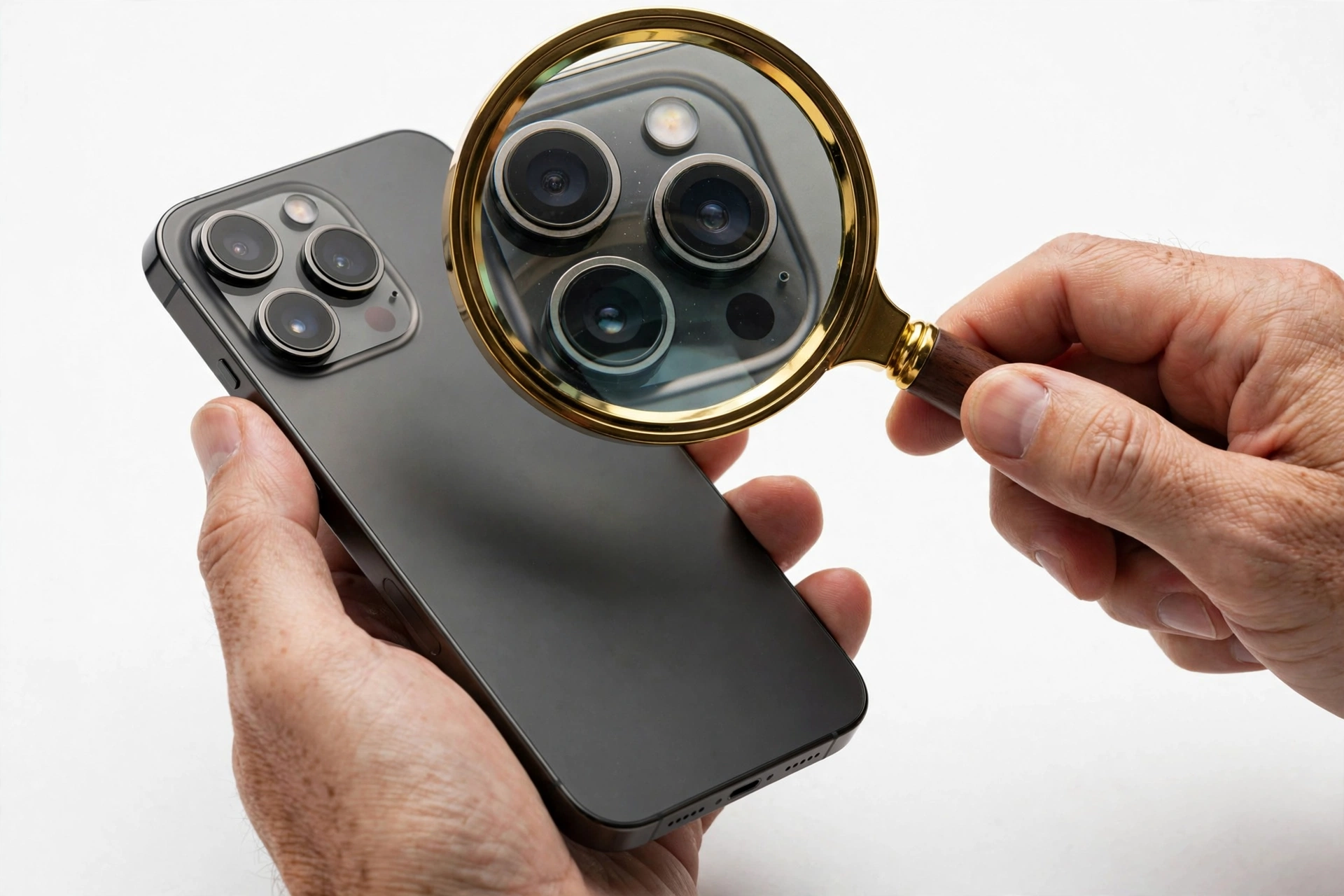
Before you compare cameras or check serial numbers, answer one question: does this phone actually exist? Every authenticity check that follows only works if the model is real. Here is the fastest way to run the existence test on a claimed Vivo X400 Pro: (Source: cashify.in)
- Search Vivo’s official site. Go to vivo.com and search for “X400 Pro.” If the phone were real, it would have a product page, a specs sheet, and press materials. As of October 2026, there is no such page. An aggregator page listing “expected specs” is not an announcement.
- Check for a launch event. Flagship X-series phones launch with press events and coverage from established outlets. The X300 series launched in October 2025 with full coverage; the X400 Pro has had no event, no press release, and no hands-on coverage from any major outlet.
- Read the aggregator disclaimers. Sites that list the X400 Pro label it “Rumoured,” “Upcoming,” or “Coming Soon.” Cashify’s comparison pages explicitly mark the X400 Pro as “Rumoured” with “Announced On: Not Available.” That is the aggregator telling you it does not exist yet.
Quick fact: A phone that fails the existence test needs no further checks. No IMEI database, spec sheet, or seller promise can authenticate a device that the manufacturer has never announced. Walk away before money changes hands.
If the listing passes this test — meaning the phone is real and you hold it in your hands — continue to the checks below. If it fails, skip straight to section 14 on what to do if you have already paid.
2. Who this guide helps
This guide is written for:
- Online marketplace buyers who found a “Vivo X400 Pro” listing at an attractive price and want to verify it before paying.
- Gift buyers considering a Vivo flagship for someone and trying to avoid buying a mislabeled older model.
- Secondhand buyers meeting a seller in person who want a checklist they can run on the spot.
- Curious shoppers who saw a “leaked specs” video and want to know what is confirmed versus invented.
It is not a review, and it is not a buying recommendation. It is a verification toolkit. For the general Vivo authenticity process that applies to every model, see our guide on how to check if a Vivo phone is original. For the previous generation, read how to check if the Vivo X300 Pro is original and how to check if the Vivo X300 Ultra is original — the X300 Pro is the phone most likely to be mislabeled as an X400 Pro.
3. What Vivo has actually announced: nothing
Let us be precise about the evidence, because this is the foundation everything else rests on:
- No Vivo press release mentions an X400 Pro as of October 14, 2026.
- No Vivo product page exists for the X400 Pro on vivo.com in any region.
- No launch event has been held. The X300 series launched in October 2025 (the X300 Pro was announced October 13, 2025, per reporting); its successor has had no equivalent event.
- No major outlet (GSMArena, Android Authority, PhoneArena, or equivalent) has published launch coverage, because there has been no launch to cover.
- A fan-made concept video circulating on YouTube carries an explicit disclaimer: “The Vivo X400 Pro is not an officially announced product by Vivo” and describes its designs and specifications as “purely speculative.”
The X400 Pro appears only in three kinds of places: rumor aggregator spec pages (Cashify, iGeekPhone, MobileMaya), comparison tools that pit it against real phones, and concept videos. None of these is Vivo. An aggregator’s “expected price” of around Rs. 89,999 is a guess printed in a template, not a number Vivo has ever confirmed.
Stop for safety: Do not sign into your Google account, enter banking details, or restore personal data on a device you suspect is counterfeit. Clone firmware can include spyware. Verification comes first; your accounts come after.
4. What rumor sites claim — and what that actually proves
Rumor pages do contain claims. The question is what those claims are worth. The table below separates the two aggregator spec sets most commonly quoted by sellers, with an honest evidence level for each.
| Claim | Source type | Evidence level | What it proves about a listing |
|---|---|---|---|
| 6.78-inch AMOLED, 120Hz, Dimensity 9500, 6,000mAh, 100W charging | Cashify comparison pages | Rumor — aggregator template data | Nothing. The seller read the same page. |
| 200MP main + 50MP periscope + 50MP ultrawide with ZEISS optics and T* coating, 50MP front | iGeekPhone product page | Rumor — single aggregator | Nothing. No outlet has confirmed these sensors. |
| Dimensity 9600 Ultra (3nm), Android 17 / Funtouch 17 | iGeekPhone product page | Rumor — single aggregator | Nothing. Chipset name is unverified. |
| Release date October 17, 2026 | iGeekPhone product page | Rumor — single aggregator | Nothing. Vivo has announced no date. |
| Colors: Phantom Black, Ice Blue, Titanium Gray, Sakura Pink, Emerald Green | iGeekPhone product page | Rumor — single aggregator | Nothing. Colors are invented until Vivo names them. |
| Expected price around Rs. 89,999 | Cashify | Guess — explicitly labeled “Expected” | Nothing. No confirmed pricing exists anywhere. |
Notice the pattern: every “specification” traces back to one or two aggregator pages, and none traces back to Vivo. A seller who quotes “200MP ZEISS camera” or “Dimensity 9600 Ultra” as proof they have the phone has proven only that they can read rumor sites. This is rumor laundering — unconfirmed claims repeated until they sound official — and it is the single most common trick in unannounced-device scams.
5. The 10-check pre-payment worksheet
Run these checks in order before paying anything. Stop at the first failure.
| # | Check | How to run it | Pass looks like | Fail looks like |
|---|---|---|---|---|
| 1 | Existence | Search vivo.com for the model | Official product page exists | No page — the current state |
| 2 | Launch event | Search news for a launch announcement | Dated launch coverage from major outlets | Only rumor pages and concept videos |
| 3 | Seller’s “proof” | Ask what proves it is an X400 Pro | Vivo documentation, sealed retail box with matching IMEI | Aggregator screenshots, “trust me,” concept renders |
| 4 | Box and branding | Inspect the retail box | Professional Vivo packaging, model name printed, IMEI sticker | Generic box, mismatched labels, no IMEI sticker |
| 5 | IMEI triple-match | Dial *#06#, compare with Settings and box | All three match | Any mismatch — instant reject |
| 6 | Settings model name | Settings > About phone | Reads “Vivo X400 Pro” | Reads X300 Pro, another model, or generic text |
| 7 | Vivo IMEI Authentication | vivo.com/[region]/support/IMEI | Vivo recognizes the IMEI and model | Unrecognized — expected for an unannounced model |
| 8 | Camera hardware | Inspect lens array; test zoom | Matches whatever Vivo eventually ships | Wrong lens count, fake “ZEISS” text, digital-only zoom |
| 9 | Payment protection | Check the payment method | Reversible: credit card, protected marketplace | Wire transfer, crypto, gift cards — instant reject |
| 10 | Price sanity | Compare against real flagships | In line with the X300 Pro’s real pricing | Suspiciously cheap “flagship” — classic counterfeit pricing |
Check 7 deserves emphasis: Vivo runs an official IMEI Authentication tool on its regional support sites (for example, vivo.com/[region]/support/IMEI), which reports whether a device is genuine. For an unannounced model, this tool cannot return a positive result — the IMEI of a phone that does not officially exist will not be in Vivo’s system. That dead end is the answer: it confirms the existence test.
6. The mislabeled X300 Pro: the most likely scam
When a scammer needs a physical phone to sell as an “X400 Pro,” the cheapest convincing option is the previous generation’s real flagship: the Vivo X300 Pro, which launched in October 2025. It is a genuine Vivo phone with a 200MP periscope camera and ZEISS branding — close enough to fool a buyer who has only read rumor specs.
| Attribute | Real X300 Pro (reported) | What an “X400 Pro” listing shows | The tell |
|---|---|---|---|
| Model name in Settings | Vivo X300 Pro | Claims X400 Pro | Settings > About phone never lies about the flashed model |
| Model number | V2514 | Unknown / refuses to show | Ask for it; a real successor would have its own number |
| Launch date | October 13, 2025 | “Just launched” | No launch happened — check the news |
| Chipset | Dimensity 9500 (reported) | Claims “9600 Ultra” | Benchmark apps read the real chip; a relabeled unit reports 9500 |
| ZEISS branding | Genuine ZEISS optics | Genuine ZEISS optics (it is an X300 Pro) | ZEISS text alone proves nothing — the phone is real, the name is wrong |
| Price | Real flagship pricing | Slightly below X300 Pro “deal” | The discount is the bait for the mislabel |
The decisive test for a relabeled unit is the model number and a benchmark app. The X300 Pro’s reported model number is V2514. A phone claiming to be an X400 Pro that reports V2514 — or a Dimensity 9500 in a hardware info app — is an X300 Pro wearing a new name. Our X300 Pro authenticity guide covers that phone’s genuine tells in detail, which double as the mislabel detector here.
(The following is a hypothetical illustration, not a customer story.) Amara finds a “Vivo X400 Pro — brand new, sealed” listing priced slightly below the X300 Pro’s going rate. She asks the seller for a screenshot of Settings > About phone before meeting. The screenshot shows model number V2514 and a Dimensity 9500 in the hardware info the seller reluctantly shares. Amara recognizes V2514 as the X300 Pro’s reported model number and walks away — the “X400 Pro” was a genuine X300 Pro with a rewritten title.
Tip: Ask the seller for a screenshot of Settings > About phone showing the model name and model number before you meet. A legitimate seller with a real phone has no reason to refuse. Refusal is itself the answer.
7. Four listing patterns, diagnosed
| Pattern | What the listing looks like | What it really is | Risk level |
|---|---|---|---|
| Mislabeled X300 Pro | Real phone photos, “X400 Pro” title, slight discount | Genuine X300 Pro sold under the wrong name | Medium — you get a real phone, but overpay for a lie |
| Pre-order deposit scam | “Reserve your X400 Pro — limited slots, pay deposit now” | No phone exists; deposits disappear | Critical — total loss, no phone at all |
| Placeholder-spec page | Full spec sheet, “Buy now” button, stock photos | Rumor specs dressed as a product page; ships a counterfeit or nothing | High — the professional layout is the trap |
| Straight counterfeit | Suspiciously cheap “flagship,” vague seller, stock images | Clone hardware with fake branding | High — poor hardware, possible spyware firmware |
The pre-order deposit scam deserves special attention because it exploits the “upcoming” framing honestly used by rumor sites. A scammer copies the aggregator’s “Coming Soon” language, adds urgency (“limited launch stock”), and collects deposits for a phone that cannot ship. Vivo has announced no launch, so there is no launch stock — limited or otherwise.
8. Physical tells, if the phone is in your hands
If you are meeting a seller in person, inspect the hardware before any software check:
- The retail box. Genuine Vivo flagships ship in professional retail packaging with the model name printed and an IMEI sticker. A generic brown box, a mismatched label, or no IMEI sticker is an instant reject.
- Build quality. Vivo X-series phones have precise fit and finish: tight seams, aligned buttons, clean camera module edges. Rough edges, loose buttons, or a rattling camera module suggest clone hardware.
- The camera module. The X300 Pro’s signature is its large circular camera housing with ZEISS branding. A claimed X400 Pro should have a coherent, professional camera design — not a glued-on lens ring or misspelled branding. Misspellings (“ZEIS5,” “ZElSS”) are classic counterfeit tells.
- Weight and feel. Flagships have a dense, solid feel. An unusually light “flagship” suggests cheap clone internals. (You cannot verify exact grams without the real spec sheet — but obvious lightness is a signal.)
- The SIM tray. On premium Vivo models the IMEI is finely engraved on the SIM tray. Compare it with the *#06# readout — they must match.
9. Software tells: Settings, dialer codes, and the update server
Clone phones often fail software checks that cost nothing to run:
- *#06# — the IMEI readout. Dial it and compare the on-screen IMEI with the box sticker, the SIM tray engraving, and Settings > About phone. All must match. Any mismatch is an instant reject.
- Settings > About phone. Check the model name, model number, Android version, and build number. A claimed X400 Pro that reads “X300 Pro” or a generic “Android Phone” is exposed.
- *#09# — model and ROM info. On some Vivo models this dialer code displays model and ROM information. Compare it against the About screen.
- The update server. Go to Settings > System update and check for updates. Genuine Vivo phones reach Vivo’s update servers. A phone that cannot reach them — or shows a clearly fake “update” screen — is not running genuine Vivo software. This is the check clone-makers fear most, because faking a live connection to the manufacturer’s servers is far harder than faking a logo.
- Play Protect certification. Open the Play Store > Settings > About and check Play Protect certification. Uncertified status on a claimed flagship is a strong counterfeit signal.
- Preinstalled apps. Genuine Vivo phones ship with Vivo’s app suite and regional software. A “Vivo” phone full of unfamiliar apps, or missing the expected Vivo apps, deserves suspicion.
Quick fact: A benchmark app (such as Geekbench or AnTuTu) reads the actual chipset. If the listing claims a next-generation chip but the benchmark reports the Dimensity 9500 — the X300 Pro’s reported chip — you are holding a relabeled X300 Pro.
10. The ZEISS branding check
ZEISS co-engineered optics are the X-series signature, and scammers know buyers look for the name. Here is how to evaluate it honestly:
- Real ZEISS branding is precise. On the X300 Pro, the ZEISS name and T* coating mark are cleanly printed on the camera module. Blurry printing, misspellings, or a sticker rather than printed text are counterfeit tells.
- ZEISS text does not prove the model. A mislabeled X300 Pro has genuine ZEISS branding — because it is a genuine X300 Pro. The branding authenticates the phone, not the name on the listing. Always pair the branding check with the model-number check.
- Camera performance is the deeper test. The X300 Pro’s reported 200MP periscope with 3x-class optical zoom produces genuinely detailed telephoto shots. A counterfeit with a fake “200MP” label typically produces soft, noisy zoom images — the hardware cannot fake physics.
- Unconfirmed for the X400 Pro. The rumor pages claim ZEISS optics for the X400 Pro, but Vivo has confirmed nothing. Treat any ZEISS claim about the X400 Pro as unverified until launch.
11. Vivo’s official verification — and why it is a dead end right now
Vivo provides genuine buyer-facing verification tools, and you should know exactly what they can and cannot do for an unannounced model:
- IMEI Authentication: Vivo’s regional support sites (for example, vivo.com/[region]/support/IMEI) offer an IMEI check that reports whether a device is genuine. This is a real, official tool — but it can only recognize devices that exist in Vivo’s system. An X400 Pro IMEI will not be there, because Vivo has never issued one.
- Warranty check: Vivo’s support site lets you check warranty status by IMEI. Same limitation: no announced model, no warranty record.
- The honest conclusion: For the X400 Pro specifically, these official tools being unable to verify the phone is the verification. A genuine-but-unannounced phone is a contradiction — Vivo’s system not recognizing it confirms the existence test.
Save these tools for launch day. Once Vivo actually announces the X400 Pro, the IMEI Authentication page becomes the single most authoritative check available. Until then, its silence is the signal.
Stop for safety: Never use unofficial “IMEI checker” websites that ask you to enter your IMEI. Many exist primarily to harvest IMEI numbers, which can be used for identity cloning. Use only Vivo’s official site — and understand its current limits for this model.
12. Purchase-channel risk
| Channel | Risk level | Why |
|---|---|---|
| Vivo official store / authorized retailer | None | They cannot sell a phone that does not exist; you will simply not find it |
| Major carrier store | None | Same — carriers only stock announced devices |
| Established e-commerce (protected payments) | High | Listings can be faked; but payment protection gives you a dispute path |
| Classifieds / social marketplace, in person | Very high | No protection; cash deals are final; mislabeling is rampant |
| Classifieds, shipped, wire/crypto payment | Critical | Irreversible payment for a phone that does not exist — never do this |
| “Pre-order” via unknown website | Critical | Deposit scam pattern; no phone, no refund path |
The single most protective step is the payment method. A credit card or a marketplace with buyer protection gives you a chargeback path if the phone turns out to be mislabeled or fake. Wire transfers, cryptocurrency, and gift cards are irreversible — scammers demand them precisely because you cannot get the money back.
13. The five-category classification
| Category | Description | How to identify it |
|---|---|---|
| 1. Genuine X400 Pro | A real unit from Vivo | Impossible today — the phone is unannounced |
| 2. Mislabeled genuine Vivo | Real X300 Pro (or older) sold as X400 Pro | Settings model name, V2514 model number, benchmark chip readout |
| 3. Refurbished/used flagship | Genuine older Vivo, honestly or dishonestly presented | Same checks as category 2, plus wear inspection |
| 4. Counterfeit clone | Non-Vivo hardware with fake branding | Failed *#06# match, no update-server reach, misspelled branding, Play Protect uncertified |
| 5. Nothing at all | Deposit scam — no phone exists | Seller demands upfront payment, cannot produce the phone for inspection |
Today, categories 2 through 5 cover every real-world outcome. Category 1 becomes possible only after Vivo announces the phone — at which point this guide’s launch-day checks (IMEI Authentication, update-server reach, EXIF dimension tests) take over.
14. What to do if you already paid
If money has already changed hands for a claimed X400 Pro, act quickly and in this order:
- Stop further payments immediately. Do not send “shipping fees,” “customs charges,” or “verification deposits.” Each is a follow-on scam layer.
- Document everything. Screenshot the listing, the seller’s profile, all messages, payment receipts, and any tracking numbers. Do this before the seller can delete anything.
- Dispute the payment now. If you paid by credit card or a protected marketplace, open a dispute immediately — cite “item not as described” or “item never received.” Time limits apply, so do not wait.
- Report the listing. Report the seller to the marketplace platform. If you paid by wire or crypto, file a report with local law enforcement — recovery is unlikely, but the report creates a record.
- Beware the recovery scam. Anyone who contacts you offering to “recover” your lost payment for an upfront fee is running a second scam on top of the first.
Tip: If the seller shipped something, do not sign into your accounts on it until you have verified what it is. A counterfeit phone’s firmware is untrusted — treat it as hostile hardware until proven otherwise.
(The following is a hypothetical illustration, not a customer story.) Devon pays a deposit to “reserve” an X400 Pro from a website advertising “limited launch stock.” Weeks pass with no shipping update, then the site disappears. Because Devon paid by credit card, he opens a dispute citing “item never received,” provides his screenshots and receipts, and recovers the deposit — a recovery that would have been impossible with a wire transfer.
15. What your checks can and cannot establish
| Check | Can establish | Cannot establish |
|---|---|---|
| Existence test (vivo.com search) | Whether Vivo has announced the model | Anything about a specific unit |
| *#06# IMEI triple-match | Internal consistency of one unit | Whether the model itself is real |
| Vivo IMEI Authentication | Whether Vivo recognizes the IMEI | Anything about an unannounced model |
| Settings model name | What software the phone claims to be | Whether the hardware matches (software can be faked) |
| Benchmark chip readout | The actual silicon inside | The marketing name on the box |
| ZEISS branding inspection | Print quality and plausibility | The model name — a real X300 Pro has real ZEISS text |
| Update-server reach | Genuine Vivo software | Which model it is |
| Seller’s spec quotes | That the seller reads rumor sites | That the seller has the phone |
No single check is sufficient. The existence test eliminates the scam before it starts; the IMEI and software checks catch mislabeled and counterfeit units; the payment-method rule limits your loss if everything else fails. Layer them.
16. Frequently asked questions
Can I buy a Vivo X400 Pro today?
No. Vivo has not announced the X400 Pro as of October 2026, so no genuine unit can be on sale. Any listing offering one is a mislabeled older phone, a deposit scam, or a counterfeit.
A seller quoted the exact specs — “200MP ZEISS, Dimensity 9600 Ultra.” Doesn’t that prove they have it?
No. Those specifications come from rumor aggregator pages (iGeekPhone, Cashify), not from Vivo. Quoting them proves the seller read the same pages you can read for free. This is rumor laundering, not evidence.
When will the X400 Pro actually launch?
Unknown. One aggregator claims October 17, 2026, but that is an unconfirmed aggregator date, not a Vivo announcement. The X300 series launched in October 2025, so a successor in late 2026 would fit Vivo’s cadence — but cadence is inference, not fact. Wait for Vivo’s own announcement.
How is this different from the X300 Pro?
The X300 Pro is a real phone (announced October 13, 2025, model V2514, reported 200MP periscope, Dimensity 9500). The X400 Pro is unannounced. The most common scam is selling the real X300 Pro under the X400 Pro name — see our X300 Pro guide for that phone’s genuine tells.
Can Vivo’s IMEI check verify an X400 Pro?
Not currently. Vivo’s official IMEI Authentication tool can only recognize devices in Vivo’s system, and an unannounced model has no records there. Once Vivo launches the phone, that tool becomes the most authoritative check available.
I already paid a deposit for a “pre-order.” What now?
Follow the recovery steps in section 14: stop further payments, document everything, dispute the charge immediately through your payment provider, and report the seller. Do not pay any “recovery” service an upfront fee.
Are YouTube “official trailer” videos proof the phone is coming?
No. The circulating concept videos are fan-made renders, and at least one carries an explicit disclaimer that the X400 Pro “is not an officially announced product by Vivo.” Treat them as entertainment, not evidence.
I want a genuine Vivo flagship now — what should I do?
Buy a model Vivo has actually announced, from an authorized channel. The X300 Pro and X300 Ultra are real, verifiable flagships. If you are in Las Vegas and want a hands-on assessment of a phone you are considering, Las Vegas Phone Repair & Accessories, 7400 Las Vegas Blvd S, Unit TT42, Las Vegas, NV 89123, (424) 406-6202 — call ahead to confirm today’s hours.
Video: How to tell if your smartphone is fake or real
Sources and editorial notes
- Cashify — Vivo X400 Pro vs X300 Pro comparison: lists the X400 Pro as “Rumoured” with “Announced On: Not Available” and an “Expected” price; X300 Pro shown as launched October 13, 2025, model V2514. Used for the existence-test evidence and the mislabel comparison.
- iGeekPhone — Vivo X400 Pro product page: aggregator page listing the phone as “Coming Soon” with a claimed October 17, 2026 date and detailed specs (200MP ZEISS triple camera, Dimensity 9600 Ultra, colors). Treated as rumor, not confirmation; used to document what sellers quote.
- MobileMaya — Vivo X400 Pro: lists the phone as “Upcoming” with rumored display and chipset details. Used as additional evidence of unannounced status.
- YouTube — fan-made Vivo X400 Pro concept video: carries an explicit disclaimer that the X400 Pro “is not an officially announced product by Vivo” and that designs shown are “purely speculative.” Used to characterize concept-video evidence.
- VCGamers — How to Check Vivo Warranty: describes Vivo’s official IMEI check via vivo.com/[region]/support/IMEI and the warranty-status flow. Used for the official-verification section.
- Dr.Fone — Vivo Warranty Check Online: describes Vivo’s official IMEI authentication page and its device-authentication purpose. Used to document the official tool and its limits.
- Pakera — Phone Warranty Check by brand: notes Vivo’s “IMEI Authentication” tool showing “whether the device is genuine.” Used to confirm the tool’s purpose.
- JK Mobiles — Vivo IMEI Check methods: documents *#06#, *#09# on some models, SIM-tray IMEI engraving, and the match-the-box advice. Used for the software-tells section.
Last source check: October 14, 2026. AI-assisted editorial guide, checked against the linked manufacturer information and press reporting. Launch details are reported, not manufacturer-confirmed unless noted; specifications may vary by region and production batch. This guide is for buyer education and does not constitute a warranty or authentication certificate.
Let’s get you connected again.
Tell us what’s happening with your device and we’ll help you decide the safest next step — no jargon, no pressure.
Las Vegas Phone Repair & Accessories · 7400 Las Vegas Blvd S, Unit TT42, Las Vegas, NV 89123
10:00 AM–8:00 PM — call ahead to confirm today’s hours