
Samsung Galaxy Watch 10: Rumors, Expected Features and What to Know
The Samsung Galaxy Watch 10 is real in one sense — Samsung confirmed it was already in development back in August 2025 — but every detail about it, from its specs to its release date, is still rumor. Press reporting points to a mid-2027 launch with two headline possibilities: a Micro-LED display and a solid-state “Dream Battery.” This guide collects what is confirmed, what is credibly reported, and what is wishful thinking.
On this page
The Samsung Galaxy Watch 10 is real in one sense — Samsung confirmed it was already in development back in August 2025 — but every detail about it, from its specs to its release date, is still rumor.
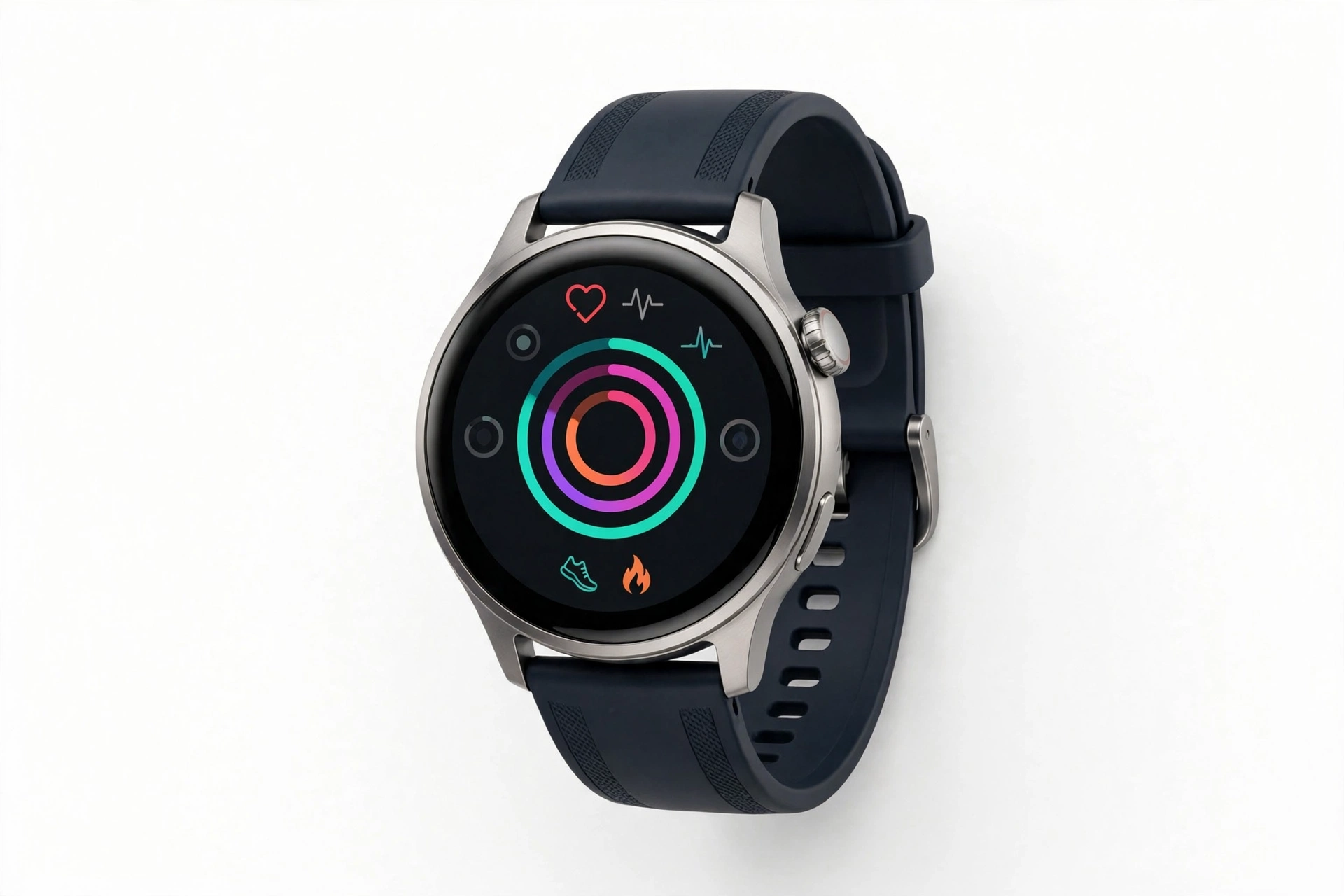
1. The short version: what the Galaxy Watch 10 reportedly is
Here is the honest summary of the Galaxy Watch 10’s status as of October 13, 2026. Samsung has not announced the watch, not shown it, and not published a single specification. Everything below beyond one confirmed fact is built from press reporting, industry supply-chain leaks, and Samsung’s own stated strategy — and is labeled as such throughout. (Source: androidauthority.com)
- What is confirmed: Samsung said in August 2025 that the Galaxy Watch 9 and Galaxy Watch 10 were already in development. (Reported by Android Authority from a Korean press conference.)
- Expected launch: around July 2027, following Samsung’s annual mid-summer Unpacked cycle, if that cycle holds. This is an inference, not a report.
- The two biggest hardware rumors: a Micro-LED display and an all-solid-state battery. Both are single-report-sourced and years in the making.
- Health remains the strategy: Samsung’s health hardware leadership has said the company prioritizes measurement accuracy over extreme battery life, and the Watch 10 is expected to continue that direction.
- Who should read this: Galaxy Watch 9 or Watch 8 owners deciding whether to buy now or wait, and anyone tracking whether 2027 is finally the year smartwatches change in a meaningful way.
2. Why this article is mostly rumors — and proud of it
The Galaxy Watch 10 has not been announced, certified, leaked in renders, or spotted in a database. There is no credible release date, no leaked specification sheet, and no confirmed pricing. That puts this article in a different category from the site’s rumors-to-reality roundups for already-launched devices.
The editorial approach here is strict: every claim carries its evidence grade. “Confirmed” means Samsung or a reputable outlet said it on the record. “Reported” means a credible press source published it. “Expected” means it is a reasonable inference from Samsung’s patterns, and it is labeled as such. Anything else — fan renders, wishlist features, and forum speculation — is treated as exactly that.
Quick fact: Samsung’s own timeline makes the Watch 10 unusual among rumored products. The company publicly confirmed in 2025 that it was working on two generations at once — the Watch 9 (which launched in July 2026) and the Watch 10 (expected in 2027). Confirmed roadmap mentions years in advance are rare in the wearables industry.
3. The one confirmed fact: Samsung said it was coming
In August 2025, about a month after the Galaxy Watch 8 launched, Samsung’s Choi Jong-min — executive director of the Health Hardware Development Group within Samsung’s Mobile Experience division — told Korean media that the company was already working on the Galaxy Watch 9 and the Galaxy Watch 10. The remarks came at a press briefing covered by the Korean outlet Sisa Journal and reported in English by Android Authority.
The briefing itself was mostly about philosophy, not products. Choi contrasted Samsung’s approach with Chinese competitors, arguing that brands like Huawei, OPPO, and OnePlus achieve seven-to-ten days of battery life with low-power components while Samsung prioritizes accurate health measurement systems — systems he said were “already being tested for the next two generations of the Galaxy Watch.”
Why this matters: it means the Watch 10’s health-sensor architecture was being tested at least two years before its expected launch. Samsung’s long-term sensors, like the Antioxidant Index that debuted on the Watch 8, were reportedly in research for years before release. If Samsung follows that pattern, the Watch 10’s headline health feature is something the company was already refining in 2025.
4. Launch timeline: what the annual cycle says
Samsung has launched Galaxy Watches on a remarkably consistent summer schedule in recent years: the Watch 7 and Watch Ultra in July 2024, the Watch 8 and Watch 8 Classic in July 2025, and the Watch 9 and Watch Ultra 2 on July 22, 2026 at Galaxy Unpacked in London. Press reporting consistently describes the Watch 9 as arriving “mid-2026,” and industry coverage expects the Watch 10 in mid-2027.
| Model | Announcement (reported) | Status |
|---|---|---|
| Galaxy Watch 7 / Watch Ultra | July 2024 | Launched |
| Galaxy Watch 8 / Watch 8 Classic | July 2025 | Launched |
| Galaxy Watch 9 / Watch Ultra 2 | July 22, 2026 (Unpacked, London) | Launched (on sale August 7, 2026) |
| Galaxy Watch 10 | Expected ~July 2027 | Rumored — not confirmed |
The July window is an inference, not a leak. Samsung could move the launch — it has paired Watch launches with its foldable Unpacked events in recent years, and any change to that event’s timing would move the watch with it. Do not treat “July 2027” as a reported fact.
5. The rumor record: what the press has reported so far
The table below is the complete credible rumor record for the Galaxy Watch 10 as of October 2026. Each row carries its source and a confidence grade — the same approach used across this site’s rumors coverage.
| Rumor | Source | Confidence |
|---|---|---|
| Samsung confirmed Watch 10 was in development (Aug 2025) | Android Authority, via Korean outlet Sisa Journal | High — on-record executive briefing |
| Micro-LED display possible on Watch 10; Samsung Display building smartwatch Micro-LED production facility | SamMobile, citing Korean report | Medium — facilities reports are credible, but Samsung says no final decision on mass production |
| All-solid-state “Dream Battery” may debut in Watch 10 (2027) | Report cited by Android Central | Low-medium — single report, timeline explicitly uncertain |
| New, more advanced BioActive health sensors | Industry watchers (TechStory summary) | Low — analyst expectation, not a leak |
| AI-driven health recommendations for preventive care | Industry watchers (TechStory summary) | Low — expectation, not a leak |
| Non-invasive glucose monitoring | Wearables industry rumor, summarized by TechStory | Very low — has been “in development” industry-wide for years with no product |
| Next-generation Qualcomm wearable chip | Editorial inference from the Watch 9’s Snapdragon Wear Elite | Inference only — no leak exists |
| Samsung Health subscription tier may debut around Watch 10 | Android Central (public Galaxy AI free-through-2025 disclaimers) | Low — reading of disclaimers, not a leak |
Notice how thin the record is. Unlike phones, where supply-chain leaks produce render after render, the Watch 10 has generated almost no hardware leaks — which is itself information. It suggests Samsung is holding the design close, or that the distinctive hardware changes are still being validated.
6. The Micro-LED display: the biggest hardware bet
What the reporting says
Samsung has been hinting at Micro-LED displays for smartwatches since 2023. In mid-2026, SamMobile reported that Samsung Display was constructing a production facility for smartwatch Micro-LED displays in Asan, South Korea, with equipment installation planned and mass production possibly beginning in the second half of 2027 — “just in time for Samsung to introduce this significant new upgrade with the Galaxy Watch 10 series.”
Why Micro-LED matters on a watch
Micro-LED combines OLED-like perfect blacks and contrast with LCD-like (or better) brightness, and because the light-emitting elements are inorganic, it does not suffer from burn-in. On a wrist-worn display that is always-on and constantly exposed to sunlight, that combination is arguably more meaningful than on a phone. LEDinside’s industry coverage has noted that Micro-LED elements under 50 micrometers are about a tenth the size of those in large TV panels — which is what makes the technology miniaturizable for a watch at all.
Reasons for skepticism
Three cautions, all worth stating plainly. First, Samsung itself has said no final decision on mass production has been made — the facility report is about test production capacity, not a commitment to ship. Second, cost is the known barrier: industry reporting has put Micro-LED watch displays around $150 per panel, far above OLED, which would push prices up or eat margins. Third, Apple reportedly walked away from its own Micro-LED watch project over technical difficulties — a warning that the technology is genuinely hard at watch scale. The Watch 10 having Micro-LED is plausible and reported; it is not settled.
What to expect either way
If Micro-LED slips past 2027, the Watch 10 will most likely iterate on the Super AMOLED sapphire-crystal display formula used by the Watch 9. Samsung’s display improvements in recent generations have been incremental (brightness bumps, protection glass), so the display is the one area where the Watch 10 could either leap forward or look familiar.
7. Battery: the “Dream Battery” and the real question
The all-solid-state report
A report cited by Android Central claims Samsung is working on denser all-solid-state batteries — “Dream Batteries” — intended for Galaxy Buds, the Galaxy Ring 2, and future Galaxy Watches, and that the technology may not be ready until the Galaxy Watch 10 in 2027. It also notes the batteries may cost more than conventional lithium-ion cells.
Quick fact: the Galaxy Watch 9 shipped with up to roughly 40 hours of battery life per press coverage, with reviewers hoping for 50 hours from the next generation. The solid-state battery report is the only specific rumor addressing that gap — and it is one report with an uncertain timeline.
The philosophical split
Remember Choi Jong-min’s 2025 briefing: Samsung explicitly said it prioritizes measurement accuracy over extreme battery life, contrasting its approach with Chinese brands that reach seven to ten days with low-power chips. If that philosophy holds, the Watch 10’s battery story is more likely “enough battery to run better sensors all day” than “a week of battery.” Watch buyers who want multi-week endurance should calibrate expectations against Samsung’s own words.
What improved battery could look like
Even without solid-state cells, Samsung has three conventional levers: a more efficient chip (the Snapdragon Wear Elite was reported to deliver about 30% more battery life than its predecessor), software power management, and slightly denser cells in the same case. Watch 9 coverage already hoped for a jump from ~40 to ~50 hours; the Watch 10 could plausibly get there with conventional engineering alone.
8. The chip: what follows the Snapdragon Wear Elite
The Galaxy Watch 9 marked a platform shift: Samsung dropped its own Exynos W1000 in favor of Qualcomm’s Snapdragon Wear Elite — a 3nm chip reported to bring up to 5x the CPU and 7x the GPU power of the previous Snapdragon wearable chip, plus a dedicated AI accelerator for on-device models. Samsung backed the choice with an on-record quote about making the watch a better wellness companion.
There is no leak about the Watch 10’s chip. The reasonable inference — and it is only an inference — is that Samsung will use a next-generation Qualcomm part. Qualcomm publicly named Samsung as a launch partner for the Wear Elite generation at MWC 2026, and Samsung’s two-generation-ahead planning suggests the Watch 10’s chip decision was made early. Watch for Qualcomm announcements in 2027 as the first real signal.
9. Health sensors: Samsung’s long game
What industry watchers expect
TechStory’s summary of expectations lists more advanced BioActive sensors capable of detecting additional biomarkers, AI-driven health recommendations for preventive care, and improved Samsung Health integration. None of this is leaked; it is extrapolation from Samsung’s stated direction and the Watch 8→9 trajectory (Antioxidant Index, then Vitals, Heart Health Score, Daily Cardio Load, Fitness Index, Hearing Health).
The glucose question
Non-invasive glucose monitoring is the perennial wearables rumor — “long rumored to be under development in the wearables industry,” as TechStory puts it. Samsung’s Antioxidant Index (carotenoid measurement) is genuinely novel and shows the company’s willingness to ship unusual sensors, but glucose remains in the rumor column for every manufacturer. Treat any Watch 10 glucose claim with the skepticism it deserves: this rumor has been wrong about every watch for a decade.
What health studies hint at
Two studies cited in Watch 9 coverage show the direction of travel: a joint study with a Korean hospital found the Galaxy Watch 6 could predict fainting episodes up to 5 minutes in advance with 84.6% accuracy, and a Massachusetts General Hospital study is using the Watch 8 to track muscle loss in patients on GLP-1 medication. Samsung’s wearables are being positioned as clinical-adjacent tools, and the Watch 10 is expected to deepen that positioning — likely through software and sensor accuracy rather than one miracle sensor.
Stop for safety: health features on smartwatches are screening and wellness tools, not medical devices. No watch — rumored or released — diagnoses conditions, and sensor readings should never replace medical advice. If a Watch 10 rumor ever claims medical-grade diagnosis, treat the rumor, not the watch, as the problem.
10. Software: what the Watch 10 will run
The Galaxy Watch 9 shipped with Wear OS 7 and One UI 9 Watch, and introduced a redesigned Samsung Health app organized around five pillars (Sleep, Activity, Nutrition, Mindfulness, Vitals) with an AI-powered Energy Score front and center. The Watch 10 will presumably ship with the next Wear OS generation — and Samsung’s footnotes on Galaxy AI features (free through 2025 disclaimers in Android Central’s coverage) raise the subscription question.
The subscription question deserves care. Samsung has publicly mused about a Samsung Health subscription, and Galaxy AI disclaimers historically referenced time-limited free access. Whether the Watch 10’s headline health features are free, freemium, or paid is unreported — but it is the kind of business decision that could matter more to buyers than any single sensor. Watch Samsung’s Unpacked keynote language carefully when the time comes.
11. Design: what to expect
Samsung introduced the squircle “Cushion Design” — a circular display inside a square-edged case — on the Watch 8, and the Watch 9 kept it (in Armor Aluminum 2, in 40mm and 44mm sizes, with no Classic variant that year). There are no Watch 10 design leaks. The reasonable expectation is refinement of the squircle language rather than a reversal, though Samsung has surprised before (the Watch 8 Classic’s return after the Ultra experiment).
One open question: the Classic. The Watch 9 lineup had no Classic model. Whether the rotating bezel returns on the Watch 10 generation is pure speculation — fan-favorite features do return, but nothing in the reporting suggests it.
12. Pricing expectations
There are no Watch 10 pricing leaks. The anchor is the Watch 9: $379.99 for 40mm Bluetooth, $429.99 for 40mm LTE, $409.99 for 44mm Bluetooth, $459.99 for 44mm LTE — a $30 increase over the Watch 8 that Samsung attributed to higher memory and storage costs. If the Watch 10 ships with Micro-LED or solid-state batteries, upward price pressure is plausible; if it is an iterative year, the Watch 9’s pricing is the likely template. All of this is inference, not reporting.
13. Watch 10 vs. Watch 9: confirmed specs vs. expectations
| Aspect | Galaxy Watch 9 (reported) | Galaxy Watch 10 (expected/rumored) |
|---|---|---|
| Launch | July 22, 2026; on sale Aug 7, 2026 | Expected ~July 2027 (inference) |
| Chip | Snapdragon Wear Elite (3nm) | Next-gen Qualcomm wearable chip (inference) |
| Display | Super AMOLED, sapphire crystal | Micro-LED rumored (medium confidence) |
| Battery | ~40 hours (reported) | Solid-state “Dream Battery” rumored (low-medium confidence) |
| Health sensors | BioActive (Vitals, Heart Health Score, Fitness Index, Antioxidant/AGEs trends, Hearing Health) | Advanced BioActive successors expected (low confidence) |
| Sizes | 40mm / 44mm; Bluetooth + LTE | Unknown — no reports |
| Starting price | $379.99 (US) | Unknown — no reports |
| Software | Wear OS 7 + One UI 9 Watch | Next-gen Wear OS expected (inference) |
14. What Watch 9 owners should know: buy now or wait
The Watch 10 is roughly nine months away at the earliest, and its headline features are unconfirmed. Here is a decision framework based on what is known today.
| Your situation | Suggestion |
|---|---|
| Your current watch is old, damaged, or dying | Buy the Watch 9 now. The rumored Watch 10 features are unconfirmed and at least ~9 months out. |
| You want the newest chip and AI health suite | The Watch 9 already has the Snapdragon Wear Elite and the new health suite — buy now. |
| You specifically want a Micro-LED display or solid-state battery | Wait — but understand both are single-source rumors, not promises. |
| You buy every generation | Wait for the Watch 10, and track Qualcomm’s 2027 chip announcements as your early signal. |
| Price matters most | The Watch 9 is the safer value bet; new display tech usually raises prices, not lowers them. |
Quick fact: Samsung’s $30 price increase on the Watch 9 (to $379.99) was attributed to memory and storage costs. If Micro-LED or solid-state batteries make the Watch 10, expect pricing to reflect it — new display technology has never made a watch cheaper in its debut year.
15. The launch partner: what about the next Ultra?
The Watch 9 launched alongside the Galaxy Watch Ultra 2 ($699.99, 47mm, titanium). Nothing in the reporting names a “Watch Ultra 3” for 2027, but Samsung’s pattern of pairing a flagship Ultra with the numbered watch is two generations old (Ultra in 2024, Ultra 2 in 2026 — notably, no Ultra in 2025). If the pattern alternates years, a Watch 10-era Ultra is plausible but unreported. Any Ultra rumor attached to the Watch 10 should be treated as speculation until a source names it.
16. What to ignore: weak and recycled rumors
The rumor ecosystem recycles claims across generations. Watch for these patterns and discount accordingly:
- Non-invasive glucose “breakthroughs”: rumored for every Galaxy Watch since the Watch 4 era. It has never shipped on any consumer watch.
- Fan renders presented as leaks: concept artists produce beautiful Watch 10 renders; they are design fiction, not leaks.
- Spec sheets from unknown blogs: detailed Watch 10 “spec leaks” on low-reputation sites are typically assembled from the Watch 9’s specs plus wishlist items.
- “Confirmed” launch dates: no credible outlet has reported a Watch 10 date. Any specific day-month claim is invented.
17. How to judge future Watch 10 leaks
The most useful skill for a rumored product is grading leaks as they arrive. Here are two hypothetical scenarios showing how to read the evidence.
(The following are hypothetical illustrations, not customer stories.)
Hypothetical example: Maya’s Micro-LED question. Maya sees a headline: “Galaxy Watch 10 confirmed to have Micro-LED display!” She reads the article and finds it cites only the SamMobile facility report — which itself says Samsung has made no final decision on mass production. Maya correctly downgrades the headline to “Micro-LED possible, unconfirmed” and keeps her Watch 9 purchase plan unchanged.
Hypothetical example: Daniel’s patience problem. Daniel’s Watch 5 battery barely lasts a day. He reads that the Watch 10 “may” have a solid-state battery in 2027 and considers suffering for nine more months. He checks the source: one report with an uncertain timeline. He buys the Watch 9 now instead, because a confirmed 40-hour battery beats a rumored breakthrough.
Tip: the strongest future Watch 10 signals will be (1) Qualcomm wearable-chip announcements, (2) Korean supply-chain reports about display orders, and (3) Samsung’s own executive remarks. In that order.
18. Care and assessment: your current watch before the Watch 10
If you are holding a current Galaxy Watch while waiting for the Watch 10, keep it healthy: charge with certified chargers, avoid extreme heat, and do not wear a watch with a swollen or separating battery. For screen or battery issues on a current watch, see our Galaxy Watch screen issues assessment guide, our Galaxy Watch 9 rumors and expectations guide, and our Galaxy Watch 8 owner guide for context on the current lineup.
Stop for safety: never open a smartwatch yourself. If the screen is lifting, the back crystal is separating, or the watch runs dangerously hot, stop wearing and charging it, keep it on a non-flammable surface away from flammables, and seek professional assessment. Swollen lithium batteries are a fire risk — not a DIY project.
19. Frequently asked questions
When will the Samsung Galaxy Watch 10 be released?
Samsung has not announced a date. The expected window is around July 2027, inferred from Samsung’s annual mid-summer Unpacked cycle (Watch 7 in July 2024, Watch 8 in July 2025, Watch 9 on July 22, 2026). That is an inference, not a reported fact.
Has Samsung confirmed the Galaxy Watch 10?
Partially. In August 2025, a Samsung health hardware executive told Korean media that the company was already working on the Watch 9 and Watch 10 (reported by Android Authority). No features, specs, prices, or dates have been confirmed.
Will the Galaxy Watch 10 have a Micro-LED display?
Possibly, but unconfirmed. SamMobile reported that Samsung Display is building a smartwatch Micro-LED production facility with possible mass production in the second half of 2027 — “just in time” for the Watch 10 series. Samsung itself says no final production decision has been made.
Will the Galaxy Watch 10 have better battery life?
A single report cited by Android Central claims all-solid-state “Dream Batteries” may debut in the Watch 10 (2027), but the timeline is explicitly uncertain. Samsung has also said it prioritizes health measurement accuracy over extreme battery life, so expect gains in sensor capability alongside any battery gains.
Should I buy the Galaxy Watch 9 now or wait for the Watch 10?
If your current watch is struggling, buy the Watch 9 — the Watch 10’s headline features are unconfirmed rumors nine-plus months away. Only wait if you specifically want Micro-LED or solid-state battery technology and accept that both are single-source rumors.
Will there be a Galaxy Watch 10 Classic?
Unreported. The Watch 9 lineup had no Classic model. Whether the rotating bezel returns is pure speculation.
How much will the Galaxy Watch 10 cost?
There are no pricing leaks. The Watch 9 started at $379.99 in the US; new display or battery technology would likely push the Watch 10’s price up rather than down.
Will the Watch 10 have blood glucose monitoring?
There is no credible evidence of it. Non-invasive glucose monitoring has been rumored for every major smartwatch for years and has never shipped on a consumer watch. Treat any such claim about the Watch 10 with skepticism.
Video: How to tell if your smartphone is fake or real
Sources and editorial notes
- Android Authority — Samsung says it is already working on Galaxy Watch 9 and 10: the August 2025 executive briefing (via Korean outlet Sisa Journal) confirming Watch 10 development and Samsung’s health-accuracy-first philosophy. (Last checked October 13, 2026.)
- SamMobile — Samsung’s smartwatches are closer to getting Micro LED displays: report on the Asan production facility, possible H2 2027 mass production, and the Watch 10 timing angle; notes no final decision on mass production. (Last checked October 13, 2026.)
- Android Central — Galaxy Watch 9: everything we want to see: solid-state “Dream Battery” report (possibly not ready until Watch 10, 2027), Samsung Health subscription speculation, Galaxy AI disclaimer reading. (Last checked October 13, 2026.)
- TechStory — Samsung confirms Galaxy Watch 9 and 10, plans features: summary of the confirmation and industry expectations (advanced BioActive sensors, AI health recommendations, glucose monitoring as a long-term industry rumor). (Last checked October 13, 2026.)
- Wikipedia — Samsung Galaxy Watch 9: launch facts used as the Watch 10’s anchor (announced July 22, 2026 at Unpacked in London; released August 7, 2026; Snapdragon Wear Elite; Wear OS 7 and One UI 9 Watch; no Classic variant). (Last checked October 13, 2026.)
- PhoneArena — Galaxy Watch 9 release date, price, specs: launch reporting used for pricing and lineup facts ($379.99 starting price; Watch Ultra 2 announced alongside). (Last checked October 13, 2026.)
- Android Headlines — Samsung’s next Galaxy Watch is getting a serious AI health upgrade: Samsung Health redesign (Vitals, Heart Health Score, Daily Cardio Load, Fitness Index, Hearing Health) showing the software trajectory the Watch 10 will inherit. (Last checked October 13, 2026.)
Last source check: October 13, 2026. AI-assisted editorial guide, checked against the linked manufacturer and press information. The Galaxy Watch 10 is unannounced: the one confirmed fact is Samsung’s 2025 statement that it was in development; every specification, date, and price in this article is reported or expected, and is labeled as such. Launch details cited for the Watch 9 come from press reporting of Samsung’s announcement, not from Samsung’s own pages. If your watch needs hands-on assessment, Las Vegas Phone Repair & Accessories is at 7400 Las Vegas Blvd S, Unit TT42, Las Vegas, NV 89123 — call (424) 406-6202 ahead to confirm today’s hours (generally 10:00 AM–8:00 PM).
Let’s get you connected again.
Tell us what’s happening with your device and we’ll help you decide the safest next step — no jargon, no pressure.
Las Vegas Phone Repair & Accessories · 7400 Las Vegas Blvd S, Unit TT42, Las Vegas, NV 89123
10:00 AM–8:00 PM — call ahead to confirm today’s hours